Bible Prophecy, Signs of the Times and Gog and Magog Updates with Articles in the News
Iran still just one year away from nuke, despite US-Israeli attacks
US intelligence reports suggest Iran’s breakout time for weaponizing fissile uranium hasn’t changed since American and Israeli airstrikes.
The recent American-Israeli air campaign against the Iranian regime and its nuclear program has not succeeded in lengthening the time it would take the Islamic Republic to weaponize its stockpile of fissile material and assemble a nuclear weapon, American intelligence assessments indicate.
On Monday night, Reuters published a report that cited three sources familiar with the matter who said that US intelligence estimates on Iran’s “breakout time” remain unchanged from estimates after last summer’s US-Israeli strikes on Iranian nuclear sites.
The assessments suggest two months of war launched by President Donald Trump have not significantly altered Tehran’s nuclear timeline, despite US and Israeli attacks on military and nuclear-related targets.
The sources said that US intelligence agencies had assessed before last June’s 12-day war that Iran could produce enough bomb-grade uranium and build a weapon in about three to six months.
After US strikes hit the Natanz, Fordow and Isfahan nuclear complexes, that estimate was pushed back to about nine months to a year, the sources said.
The latest assessments remain broadly unchanged.
The finding suggests that further delaying Iran’s nuclear program may require destroying or removing its remaining stockpile of highly enriched uranium.
The International Atomic Energy Agency has been unable to verify the location of about 440 kilograms of uranium enriched to 60% since inspections were suspended. The agency assesses that the stockpile would be enough for 10 bombs if further enriched.
“While Operation Midnight Hammer obliterated Iran’s nuclear facilities, Operation Epic Fury built on this success by decimating Iran’s defense industrial base that they once leveraged as a protective shield around their pursuit of a nuclear weapon,” White House spokeswoman Olivia Wales said.
“President Trump has long been clear that Iran can never have a nuclear weapon – and he does not bluff,” she added.
The Office of the Director of National Intelligence did not respond to a request for comment.
US officials have repeatedly said preventing Iran from obtaining a nuclear weapon is a central goal of the war.
“Iran can never be allowed to obtain a nuclear weapon. That is the goal of this operation,” Vice President JD Vance wrote on X on March 2.
The war has stalled since the US and Iran agreed to an April 7 truce to pursue peace talks. Tensions remain high, with Iran restricting traffic through the Strait of Hormuz and disrupting global oil supplies.
Report: Russia gives list of Israeli energy targets to Iran
The sources said the unchanged estimate reflects, in part, the focus of the latest campaign.
Israel has struck some nuclear-related targets, including a uranium-processing facility in late March.
But US attacks have focused mainly on conventional military capabilities, Iran’s leadership and its military-industrial base.
Eric Brewer, a former senior US intelligence analyst who led assessments of Iran’s nuclear program, said the estimates were not surprising.
“Iran still possesses all of its nuclear material, as far as we know,” said Brewer, now vice president of the nuclear materials study program at the Nuclear Threat Initiative. “That material is probably located in deeply buried underground sites where US munitions can’t penetrate.”
US officials have considered more dangerous options to further impede Iran’s nuclear program, including ground raids to retrieve highly enriched uranium believed to be stored in tunnels at Isfahan, the sources said.
Experts say assessing Iran’s nuclear capacity remains difficult, and the impact of Israel’s assassination campaign against Iranian nuclear scientists is uncertain.
David Albright, a former UN nuclear inspector who heads the Institute for Science and International Security, said the killings may have damaged Iran’s ability to build a working weapon.
“I think everyone agrees knowledge can’t be bombed, but know-how certainly can be destroyed,” he said.
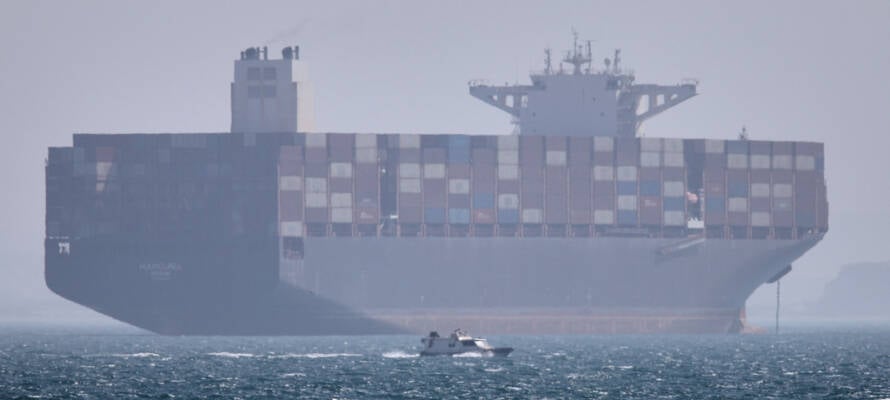
Your Container shipment are On sea !! Ceasefire Hanging by a Thread Amid Hormuz Fighting and UAE Attacks
In Israel, officials signaled readiness for rapid escalation.
The fragile ceasefire between the United States and Iran appeared increasingly at risk Tuesday as Iranian officials escalated their rhetoric and a series of military incidents in and around the Strait of Hormuz pointed to a growing likelihood of renewed conflict.
In a post on X Tuesday morning, Iranian parliament speaker Mohammad Bagher Ghalibaf issued a stark warning over the situation in the strategic waterway, writing that “the new equation of the Strait of Hormuz is taking shape.”
He added that “the security of shipping and the transfer of energy is under threat due to the violation of the ceasefire and the imposition of a blockade by America and its allies,” and cautioned that “the continuation of the current situation is not tolerable for America, while we have not even begun yet.”
The remarks signaled a sharp escalation in tone from Tehran and came as clashes at sea intensified. The U.S. military confirmed it engaged Iranian forces on Monday, sinking six small boats that were targeting civilian vessels as part of efforts to reopen the Strait of Hormuz.
Two U.S. Navy destroyers transited the strait under what officials described as a sustained barrage involving missiles, drones, and swarming small boats, according to CBS News. Both vessels were supported by fighter jets and Apache helicopters and were able to intercept or deter all incoming threats.
At the same time, Iran expanded its attacks beyond the maritime arena. In the United Arab Emirates, air defense systems intercepted 12 ballistic missiles, three cruise missiles, and four drones launched from Iran, according to the Emirati defense ministry.
The attack marked the first direct strike on the Gulf state since the ceasefire took hold in early April. A fire broke out in Fujairah following the strike, leaving three people injured. A source told CNN that an Israeli-deployed Iron Dome system was involved in intercepting some of the incoming threats.
Despite the escalation, President Trump appeared to downplay the severity of the incidents. In remarks to ABC News, he described the exchange as “not heavy firing” and said most of the Iranian projectiles were intercepted.
“One got through. Not huge damage,” he said. However, earlier in the day, Trump issued a stark warning in an interview with Fox News, saying Iran would be “blown off the face of the Earth” if it attacked U.S. vessels.
In Israel, officials signaled readiness for a rapid escalation. A senior source told Israel’s Channel 14 that “Israel is prepared to return to fighting immediately in Iran” and is “just waiting for a green light from the Americans.”
The IDF Home Front Command remains on high alert, though authorities emphasized there has been no change in civilian guidelines and daily life continues as normal. Military officials stressed that air defense systems and offensive capabilities remain at elevated readiness, unchanged since the ceasefire was declared.
The convergence of intensified Iranian threats, direct attacks on U.S. and allied assets, and rising military preparedness across the region suggests the ceasefire is under significant strain.
With both rhetoric and operational activity escalating, officials increasingly warn that a return to broader conflict is becoming a real and immediate possibility.
Bread to your Enemy ? Israel to Supply Jet Fuel to Germany Amid Hormuz Crisis

The agreement comes as European energy concerns have mounted in recent weeks due to disruptions linked to tensions in Hormuz, a critical global shipping route.
Israel has agreed to supply jet fuel to Germany following a formal request from Berlin, as energy markets face growing strain amid the ongoing crisis in the Strait of Hormuz.
The move was coordinated between Energy and Infrastructure Minister Eli Cohen and Foreign Minister Gideon Sa’ar after Germany sought assistance in securing fuel supplies.
The request, which also included potential support in natural gas, was approved after an internal review found that Israel has surplus production available for export, subject to ongoing security developments.
Officials at the Energy Ministry said the decision followed an assessment by the Fuel Administration, which determined that excess output could be redirected abroad.
Cohen instructed ministry officials “to make every effort to respond positively,” paving the way for the agreement. Coordination of shipments will be carried out with Israeli refineries to ensure steady supply, in what officials described as a complex but feasible logistical effort.
The formal notification of the move was delivered by Sa’ar to Germany’s Economy and Energy Minister Katherina Reiche during a diplomatic visit in Berlin. Sa’ar highlighted the strong economic and strategic cooperation between Israel and Germany and stressed its importance.
The agreement comes as European energy concerns have mounted in recent weeks due to disruptions linked to tensions in Hormuz, a critical global shipping route.
According to a Wall Street Journal report from earlier in the crisis, German carrier Lufthansa had planned to cancel several European routes and up to 20,000 short-haul flights through October in an effort to conserve jet fuel, as airlines braced for potential shortages and rising prices.
Sa’ar is currently visiting Germany, where he met with Chancellor Friedrich Merz and Foreign Minister Johann Wadephul to discuss Iran, regional security, and bilateral cooperation.
The Foreign Ministry noted it was the eighth meeting between Sa’ar and Wadephul within a year, underscoring the close coordination between the two countries.
In parallel with the fuel agreement, Israel’s Energy Ministry said it is examining additional ways to assist Germany, including potential exports of natural gas, depending on capacity and evolving European demand.