
Bible Prophecy, Signs of the Times and Gog and Magog Updates with Articles in the News
100 000 humanoid robot, NEO’s by 2027
Unprecedented Disruption Is Coming With Mass Production Of Humanoid Robots
The future has a way of arriving quietly–until suddenly, it doesn’t. And with the announcement of a full-scale humanoid robot factory in California set to produce up to 100,000 units by the end of 2027, that future is no longer theoretical. It is being assembled, tested, and prepared for delivery into American homes.
U.S.-based company 1X has taken a decisive step forward with its new facility in Hayward ( a 2nd facility in San Carlos is coming online later this year), aiming to mass-produce its humanoid robot, NEO. These machines are not specialized industrial arms hidden away in factories. They are designed to walk among us–inside homes–assisting with everyday tasks, interacting with people, and learning in real time.
Powered by advanced AI systems from NVIDIA, including the Jetson Thor platform and Isaac simulation tools, NEO represents a merging of robotics and artificial intelligence that has long been promised but never fully realized at scale.
And yet, the question is no longer whether humanoid robots are coming. The question is: what happens when they arrive?
From a technological standpoint, this leap is staggering. The robots are being trained in virtual environments through reinforcement learning, enabling them to adapt, improve, and respond dynamically to real-world conditions. Their ability to process information locally–without relying heavily on cloud systems–means they can react in real time, making them more autonomous and more capable than previous generations of machines. This is not automation as we have known it. This is embodiment–intelligence placed into physical form.
But the deeper story is not about what these robots can do. It is about what their presence will change.
Start with work.
For decades, automation has chipped away at repetitive and industrial jobs. But humanoid robots introduce a new variable: flexibility. A robot that can move like a human, adapt like a human, and learn like a human is no longer confined to one task. It can clean, assist the elderly, stock shelves, deliver packages, and even perform basic caregiving functions. The implications are immediate and profound. Entire sectors–home health care, retail support, logistics, and even entry-level service jobs–could face unprecedented disruption.
The economic argument will be familiar: increased efficiency, reduced labor costs, and higher productivity. Companies will embrace humanoid robots because they do not call in sick, demand wages, or require benefits. But beneath that efficiency lies a more unsettling question–what happens to the millions of people whose roles become optional?
History shows that technological revolutions often create new jobs even as they eliminate old ones. But this time may be different. When the machine is no longer just a tool but a general-purpose worker, the scope of displacement expands dramatically. The speed of this transition–accelerated by AI learning and mass production–may outpace society’s ability to adapt.
Then there is the cultural shift.
For the first time, machines will not just be tools we use–they will be entities we live alongside. A humanoid robot in the home is not like a dishwasher or a smartphone. It moves, responds, and interacts in ways that mimic human behavior. Over time, people may begin to form attachments, dependencies, or even emotional connections. This raises difficult questions about identity, relationships, and what it means to be human in a world where imitation becomes increasingly convincing.
Will children grow up seeing robots as companions? Will the elderly rely on machines for comfort and care instead of human interaction? Will society slowly trade authentic relationships for convenient ones?
There is also the question of control.
With vertically integrated manufacturing and AI systems that continuously learn and update, companies like 1X are not just building hardware–they are building ecosystems. The data collected, the behaviors learned, and the decisions made by these machines will all be shaped by the entities that design them. That raises concerns about privacy, influence, and the potential centralization of power in the hands of a few tech companies.
And yet, despite these concerns, demand is already surging. The company reports that its first-year production batch of 10,000 sold out in just five days. That kind of response suggests something deeper than curiosity–it suggests readiness. Or perhaps, inevitability.
Because at its core, this is not just a technological development. It is a turning point.
Humanoid robots represent the convergence of decades of innovation into a single, tangible reality. They promise convenience, efficiency, and a new standard of living. But they also challenge long-standing assumptions about work, value, and human uniqueness.
By the end of 2026, the first of these machines are estimated to begin entering homes and while the world may not look dramatically different overnight, the trajectory will be set. A society that once revolved around human labor will begin to reorganize itself around artificial capability.
And the most important question will not be how advanced these robots become.
It will be whether we have fully considered what we are becoming alongside them.
17 000 000 ( 17 Million ) Abortions to Date in the Past 15 Years in USA alone.
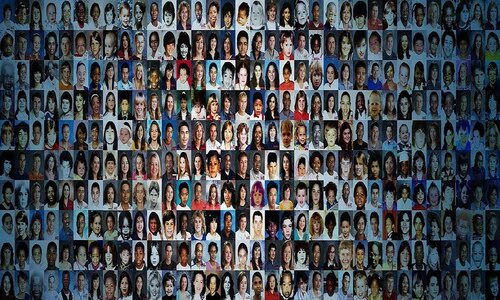
The Generation That Never Was: Vast Numbers Of Generation Z Lost To Abortion
17 000 000 Murders by Mothers – something to think of this Mothers Day !!!
Seventeen million is not just a number–it is a silence.
It is the empty desks that were never filled, the voices that were never heard, the lives that never had the chance to begin. However one arrives at the statistics, the baseline reality is sobering: tens of millions of pregnancies in the United States alone have ended in abortion over the past several decades. That is not a marginal figure. It is not a rounding error in history. It is a population-scale absence–one that forces a difficult but necessary question: what has been lost?
The claim, discussed by Rachel Wilson on the Jack Neel Podcast, frames the issue in generational terms–suggesting as much as one-third of Generation Z (those born between 1997-2012) never made it to birth. While exact percentages can be debated endlessly, the broader implication does not require mathematical precision to understand. When the numbers reach into the tens of millions, the impact is no longer theoretical. It becomes civilizational.
Start with the most obvious dimension: human potential.
Seventeen million lives represent more than just individuals–they represent possibility multiplied across time. Within that number could have been doctors who discovered treatments, engineers who built new technologies, teachers who shaped future leaders, and parents who raised the next generation. The loss is not just immediate; it compounds. Each life that never begins also means future families that never form, grandchildren who are never born, and contributions that never materialize.
It is a ripple effect that stretches far beyond a single generation.
Economically, the consequences are becoming increasingly visible. Many developed nations, including the United States, are grappling with declining birthrates and aging populations. Fewer young people entering the workforce means fewer taxpayers supporting social systems, fewer innovators driving growth, and fewer hands to sustain the infrastructure of society. In response, governments often turn to immigration as a way to stabilize labor markets and economic output.
That solution may be practical, but it raises an uncomfortable question: what if the need for replacement had been less urgent in the first place?
This is not about assigning blame as much as it is about recognizing cause and effect. A society that reduces its own birthrate–whether through cultural shifts, economic pressures, or policy decisions–will inevitably face the downstream consequences of that choice. Labor shortages, demographic imbalance, and social strain do not emerge in isolation. They are the natural outcome of fewer people being born.
But beyond economics lies something deeper–something harder to quantify.
There is a cultural and emotional cost to absence. A generation is not just a collection of individuals; it is a shared identity shaped by relationships, experiences, and collective memory. Remove millions from that equation, and what remains is not simply smaller–it is different. Entire networks of friendships, communities, and families are missing. The world we know today is not just the result of who is here, but also who is not.
From a Christian perspective, this absence carries profound spiritual weight.
The Bible speaks consistently of life as intentional and known by God. In Psalm 139, the image is vivid: each person “fearfully and wonderfully made,” formed with purpose and care. If that is true, then every lost life is not just a statistical reduction, but a story that was never told–a calling that was never fulfilled.
And yet, any honest conversation must also acknowledge the realities that surround abortion.
Behind every number is a woman facing a decision–often under pressure, uncertainty, or fear. Economic hardship, lack of support, and cultural messaging all shape these moments. If society is troubled by the scale of abortion, it must also confront the conditions that make it seem like the only option for so many. Addressing the outcome without addressing the causes will always fall short.
Still, the scale itself demands reflection.
Seventeen million. Even if one were to set aside debates over percentages or generational labels, that number alone is enough to pause. It represents a population larger than many countries–a vast, unseen absence that has quietly reshaped the trajectory of a nation.
What would those lives have added to the world? How would they have influenced culture, economy, faith, and family?
We cannot know.
But we can recognize that something significant has been lost.
The conversation around abortion is often framed in terms of rights, law, and personal autonomy. Those are important considerations. But there is another dimension that is too often overlooked–the cumulative impact over time. When decisions that affect individual lives are multiplied across millions, they do not remain individual. They become generational.
And generations shape history.
The world we inhabit today is not only defined by the people who are here, building, creating, and living–it is also defined by those who are not. The absence is invisible, but its effects are not. They are felt in the economy, in culture, in communities, and perhaps most deeply, in the quiet recognition that an entire generation of possibility never had the chance to unfold.
That is not a small thing.
It is a silence measured in millions.
Trump makes history: First U.S. president to call the nation to Shabbat – a Christian ZIONISM Shabbat

For the first time in American history, a sitting president has called on the entire nation to observe Shabbat. In a White House proclamation signed May 4, 2026, as part of Jewish American Heritage Month, President Donald Trump designated the period from sundown Friday, May 15, through nightfall Saturday, May 16, as a national Shabbat, dubbed “Shabbat 250”, in honor of the 250th anniversary of American independence. The move sent shockwaves through Jewish and Christian communities alike, and for those who know their Talmud, the implications stretch far beyond a single weekend.
Invoking President George Washington’s celebrated 1790 letter to the Hebrew Congregation in Newport, Rhode Island, in which Washington wrote that the United States “gives to bigotry no sanction, to persecution no assistance,” Trump tied the founding promise of America directly to its Jewish citizens.
“In special honor of 250 glorious years of American independence and on the weekend of Rededicate 250 — a national jubilee of prayer, praise, and thanksgiving — Jewish Americans are encouraged to observe a national Sabbath,” Trump wrote. “From sundown on May 15 to nightfall on May 16, friends, families, and communities of all backgrounds may come together in gratitude for our great Nation. This day will recognize the sacred Jewish tradition of setting aside time for rest, reflection, and gratitude to the Almighty.”
Trump also paid tribute to Haym Salomon, the Revolutionary War–era financier who rallied support for independence and, as the proclamation put it, “gave everything to the success of the American Revolution.” The proclamation declares: “Like so many Jewish Americans who follow in his footsteps, Salomon’s legacy stands as a testament to the unshakable belief in the American promise.”
In a direct rebuke of the rising tide of antisemitism on college campuses and beyond, Trump wrote: “Under my leadership, we are aggressively fighting the violence against Jewish Americans that increased under my predecessor, prosecuting hateful criminals to the fullest extent of the law, and working to end the scourge of anti-Semitism throughout our institutions.”
The proclamation closes with a direct call: “I further call on all Americans to celebrate their faith and freedom throughout this year, during this month, and especially on Shabbat to celebrate our 250th year. DONALD J. TRUMP.”