The Challenge Donald Trump Hasn’t Accepted Yet
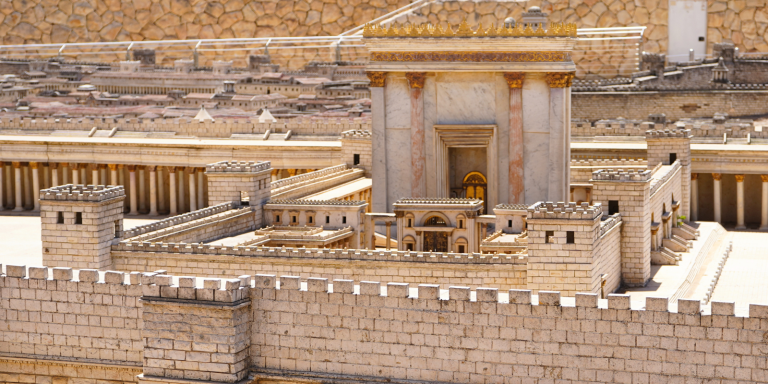
In October 2025, Jake Turx, a Hasidic journalist with a White House press pass, stood up in the briefing room and asked Press Secretary Karoline Leavitt a question that made the room laugh: “To your knowledge, has the topic of rebuilding the Holy Temple in Jerusalem ever come up?” Turx had set the question up with a straight face, noting that Trump “is likely going to go down as the greatest builder of this era.”
Leavitt shut it down in four words: “No, it has not.”
The room moved on. But the question wasn’t ridiculous. It was a provocation — a deliberate attempt to put something on the table that everyone in that room was too sophisticated to take seriously. And the fact that it got a laugh tells you something important about where we are.
Because here is what nobody in that briefing room knew, or at least nobody said out loud: this has all happened before.
Rabbi Elie Mischel and Aharon Mendelowitz explored the opening chapter of the book of Ezra — and what they found has striking implications for our moment. The book begins with a proclamation from the most powerful man in the world. Cyrus, king of Persia, conqueror of Babylonia, master of an empire stretching from India to Greece, issues a decree: God has commanded me to build Him a temple in Jerusalem. Whoever among His people wants to return — let them return.
Cyrus was a pagan king. He worshipped idols. He was, by any measure, not a holy man. And yet the prophet Isaiah had named him — by name, generations before his birth — as God’s mashiach. Not the final Messiah, but mashiach in its original sense: anointed, appointed by God for a specific mission.
God’s instrument for the return of the Jewish people to their land was a Persian pagan.
There are those today who refer to Donald Trump as a Cyrus figure. As Rabbi Mischel and Mendelowitz discuss, it is not hard to see why. The unlikely rise, the unapologetic support for Israel, the recognition of Jerusalem as Israel’s capital, the embassy move — and then the assassination attempt, the bullet that took a piece of his ear, which Trump himself has spoken about as a sign that God preserved him for a reason. God works through unlikely vessels. He always has.
But the Cyrus parallel, as compelling as it is, may actually be setting the bar too low.
Turn back a few books in the Bible, to 1 Kings 5, and you find a different model of what Gentile partnership in God’s purposes can look like. Solomon is preparing to build the First Temple in Jerusalem. He has the vision, the resources, the divine mandate. What he needs is lumber — the great cedars of Lebanon — and the craftsmen who know how to work them. And so he turns to Hiram, king of Tyre.
Hiram doesn’t issue a proclamation. He doesn’t give permission. The Jews don’t need his permission — they are sovereign in their own land, building their own Temple. What Hiram does is show up. He sends cedar and cypress timber. He sends his own craftsmen to work alongside Solomon’s. He enters into a full partnership with the king of Israel to build the house of God. “Hiram gave Solomon all the timber of cedar and cypress that he desired,” the text tells us, “and Solomon gave Hiram twenty thousand measures of wheat” (1 Kings 5:24-25).
This, Rabbi Mischel and Mendelowitz suggest, is what full Gentile partnership in the story of Israel’s redemption actually looks like. Not a permission slip. A partnership.
Trump has been a Cyrus. He has used the power at his disposal to open doors for the Jewish people and the State of Israel, and that is not nothing — it is, in fact, extraordinary. But Cyrus and Hiram are two different models, and the question worth asking is whether Trump sees himself as one or both.
Cyrus issued his decree and stepped back. Hiram sent his timber and his craftsmen and got to work.
Jake Turx got a laugh in the White House briefing room. But the question he was really asking — even if he was asking it with a smile — is one of the most serious questions of our time. The State of Israel is rebuilding. The Jewish people are coming home. The prophecies that seemed impossible for two thousand years are unfolding in real time. In that story, there is a role for a Cyrus and a role for a Hiram.
Donald Trump has already played one of them magnificently.
The question is whether he is willing to play the other.
Israel Unanimously Approves Recognition of Armenian Genocide
Israel’s government unanimously approved a resolution Sunday recognizing the Armenian Genocide, marking a historic shift in Israeli policy after decades of avoiding formal recognition.
Foreign Minister Gideon Sa’ar, who introduced the resolution, welcomed the decision and called it a long-overdue moral obligation.
“It’s never too late to do the right thing,” Sa’ar wrote on X. “I thank Prime Minister Netanyahu for his support, and the government ministers for their unanimous approval of the resolution I initiated for Israel’s recognition of the Armenian Genocide.”
“Thus, Israel joins 32 countries that have fulfilled a moral duty by recognizing the historical truth, and rejecting attempts to deny it,” he added.
On Friday, Sa’ar announced he would bring the proposal before the Cabinet, calling recognition of “the genocide perpetrated against the Armenian people in the final years of the Ottoman Empire” both “a moral and historical duty” and urging the rejection of “any denial, minimization, or distortion of the historical truth.”
The decision ends Israel’s longstanding policy of withholding formal recognition, a position largely shaped by diplomatic and strategic considerations involving Turkey.
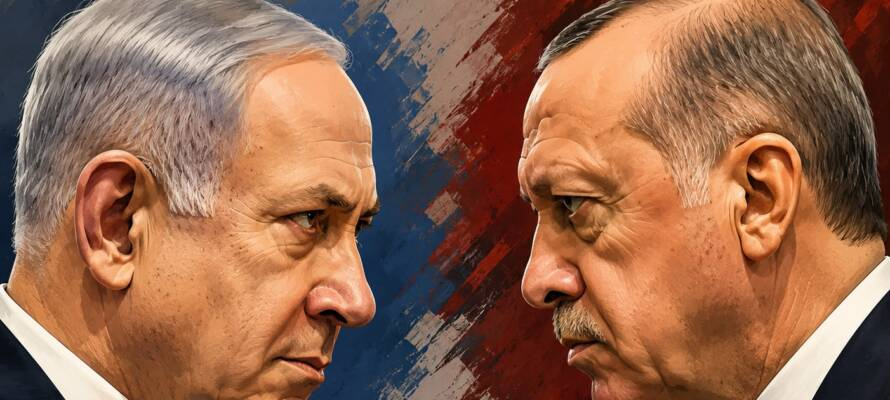
The move comes amid one of the lowest points in Israel-Turkey relations. In recent weeks, Turkish President Recep Tayyip Erdogan has intensified his attacks on Israel, accusing it of destabilizing the Middle East, comparing its actions to Nazi Germany, and warning that Israeli military operations in Syria and Lebanon could eventually threaten Turkey.
Prime Minister Benjamin Netanyahu responded by calling Erdogan “an antisemitic dictator” who supports Hamas and oppresses his own people.
Against that backdrop, Israel’s recognition of the Armenian Genocide is likely to further strain relations with Ankara, which has long rejected the characterization of the mass killings of Armenians during the final years of the Ottoman Empire as genocide.
The resolution will now be brought before the Knesset for a vote, completing the legislative process for Israel’s official recognition.