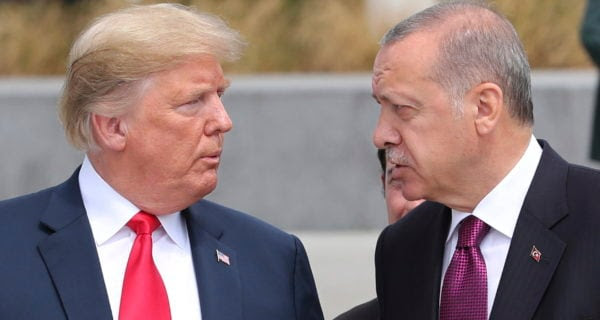
Trump says he blocked Turkish (Magog) attacks on Israel during Iran war
“He was a prime candidate to go into the war with Iran, maybe on the Iran side, because he’s not a big fan of Israel,” Trump said.
President Donald Trump said Wednesday that Turkish President Recep Tayyip Erdogan stayed out of the recent Iran war at his request, while signaling that Washington may move toward resolving Turkey’s long-running demand to receive F-35 fighter jets.
Speaking in the Oval Office alongside NATO Secretary-General Mark Rutte, Trump described Erdogan as a friend and said the Turkish leader could have entered the conflict against Israel.
“He was a prime candidate to go into the war with Iran, maybe on the Iran side, because he’s not a big fan of Israel,” Trump said.
But Trump said Erdogan agreed not to get involved after he asked him to remain on the sidelines.
“Everything I’ve ever asked him for, he’s done,” Trump added.
The comments came ahead of a NATO summit in Ankara, where Trump and Erdogan are expected to meet. Erdogan said Wednesday that bilateral talks with Trump would “most likely” take place during the July 7-8 summit, which Turkey is hosting.
WATCH: ‘Netanyahu will soon learn the lesson he deserves from the world’s Muslims,’ says Turkey’s Erdogan
Trump said Erdogan’s role as host was a major reason he planned to attend.
“I am going to the summit out of respect for President Erdogan,” Trump said, according to Turkish media. “Except for the fact that it was being held in Turkey by President Erdogan, I don’t think I would have gone to it.”
Vice President JD Vance told reporters that the administration is reviewing whether Turkey can be brought back into the F-35 process despite its 2019 purchase of Russia’s S-400 air defense system, which led Washington to remove Ankara from the F-35 program.
“Pete and the entire team are reviewing this right now, because there are certain things that we have to certify have happened … in order to comply with American law. The president has asked us to do that,” Vance said, referring to Defense Secretary Pete Hegseth.
The F-35 dispute has been one of the most serious points of tension between the two NATO allies.
The Trump administration removed Turkey from the Joint Strike Fighter program in 2019 after Ankara took delivery of the Russian-made S-400 system, arguing that Turkey could not operate the Russian missile defense system while participating in a stealth fighter program.
US officials said at the time that the S-400 could compromise the F-35’s sensitive technology.
Turkey has long insisted that its purchase of the S-400 should not bar it from the F-35 and has argued that it fulfilled its obligations as a program partner. Ankara has also pushed Washington to approve defense sales tied to its own KAAN fighter project.
Reuters reported Wednesday that the Trump administration is preparing to move ahead with more than $700 million in jet engine sales to Turkey ahead of the NATO summit.
The engines would be used for KAAN, Turkey’s domestically developed combat aircraft. That sale would not by itself restore Turkey to the F-35 program, but it would mark a significant step toward rebuilding defense cooperation.
Trump says Iran accepted ‘infinite’ nuke inspections as Tehran disputes deal terms
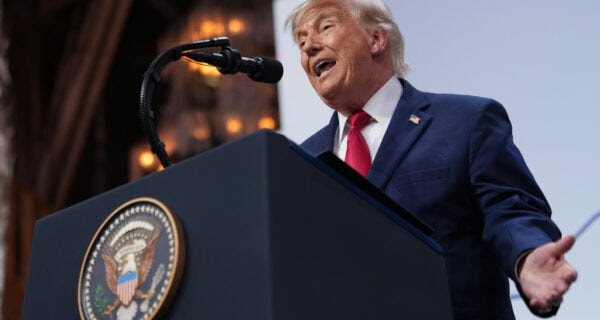
President Trump pushes back on Iran’s denials of key elements of emerging deal, says Tehran has agreed to long-term nuclear inspections.
President Donald Trump said Tuesday that Iran had agreed to “the highest level” of nuclear inspections “long into the future,” while also saying he had lifted the US naval blockade at the Strait of Hormuz and would release sanctions relief through a US-controlled escrow account for food and medical purchases.
The post came amid conflicting claims from Washington and Tehran over the terms of the preliminary US-Iran agreement, including nuclear inspections, the future of the Hormuz blockade and how unfrozen Iranian assets can be used.
“Despite their protestations and false statements to the contrary, coupled with the drumbeat of the Fake News, which is doing everything possible to make the U.S. Victory as small and insignificant as possible, Iran has fully and completely agreed to highest level Nuclear inspections long into the future (Infinity!!!),” Trump wrote on Truth Social.
“This will insure ‘Nuclear Honesty.’ If they did not agree to this, there would be no further negotiations! Based on this and other major concessions being made by Iran, I have agreed to allow the Hormuz Strait to remain OPEN, with no further Naval Blockade.”
IRGC chief blocking Iranian FM from making concessions in nuke talks
The president added that the US will maintain its naval presence to ensure Iran’s compliance with the deal.
“However, all ships are remaining in place should it be necessary to reinstitute the Blockade, which seems, at this point, highly unlikely.”
“The Money and/or Sanctions that the U.S. Treasury is releasing goes into escrow, controlled by the U.S.A., and will be used for the purchase of food and medical supplies, exclusively from the United States, including Corn, Wheat, and Soybeans from our great American Farmers.”
These are things that are desperately needed by Iran. This is a humanitarian crisis, and I feel it is necessary to help, NOW, before it is too late. Talks are going well!”
Trump’s statement directly challenged Iranian denials and attempted to define the US understanding of the interim deal after days of contradictory statements from both sides.
Iranian officials have said they did not agree to broad new inspections as described by US officials, and Foreign Ministry spokesman Esmaeil Baghaei has said Iran does not intend to allow International Atomic Energy Agency inspectors to visit nuclear sites damaged during the war.
“We do not intend to allow IAEA inspectors to visit the nuclear sites that were attacked in the war,” Baghaei said this week.
US strikes Iranian drone site; Tehran says it hit American airbase
Baghaei said Iran would continue to meet its existing obligations under the Nuclear Non-Proliferation Treaty and its safeguards agreement with the IAEA, but said there was no agreed procedure for inspections at damaged sites.
The disagreement over inspections is one of the central unresolved issues in the 60-day negotiating period opened by the US-Iran memorandum.
US officials have said the final agreement is intended to dismantle Iran’s path to a nuclear weapon and restore a long-term verification regime. Iranian officials have portrayed the understanding as a sanctions-relief and ceasefire framework, while resisting US claims that Tehran has already accepted expanded nuclear access.
Iran has also publicly disputed American claims that unfrozen funds will be used to purchase US goods.
Baghaei said Tehran would decide how to use released Iranian funds and rejected the idea that Washington could dictate the purchases.
“We will decide how to spend the released Iranian funds. There are no restrictions on this matter,” Baghaei said. “We can now access the frozen funds.”