Bible Prophecy, Signs of the Times and Gog and Magog Updates with Articles in the News
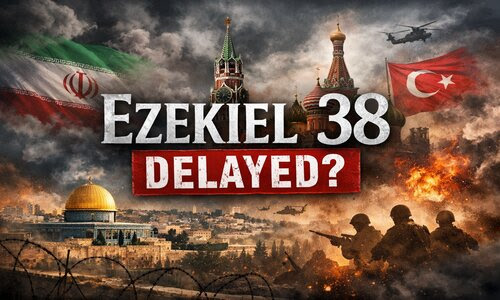
If Iran Falls, What Happens To The Ezekiel 38 Scenario?
For decades, Bible prophecy teachers have pointed to one of the most dramatic passages in Scripture–Book of Ezekiel chapters 38 and 39–as a roadmap for a future war that would shake the Middle East and the world. The prophecy describes a coalition of nations rising up against Israel in the last days. Among the nations listed is Persia–widely understood to be modern-day Iran–alongside powers commonly associated with Russia and Turkey.
For years, the alignment seemed obvious. Iran’s revolutionary regime openly called for the destruction of Israel. Russia strengthened ties with Tehran and armed its proxies. Turkey drifted further from the West while often criticizing Israel. To many students of prophecy, the stage appeared to be slowly assembling for what is often called the “Ezekiel 38 scenario.”
But geopolitics has a way of complicating even the clearest expectations.
Today, Russia remains bogged down in the war with Ukraine, a grinding conflict that has drained military resources and strategic attention. Meanwhile, a dramatic shift may be unfolding in Iran itself. While the conflict involving Iran is far from finished, it increasingly appears possible–perhaps even likely–that the current regime could fall and be replaced by leaders more friendly toward the West.
If that happens, Christians who closely watch prophecy will have to wrestle with an perplexing question: What happens to the Ezekiel 38 scenario if Iran suddenly becomes pro-Western?
For many prophecy watchers, the idea feels like a wrench thrown into the gears of expectation. If Persia is no longer hostile to Israel, the alignment described in Ezekiel appears, at least temporarily, to drift farther away. A nation once viewed as a central aggressor could suddenly become a reluctant partner of Western powers.
But history–and Scripture–warn believers against assuming that today’s headlines define tomorrow’s prophetic reality.
Even now, the situation remains fluid. Russia (Gog) and Turkey (Magog) have expressed strong opposition to the attacks against Iran and have called for restraint showing they are still very much friends of Iran.
Moments like that may seem small, but they reveal something deeper: alliances in the region are fragile. What looks stable today can fracture tomorrow.
In fact, this kind of instability may actually move the world closer to the conditions described in Ezekiel rather than further away.
The prophecy describes Israel dwelling in relative security before the invasion occurs. The nation is portrayed as prosperous, confident, and somewhat at ease–conditions that historically have rarely existed in Israel’s modern history. Yet if Iran’s current regime were removed and tensions in the region temporarily cooled, Israel might indeed experience a greater sense of security.
Such a shift could paradoxically fulfill another key element of the prophecy: a moment when Israel appears less guarded and more stable than its enemies expect.
For Christians watching these events unfold, the lesson is both humbling and encouraging.
Prophecy has never unfolded according to human timelines.
Consider how believers once struggled with the prophetic promises about Israel itself. For nearly 2,000 years, Christians read passages predicting that the Jewish people would return to their ancient homeland. They read about Israel becoming a nation again, about deserts blooming, about prosperity and military strength.
Yet for centuries, there was no Israel. Many people assumed the prophecies regarding Israel were allegories or to be replaced by the Church.
The Jewish people were scattered across the globe. Empires rose and fell. Skeptics mocked the idea that the ancient nation described in the Bible could ever reappear.
And then, in 1948, the impossible happened.
At the United Nations, the modern state of United Nations recognized the rebirth of Israel in a single historic moment–an event many Christians saw as the fulfillment of biblical prophecy unfolding before their eyes.
Since then, the once-barren land has indeed blossomed. Israel has become a technological powerhouse, a military force, and one of the most dynamic economies in the region. Even discussions about rebuilding the temple–once unthinkable–are now spoken about openly in religious circles.
All of it happened in God’s timing, not humanity’s.
That same principle applies today.
Demographics & Decline – Many Protestant Denominations Will Not Survive
In January, statistician Ryan Burge posted demographic breakdown of 20 Protestant denominations, showing the percentage of “Boomers” in each. Across Protestant denominations, both mainline and evangelical, a disproportionately large number of congregants are in their 60s, 70s, and 80s.
The aging faithful within our congregations are a blessing and an essential resource that is too often overlooked. However, it is also true that within a few decades, much of this cohort will have entered eternity. If Burge’s chart is correct, there will not be enough GenXers, Millennials, and Zoomers to sustain many of these denominations.
The percentages of “Boomers” run from a high of 49% in the liberal Episcopal Church to a low of 24% with the more conservative Church of Christ. With certain exceptions, the more traditional theology and practice a church offers, the less likely they are to age out.
The converse is also true and has been for a while now. So-called mainline denominations have been hemorrhaging numbers for decades. They are also increasingly populated by older and whiter congregants. And it may be too late for them. As Burge put in his new book, The Vanishing Church:
When silver heads outnumber newborn cries in the pews, the local church has likely crossed a point of no return. Without young people, especially young couples, it’s hard to maintain the same level of membership or attendance. But attracting young people to a congregation of baby boomers is an almost impossible task. Thus, it’s unlikely that the mainline will see any kind of resurgence in the decades to come.
Decades ago, many of these denominations chose to accommodate themselves to theological and moral progressivism. In the end, these churches had nothing to offer that could not be heard daily on NPR, and they lost their own reason for being. Why get up on Sunday morning to go to church if you could stay home and hear the same thing without the sermon?
However, mainliners aren’t the only ones facing the demographic winter. Though the top half of Burge’s graph with the worst numbers are churches that mostly lean liberal, a few conservative denominations are not far behind. For example, while the mainline Presbyterian Church of the USA are at 47% Boomer, the conservative Presbyterian Church of America also come in at 47%. Southern Baptists are at 45%. Most nondenominational groups sit at around 40%.
These denominations have not succumbed to the theological liberalism that captivated the mainlines decades earlier and, given the track record, it would not be wise to do so now. Nor is it wise, as some within the more conservative denominations seem tempted to do, to downplay, compromise or water down the moral claims of historic, orthodox Christianity. The church’s strategy should neither be to accommodate to the culture nor to the individual.
In fact, though we are still understanding the “vibe shift of the last couple of years, the churches that have grown and attracted younger generations tended to beclear about Christian doctrine and morality. They didn’t conform to wider culture like the mainliners, and they didn’t do the seeker-sensitive thing so popular forevangelical Protestants. By not bending with the social breeze, more rigorous churches were not tied to the trends that trended away.
This does not necessarily mean every church should return to robes and candles, but it does mean all should get back to the basics of Christian belief and practice, without compromise.
After all, churches are called by Christ to make disciples, not just converts. Discipleship involves seeing all of life as His, and seeing faith as personal but not private. That will mean loving our neighbors and proclaiming the truth. That will mean championing those aspects of God’s design that are under assault. For example, one way to bring more young people into the pews is to stop seeing kids as an optional life choice.
In the end, the churches that belong to Christ will endure. And it will not be because of the winsomeness, cleverness, or relevance of the Christians. It will be because He is faithful to His Bride, faithful to preserve, grow, and even discipline her whenever necessary.
Trump says he must approve the next leader of Persia / Iran / The King of the North
The president pointed to events in Venezuela earlier this year as a model for how Washington might influence political change abroad.
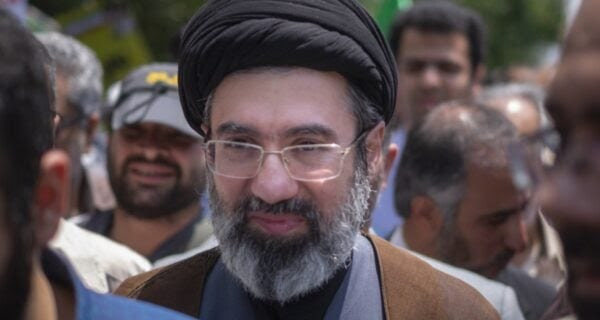
President Donald Trump said Thursday that he must have a role in selecting Iran’s next supreme leader following the assassination of Ayatollah Ali Khamenei, warning that the potential succession of the late leader’s son Mojtaba Khamenei would be unacceptable.
Speaking in a phone interview with Axios, Trump argued that Washington should participate in shaping the leadership transition now unfolding in Iran. Tehran has not yet publicly named a successor, although there is speculation that the slain leader Khamenei’s son Mojtaba may be selected.
Trump dismissed that possibility during the interview.
“They are wasting their time. Khamenei’s son is a lightweight,” Trump said. “I have to be involved in the appointment, like with Delcy [Rodriguez] in Venezuela.”
The president also said he would oppose any candidate who continued the approach associated with Iran’s previous leadership.
“Khamenei’s son is unacceptable to me. We want someone that will bring harmony and peace to Iran,” he said.
Iranian officials have delayed announcing a successor in the days since Ali Khamenei’s killing, fueling speculation about the direction of the transition.
Australian teen arrested for threatening to murder Israeli president
Iranian politicians signaled Thursday that a decision could be revealed soon.
During the interview, the president pointed to events in Venezuela earlier this year as a model for how Washington might influence political change abroad.
After US forces captured Nicolás Maduro, Venezuelan Vice President Delcy Rodriguez assumed power.
Trump later referenced the shift during his State of the Union address, calling Venezuela “our new friend and partner” and saying the United States had received more than 80 million barrels of oil since the operation.
On Wednesday, Trump again praised Rodriguez, stating that “the oil is beginning to flow” following a visit to Caracas by Interior Secretary Doug Burgum and an announcement by Rodriguez about planned reforms to Venezuela’s mining laws.
Tehran warns that it will bomb Israel’s nuclear facility in Dimona if the Islamic regime is threatened.
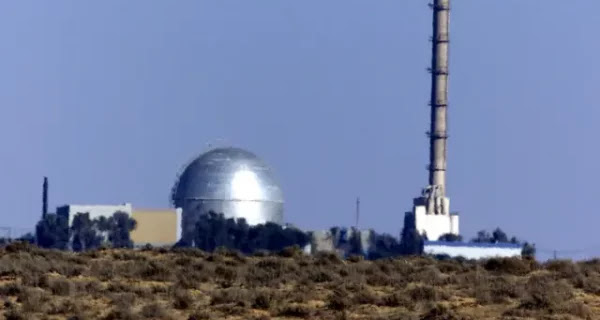
Iran warned Israel and the United States not to attempt to overthrow the Islamic Republic, stating that it will strike Israel’s nuclear research facility in Dimona if the regime is threatened.
On Wednesday, Iran’s semi-official ISNA news outlet published a report citing an Iranian defense official who said that if the US and Israel attempt to topple the Islamic Republic, Iran will strike the Negev Nuclear Research Center in southern Israel.
The NNRC is at the center of Israel’s military nuclear program,and is widely believed to have furnished the fissile material for the IDF’s nuclear warheads.
The Dimona plant is one of the most sensitive facilities in Israel and is defended by an array of air defense systems.
The Iranian military official cited in the ISNA report also warned that if the US and Israel pursue regime change in Iran, Tehran will use its “final effective missiles” to destroy energy infrastructure across the Middle East.
“This is a scenario we have already prepared for,” the official added.
While Israel has openly declared that it seeks to use its air campaign against Iran – dubbed Operation Rising Lion – to facilitate the regime’s overthrow, the Trump administration has given mixed messages on its goals for Operation Epic Fury.
President Donald Trump appeared to signal that the strikes were intended to enable dissidents to topple the government, urging the regime’s opponents on February 28 to seize the opportunity for regime change.
However, days later, Defense Secretary Pete Hegseth pushed back on the idea that the operation was intended to remove the Islamic Republic.
“This is not a so-called regime change war, but the regime sure did change, and the world is better off for it,” Hegseth said.