
Bible Prophecy, Signs of the Times and Gog and Magog Updates with Articles in the News
The Ten Greatest Challenges Facing The Church and Christianity In 2026
In many churches, 2025 looked like a year of cautious optimism. Attendance rose in pockets. Bible sales climbed. Scripture engagement surged online, especially among the young. To some, it felt like the Church was finally turning a corner after years of decline and disruption.
But beneath the surface, something else was happening.
The same year that hunger for God quietly returned, pressure against biblical faith intensified. Technology advanced faster than discernment. Governments watched more closely. Doctrine softened. Persecution raged abroad while the West largely looked away. What appeared to be recovery was, in many ways, preparation for testing.
The Church does not enter 2026 in neutral territory.
It enters carrying unresolved tensions that will no longer remain theoretical.
The Church are Drowning in Doctrines of Demons ! On some pulpits over 5 Doctrines of Demons are Preached , and some contradicting each other!
1. The Erosion of Biblical Authority–From Within the Church Itself
One of the most troubling developments of 2025 was not open hostility to Scripture, but its quiet reclassification. The Bible was increasingly treated as inspirational rather than authoritative–valuable for encouragement, but negotiable when it conflicted with cultural norms.
Sermons avoided entire categories of teaching: judgment, sexual ethics, repentance, exclusivity of Christ. Scripture was quoted selectively, often framed with disclaimers or apologies. In some seminaries and denominations, biblical authority was openly redefined as “community-informed interpretation.”
In 2026, this trend will intensify. Churches will be pressured to explain why they still believe certain passages apply at all. Once Scripture must defend itself before culture, it no longer governs belief–it merely participates in discussion.
A church that loses confidence in Scripture will not be silenced by force.
It will silence itself.
2. Government Monitoring, Surveillance, and the Quiet Redefinition of Acceptable Faith
In 2025, Western governments increasingly expanded digital monitoring under the banners of safety, misinformation control, and extremism prevention. Financial transactions, online speech, and organizational activity became easier to track, analyze, and flag.
While churches were rarely targeted directly, the framework was built. Beliefs on marriage, gender, and life were increasingly categorized as “potentially harmful,” placing biblical conviction closer to regulatory concern. Surveillance does not begin with punishment–it begins with observation.
In 2026, churches may face scrutiny not for criminal behavior, but for ideological alignment. Banking access, nonprofit status, platform visibility, and even insurance coverage could become contingent on compliance. The greatest danger is not persecution–it is preemptive obedience born of fear.
When the state begins to define which beliefs are acceptable, faith becomes conditional.
3. Doctrinal Compromise Disguised as Love and Progress
2025 offered no shortage of examples of doctrinal compromise framed as compassion. Churches hosted drag-themed Christmas celebrations. Others removed references to sin or repentance from liturgy entirely. Some openly rejected biblical teaching on sexuality, hell, or salvation while still calling themselves Christian.
These changes were not presented as rebellion, but as moral growth. Dissent was labeled harm. Faithfulness was reframed as exclusion. Over time, doctrine was not debated–it was replaced.
In 2026, this trend will sharpen. Churches that hold historic Christian teaching will increasingly be portrayed as unsafe spaces. Pastors will be pressured to affirm what Scripture forbids, or risk public backlash and institutional consequences.
Love without truth does not liberate.
It disorients.
4. Cultural Exhaustion and the Temptation to Go Silent
By late 2025, many churches were simply tired. Years of cultural conflict, political volatility, and social upheaval left leaders weary. Silence began to feel like wisdom.
But silence is not neutral. It shapes disciples just as surely as teaching does.
In 2026, exhaustion will tempt churches to avoid difficult topics altogether. Yet congregations formed without clarity will be unprepared for pressure. Retreat does not preserve unity–it postpones reckoning.
A Church that refuses to speak eventually forgets how.
5. Fragmentation Within Christianity Itself
2025 exposed deep fractures within the Church. Social media rewarded outrage over restraint. Leaders attacked one another publicly. Disagreements escalated into accusations of heresy, betrayal, or cowardice.
The result was not clarity, but cynicism.
In 2026, continued fragmentation will weaken the Church’s public witness. A divided body struggles to speak with moral authority. Unity does not require uniformity–but public hostility corrodes trust and confuses truth.
A Church that consumes itself leaves little light for the world.
6. Youth Awakening But Needing Discipleship
One of the most hopeful signs of 2025 was the surge in young people engaging Scripture. Bible apps climbed. Churches reported first-time visitors seeking meaning amid cultural instability.
But curiosity is not formation.
In 2026, without intentional discipleship, this hunger may drift into shallow spirituality, political faith, or emotional burnout. Young believers drawn by crisis must be rooted in theology, Scripture, and discipline–or the moment will fade.
Awakening without grounding creates volatility, not revival.
7. Technology as a Dangerous Substitute–or a Powerful Servant
Technology accelerated dramatically in 2025. AI-generated sermons, automated discipleship tools, livestream-only churches, and visually driven worship experiences became commonplace.
The danger is substitution. When efficiency replaces formation, depth erodes. When algorithms shape theology, the Gospel becomes content rather than truth. Technology can flatten faith into performance and consumption.
Yet technology is not the enemy. In 2025, digital tools also spread Scripture globally, amplified underground churches, connected persecuted believers, and drew seekers who would never step into a sanctuary.
In 2026, the question will not be whether churches use technology–but whether technology serves theology or replaces it.
Tools can extend the Gospel.
They must never redefine it.
8. Escalating Christian Persecution Abroad–and the Global Warning It Sends
Nigeria remained one of the deadliest places in the world to be a Christian in 2025. Churches were attacked, pastors kidnapped, villages destroyed, and believers murdered with little international attention. This was not sporadic violence–it was sustained persecution.
What was most alarming was the global silence.
At the same time, antisemitism surged worldwide–on campuses, in protests, and across digital spaces. Jewish communities faced threats, vandalism, and intimidation. The connection is clear: hostility toward biblical faith is no longer hidden.
In 2026, the Church must recognize that persecution abroad is not distant–it is instructive. Violence begins where belief is dehumanized. Legal pressure often follows where violence is tolerated elsewhere.
Ignoring persecution dulls discernment.
9. Leadership Burnout and the Quiet Collapse of Shepherds
Behind outward growth in 2025 was a hidden crisis: exhausted pastors carrying impossible expectations with little support. Cultural hostility, legal uncertainty, and constant scrutiny drained resilience.
Many simply endured.
In 2026, endurance without restoration may give way to collapse–moral failure, emotional breakdown, or abandonment of ministry altogether. A Church that celebrates growth while neglecting its leaders will eventually lose both.
Healthy churches protect their shepherds.
10. Fear of Man Replacing Fear of God
This is the thread running through every challenge.
In 2025, many churches knew what Scripture taught but chose silence to avoid backlash. What began as caution hardened into habit. Over time, obedience was postponed for safety.
In 2026, the cost of faithfulness will rise. The Church will face moments where obedience carries consequences. Fear of man produces retreat and compromise. Fear of God produces courage and clarity.
Only one sustains the Church.
A Different Kind of Year Ahead
The challenges facing the Church in 2026 are not signs of collapse. They are signs of exposure.
Comfort is ending. Neutral ground is shrinking. The Church will not be judged by its intentions, but by its convictions under pressure.
The future will belong not to the loudest churches–but to the clearest ones.
Not the safest–but the faithful.
And the time to prepare for what lies ahead this year is now.
The Dragon Now Control Silver . What will the Eagle Wings do?
Silver’s Strategic Surge: What It Means For The U.S. Dollar And American Wallets

In 2025, silver quietly became one of the hottest commodities on the planet. Prices have surged to levels not seen in decades, and the reasons go far beyond investor speculation. Behind the headlines lies a story of supply shortages, surging global demand, and geopolitical strategy — a story that could reshape the world economy and touch the average American in ways most don’t yet realize.
Silver isn’t just a shiny metal for jewelry or coins. It is the backbone of modern technology. Solar panels, electric vehicles, advanced electronics, medical devices, and even military systems rely heavily on silver. Every solar panel installed and every EV battery produced consumes silver that cannot be easily replaced. With energy transitions accelerating worldwide and electronics multiplying in homes, factories, and cities, demand for silver is skyrocketing — and supply is struggling to keep up.
But there’s another, more strategic player in this story: China. Starting in 2026, China will enforce strict new rules on silver exports. Only state-approved companies will be allowed to sell refined silver abroad, giving Beijing effective control over who gets access to this vital resource. And even silver mined elsewhere often ends up in Chinese refineries before it can enter the global market, giving China leverage over the entire supply chain. This is no different from what Beijing has done with rare earth materials — the metals behind electronics and defense systems — where it now controls roughly 85% of global supply.
This concentration of power has profound consequences. When supply tightens and demand continues to rise, China effectively becomes the gatekeeper of a metal that drives the modern economy. Prices for silver could continue to climb, affecting everything from the cost of electronics and solar panels to industrial manufacturing around the globe. Americans may not hold silver coins in their wallets, but they already feel the effects in higher prices for products that rely on silver — and this is just the beginning.
Generational Shift In The Church As More Young People Attending Than Seniors
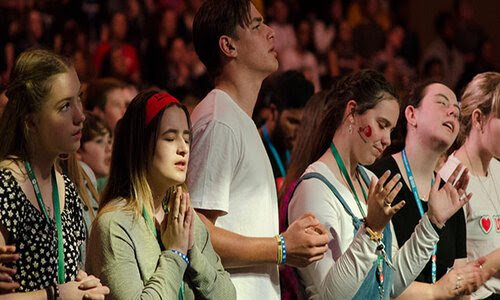
America experienced major changes in the spiritual life of its people in 2025, and the most important of them — the surge in church attendance being led by Gen Zers and Millennials — was also the least expected, according to the Texas-based Barna survey research firm.
Not only are young people leading the growing congregations on Sunday morning, but 2025 is the first time ever since Barna first began tracking such activities that older people are not the most frequently seen people sitting in the church pews, the group found.
“Millennials and Gen Z Christians are attending church more frequently than before and much more often than are older generations. The typical Gen Z churchgoer now attends 1.9 weekend per month, while Millennial churchgoers average 1.8 times, a steady upward shift since the lows seen during the pandemic,” Barna reported in a September 2025 analysis.
2 WEEKS LATER
2 WEEK LATER
What Happened in Venezuela’: Israeli ministers praise US capture of Maduro.
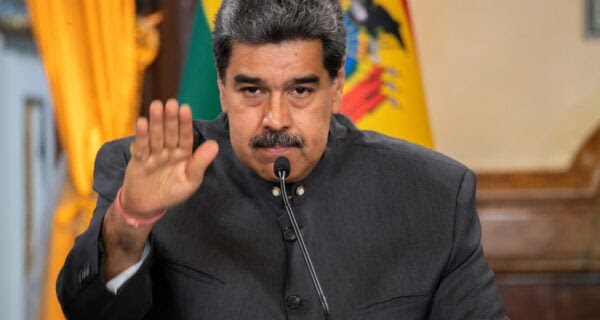
Israeli officials on Saturday welcomed the US operation that ended with the capture of Venezuelan President Nicolás Maduro, praising President Donald Trump for what they described as decisive action against a regime tied to drugs and terrorism.
Foreign Minister Gideon Sa’ar commended the operation, saying it was “led by President Trump, [who] acted as the leader of the free world.” Sa’ar said Israel stood “alongside the freedom-loving Venezuelan people, who have suffered under Maduro’s illegal tyranny,” and welcomed the removal of what he called “the dictator who led a network of drugs and terror.” He added that Israel hoped for the return of democracy in Venezuela and the establishment of friendly relations between the two countries.
“The people of Venezuela deserve to exercise their democratic rights,” Sa’ar said. “South America deserves a future free from the axis of terror and drugs.”
Deputy Foreign Minister Sharren Haskel echoed that message, stressing Israel’s alignment with Washington. “The United States is Israel’s strongest ally. We support America’s right to defend itself and enforce its laws,” she wrote on X. Haskel accused Maduro of leading “a terrorist regime, propped up by Iran,” and said Venezuela had been used “as a platform for Hezbollah’s drug trafficking, money-laundering and terror networks.”
From the opposition, leader Yair Lapid framed the events as a broader warning to Tehran. “The regime in Iran should pay close attention to what is happening in Venezuela,” Lapid wrote, as tensions between Washington and Iran continued on multiple fronts.
The US military action began in the early hours with airstrikes and culminated in the capture of Maduro and his wife, Cilia Flores, Trump said on Truth Social.
He added that both were flown out of Venezuela. Trump has accused Maduro of running a narco-terrorist state, a charge US officials say formed the basis for the operation and subsequent criminal proceedings.
Iran sharply criticized the move. The Iranian Foreign Ministry said the attack constituted “a clear violation of the fundamental principles of the UN Charter and international law,” warning that its implications threatened the international order. Israeli officials, however, portrayed the outcome as a turning point against what they see as an Iran-backed network operating far beyond the Middle East.