
Preparing To Stand Alone: Israel’s Strategic & Prophetic Shift
Something profound is happening beneath the surface of one of the world’s most enduring alliances. It isn’t marked by dramatic speeches, broken treaties, or public ultimatums. Instead, it is unfolding quietly — through budget decisions, weapons manufacturing plans, and a subtle reordering of trust. The relationship between the United States and Israel is not ending. But it is changing. And for those watching history through a biblical lens, the shift feels uncannily familiar.
For nearly eight decades, the U.S.-Israel bond has been one of modern history’s most remarkable partnerships. America stood with Israel from its earliest days, and over time that support hardened into an institutional alliance. Military aid became the centerpiece — not merely as charity, but as strategy.
Roughly $3.8 billion annually has flowed to Israel in recent years, primarily earmarked for defense. Much of that money, by design, cycles back into American defense firms producing jets, missiles, radar systems, and munitions. The relationship strengthened both nations — Israel gained security guarantees, and the U.S. sustained a powerful military-industrial ecosystem.
Beyond governments, the alliance was reinforced by people — particularly American Christians. Evangelicals, in particular, have been among Israel’s most steadfast supporters, seeing the Jewish state not only as a strategic ally but as part of a larger redemptive story. Support for Israel was once one of the rare bipartisan moral constants in American politics.
That consensus, however, is cracking.
On the American right, a growing faction of conservatives now questions the necessity of continued aid. Figures like Senator Rand Paul argue that Israel is a wealthy, technologically advanced nation fully capable of defending itself. For them, the issue isn’t hostility toward Israel — it’s sovereignty, fiscal restraint, and resistance to endless foreign entanglements. In their view, aid creates dependency, and dependency invites interference.
Ironically, Israel has come to a similar conclusion — from the opposite direction.
Over the past two years, Israeli leaders have learned a sobering lesson: aid is never free. Assistance comes with expectations, pressure, and sometimes restraint. During the Biden administration, weapons deliveries became political tools, slowed or scrutinized amid disagreements over Gaza and broader regional strategy. Even when aid ultimately arrived, the message was unmistakable — support could be conditioned, delayed, or leveraged.
That reality has pushed Israel toward a historic pivot.
Prime Minister Benjamin Netanyahu recently announced a sweeping, decade-long plan to invest more than $100 billion into building an independent Israeli munitions and defense manufacturing base. The stated goal was clear: reduce reliance on all external suppliers — including friends. Israel is accelerating domestic production of ammunition, weapons systems, and strategic materials. This is not a symbolic gesture. It is a declaration of intent.
Israel is preparing for a future where it may stand increasingly alone.
This doesn’t mean abandoning the U.S. alliance. Israeli officials have floated the idea of replacing traditional aid with joint defense initiatives — partnerships rather than patronage. Cooperation without control. Collaboration without conditions. But make no mistake: the era of unquestioned reliance is ending.
For students of biblical prophecy, this development raises a striking question. America — despite its global power — is notably absent from end-times Scripture. Nations like Persia, Magog, and others are named. Israel stands at the center. But no superpower ally comes riding to the rescue. In Ezekiel 38, Israel faces invasion largely alone — and it is God Himself who intervenes.
For decades, many wondered how that scenario could ever align with a world dominated by American influence. Why would the United States not appear? Why would it not intervene?
Perhaps we are beginning to see how.
As America grows more divided, more inward-focused, and more ideologically fractured, support for Israel is no longer guaranteed. The Democratic Party base has moved sharply away from reflexive backing of Israel, increasingly viewing it through the lens of colonialism and power imbalance rather than shared values. A future administration shaped by that worldview may have little appetite for defending Israel diplomatically — let alone militarily.
Israel, it seems, is preparing for that possibility.
This is not panic. It is prudence. It is a nation forged in survival recognizing that in the most critical moments of history, alliances can falter. Treaties can weaken. Public opinion can shift overnight. And when that happens, only God — and national resolve — remain.
The U.S.-Israel relationship is not collapsing. But it is maturing into something leaner, less sentimental, and more sober. A friendship no longer built on dependency, but on mutual respect and clear-eyed realism.
Whether one views this moment politically or prophetically, the implications are undeniable. Israel is positioning itself for a future where it answers first to its own people — and ultimately, to God alone.
And in that quiet repositioning, Scripture watchers may be witnessing not the weakening of Israel’s security — but the alignment of history with prophecy.
SIGNS OF THE TIMES
Pharmakeia: The World’s Seniors Are Being Overmedicated Into Oblivion

So many seniors that were once so full of life are now just shadows of their former selves. It can be really easy to assume that they are “just getting old” and that nothing unusual is happening to them. But the truth is that in so many cases the reason why America’s seniors are shutting down is because they are simply being overmedicated.
Our entire medical system has been designed to push pills, and so when our seniors seek medical help that is usually the solution that they are offered. As you will see below, the proportion of our seniors that are on at least 8 pharmaceutical drugs is truly alarming.
Of course those that consume pharmaceutical drug cocktails on a daily basis for an extended period of time are quite likely to experience very serious consequences.
Most people don’t realize that modern terms such as “pharmacy” and “pharmaceutical” originally come from the Greek word “pharmakeia”…
The word “pharmacy” has a fascinating origin story that’s as complex as the practice itself.
It comes from the Greek word “pharmakeia”, which referred to “the practice of the druggist”. But here is the twist: “phármakon”, the root of the term, was a double-edged sword – it meant a plant or herb that could be used for either healing or harmful purposes, blurring the line between medicine and poison.
No society in the entire history of the planet has taken “pharmakeia” to the extremes that we have.
We are the most drugged nation that the world has ever seen, and this is particularly true for our seniors.
The Wall Street Journal recently interviewed an 83-year-old woman named Barbara Schmidt that has “filled prescriptions for more than a dozen different drugs in the past year”…
For years, Barbara Schmidt’s family feared an illness was behind a pattern of terrifying falls that repeatedly landed the 83-year-old great-grandmother in surgery with broken bones. Instead, Schmidt’s frequent tumbles might have been tied to something else: medications intended to make her better.
Schmidt, who lives with her husband of 65 years in Lewes, Del., filled prescriptions for more than a dozen different drugs in the past year, according to pharmacy and medical records.
After taking so many medications in such a short period of time, it really is a miracle that she is still alive today.
But she is far from alone.
The Wall Street Journal discovered that one out of every six seniors that is enrolled in Medicare’s drug benefit has been prescribed at least 8 different pharmaceutical drugs…
That isn’t unusual for America’s seniors, according to a Wall Street Journal analysis of Medicare data. One in six of the 46 million seniors enrolled in Medicare’s drug benefit, which pays for most drugs taken by older Americans, were prescribed eight or more medications.
Millions upon millions of our seniors are literally being drugged into oblivion.
One of the problems is that seniors often visit multiple physicians, and that can result in a lot of confusion…
Pharmacists who work with seniors say doctors might not be aware of their patients’ full medication list. Patients don’t always mention what their other doctors have prescribed when a history is taken, and specialists might not have access to a shared medical record.
The Journal analysis found that, among seniors taking eight or more drugs, it was common for the prescriptions to come from a large number of doctors.
Of course it isn’t just seniors that are being overmedicated.
One recent survey found that 70 percent of U.S. adults are currently taking at least one pharmaceutical drug, and nearly a quarter of U.S. adults are currently taking at least four pharmaceutical drugs…
Recent CivicScience poll results reveal the picture of maintenance prescription drug use in the U.S. has shifted dramatically. The number of U.S. adults who report taking at least one prescription medication per day is now 70%, a 14 percentage-point increase from 2019 data.
Additionally, the percentage of people taking four or more prescription medications daily in the US has increased by six percentage points, from 18% to 24%. An increasing number of prescriptions equals less and less wiggle room in budgets already tightened due to inflationary prices.
It is an insanely profitable industry, and that is why we constantly see ads for pharmaceutical drugs on television.
They desperately want more “customers”, and seniors are the easiest target.
According to the official CDC website, 89 percent of Americans that are 65 years or older are currently taking at least one pharmaceutical drug…
Among adults aged ≥65 years, men (89.0%) and women (89.3%) were equally likely to take prescription medication. Prescription medication use increased with age, from 48.4% for those aged 18-44 years to 89.2% for those aged ≥65 years, and this pattern of increasing use with age was observed for both men and women.
We take more pharmaceutical drugs than anyone else in the world.
So why is our life expectancy below average compared to other industrialized nations?
I think that is a really important question.
When our seniors go to see their doctors, they are often not properly informed about the potential side effects of the drugs that they are being prescribed.
Let me give you an example.
Zoloft is the number one antidepressant in the United States, but most of those that are taking it do not realize that it has an extremely long list of side effects.
But don’t just take my word for it. The following comes from the official Zoloft website…
ZOLOFT may cause serious side effects. Call your healthcare provider right away if you have any of the following symptoms, or call 911 if there is an emergency.
1. Suicidal thoughts or actions:
ZOLOFT and other antidepressant medicines may increase suicidal thoughts or actions in some people 24 years of age and younger, especially within the first few months of treatment or when the dose is changed.
Depression or other serious mental illnesses are the most important causes of suicidal thoughts or actions.
Watch for these changes and call your healthcare provider right away if you notice new or sudden changes in mood, behavior, actions, thoughts, or feelings, especially if severe.
Pay particular attention to such changes when ZOLOFT is started or when the dose is changed.
Keep all follow-up visits with your healthcare provider and call between visits if you are worried about symptoms.
2. Call a doctor right away if you or a person you know who is taking ZOLOFT has any of the following symptoms, especially if they are new, worse, or worry you:
-thoughts about suicide or dying
-attempts to commit suicide
-new or worse depression
-new or worse anxiety
-feeling very agitated or restless
-panic attacks
-trouble sleeping (insomnia)
-new or worse irritability
-acting aggressive, being angry, or violent
-acting on dangerous impulses
-an extreme increase in activity and talking (mania)
-other unusual changes in behavior or mood
3. Serotonin Syndrome. This condition can be life-threatening and symptoms may include:
-agitation, hallucinations, coma, or other changes in mental status
-racing heartbeat, high or low blood pressure
-coordination problems or muscle twitching (overactive reflexes)
-nausea, vomiting, or diarrhea
-sweating or fever
-muscle rigidity
4. Increased chance of bleeding: ZOLOFT and other antidepressant medicines may increase your risk of bleeding or bruising, especially if you take the blood thinner warfarin (COUMADIN(r), JANTOVEN(r)), a non-steroidal anti-inflammatory drug (NSAIDs, like ibuprofen or naproxen), or aspirin.
5. Manic episodes. Symptoms may include:
-greatly increased energy
-racing thoughts
-unusually grand ideas
-severe trouble sleeping
-reckless behavior
-excessive happiness or irritability
-talking more or faster than usual
6. Seizures or convulsions.
7. Glaucoma (angle-closure glaucoma). ZOLOFT may cause a certain type of eye problem called angle-closure glaucoma. Call your healthcare provider if you have eye pain, changes in your vision, or swelling or redness in or around the eye. Only some people are at risk for these problems. You may want to undergo an eye examination to see if you are at risk and receive preventative treatment if you are.
8. Changes in appetite or weight.
9. Low salt (sodium) levels in the blood. Elderly people may be at greater risk for this. Symptoms may include headache, weakness or feeling unsteady, confusion, problems concentrating or thinking, or memory problems.
10. Sexual problems (dysfunction). Taking selective serotonin reuptake inhibitors (SSRIs), including ZOLOFT, may cause sexual problems.
There are many other drugs that literally list “death” as one of the potential side effects.
And earlier this year it was being reported that adverse reactions to pharmaceutical drugs have now become the third leading cause of death in the United States…
In 2021, the American Society of Pharmacovigilance (ASP) launched the Fourth Cause Campaign to raise awareness that adverse drug events (ADEs) were the fourth leading cause of death in the United States. Today, new data confirm a troubling and unacceptable reality–ADEs have now surged to become the third leading cause of death. An internal analysis conducted by ASP projects that adverse drug events now account for over 250,000 deaths annually, surpassing stroke and respiratory disease, making it the third leading cause of death in the United States.
What we are witnessing is truly a national tragedy.
But the big news networks aren’t going to talk much about it, because the pharmaceutical companies are their biggest advertisers.
And our politicians are unlikely to push for major reform, because the pharmaceutical companies pour vast amounts of money into their campaigns.
Money is power, and the pharmaceutical industry is absolutely swimming in cash.
If you are waiting for major change to happen, you may find yourself waiting for quite a while.
GOG AND MAGOG UPDATE
Magog / Iran president says US, Israel, Europe waging ‘full-fledged war’ on country
If Israel and the US were to attack Iran again, they would ‘face a more decisive response’, Pezeshkian warns.
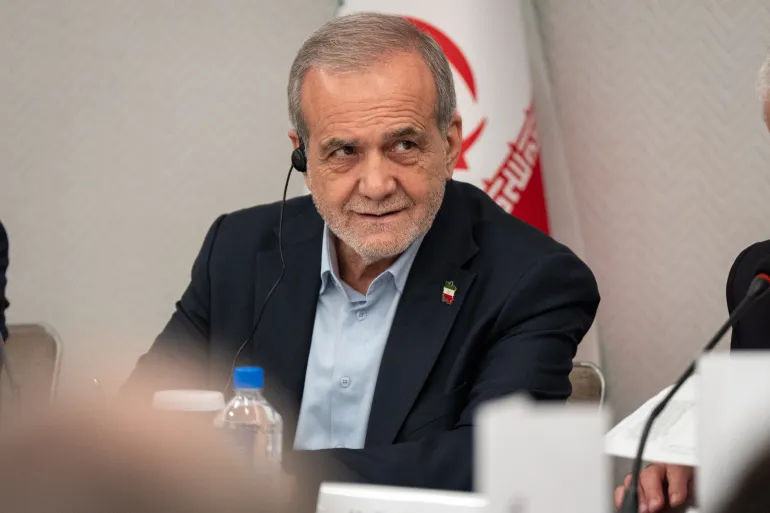
Iranian President Masoud Pezeshkian says that the United States, Israel and Europe are waging a “full-fledged war” against his country.
The president’s remarks on Saturday came ahead of Israeli Prime Minister Benjamin Netanyahu’s meeting on Monday with US President Donald Trump.
They also come six months after Israel and the US launched their 1st Attack on Iran , and after France, Germany and the United Kingdom reimposed United Nations sanctions on Iran in September over its nuclear programme.
“In my opinion, we are in a full-fledged war with America, Israel and Europe. They do not want our country to stand on its feet,” Pezeshkian told the official site of Supreme Leader Ayatollah Ali Khamenei in an interview.
“Our dear military forces are doing their jobs with strength, and now, in terms of equipment and manpower, despite all the problems we have, they are stronger than when they [Israel and the US] attacked,” he said.
“So, if they want to attack, they will naturally face a more decisive response.”