Bible Prophecy, Signs of the Times and Gog and Magog Updates with Articles in the News
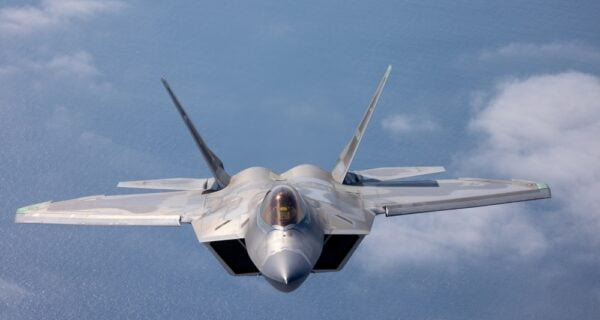
F-22 Raptors land in Israel as region stands on brink of war
The aircraft is primarily designed to penetrate contested airspace and neutralize enemy air defenses in the early stages of potential operations.
The United States has deployed a squadron of F-22 Raptor stealth fighter jets to Ovda Airbase in southern Israel, a senior official within U.S. Central Command confirmed Monday evening, in what appears to be part of Washington’s expanding military posture across the Middle East.
The aircraft arrived earlier in the day after transiting from RAF Lakenheath in the United Kingdom, supported by U.S. aerial refueling aircraft, including KC-46 Pegasus and KC-135 Stratotankers. The deployment comes as the United States continues to reinforce forces throughout the region amid rising tensions with Iran and growing concerns over potential escalation.
Stationing American combat aircraft inside Israel is relatively rare, and the deployment of the F-22 — a fifth-generation stealth fighter operated exclusively by the U.S. Air Force — is viewed by defense analysts as a particularly strong signal of readiness. The aircraft is primarily designed to penetrate contested airspace and neutralize enemy air defenses in the early stages of potential operations.
The move unfolds against the backdrop of a massive U.S. military buildup in the Middle East, which already includes multiple aircraft carrier strike groups, additional warships, and expanded air assets positioned within striking distance of Iran.
At the same time, diplomatic efforts remain underway. A third round of talks between U.S. and Iranian negotiators is scheduled for Thursday in Geneva, centered on proposals aimed at reviving a nuclear agreement. However, officials in Washington have indicated that the window for negotiations is narrowing, increasing uncertainty over whether diplomacy can prevent a broader confrontation.
While much of the F-22’s operational capability remains classified, the aircraft is widely regarded as one of the most advanced fighters in the world and has never been exported to allied nations, underscoring the strategic weight of its deployment.
With stealth aircraft, carrier strike groups, and supporting forces now assembled across the region, the military buildup increasingly resembles preparation for action rather than precaution, raising the possibility that a decision point may be approaching.
Stage set for decisive moment in Iran crisis
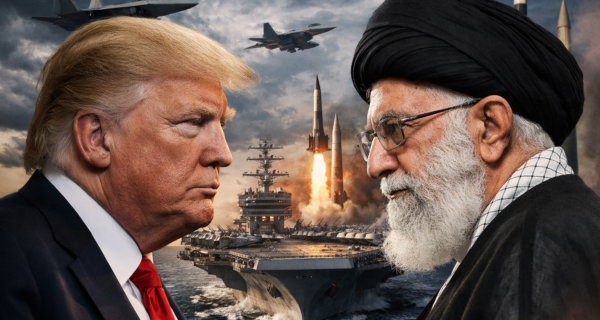
“This Thursday 26/02/2026 will decide everything – a war or a deal,” a source familiar with the talks told CNN.
As Iranian Foreign Minister Abbas Araghchi and his negotiating delegation departed Tehran en route to Geneva ahead of Thursday’s nuclear talks, a growing sense of urgency began to surround what officials increasingly describe as a decisive moment in the escalating crisis between Washington and Tehran.
The upcoming round of negotiations is widely viewed by diplomats and regional officials as a potential turning point that could determine whether diplomacy survives or the standoff shifts toward confrontation.
A senior Israeli official speaking to Channel 12 warned that expectations for a genuine diplomatic breakthrough remain extremely low.
“It would be the surprise of the year if Iran agrees to a real diplomatic solution,” the official said. “If the regime bends to American demands, it would contradict everything this regime represents.”
The official added that it would be “no less surprising” if Washington agreed to a deal perceived as cosmetic or designed merely to buy time.
Regional assessments appear similarly stark. “This Thursday will decide everything – a war or a deal,” a regional source familiar with the talks told CNN.
Another source cited by the network said that, based on recent discussions with Iranian officials, Tehran does not appear prepared to present proposals materially different from those discussed before Israel’s recent military operation, suggesting limited movement toward compromise.
IAEA chief meets Iranian FM ahead of US nuclear talks in Geneva
At the same time, the head of the United Nations nuclear watchdog issued a stark warning about the narrowing diplomatic window.
International Atomic Energy Agency Director-General Rafael Grossi said the only viable path out of the current crisis remains a negotiated agreement but cautioned that failure of diplomacy could raise the possibility of military action.
Speaking to Colombian outlet RTVC, Grossi said uncertainty surrounding Iran’s nuclear program has intensified because international inspectors have not been able to resume monitoring key nuclear facilities following the recent 12-day conflict.
“The enriched uranium stockpiles could eventually be used to make nuclear weapons,” Grossi said, emphasizing that while this does not prove Iran currently possesses nuclear weapons, the absence of inspections leaves critical questions unanswered.
He warned that Iran’s continued restrictions on IAEA oversight are creating dangerous ambiguity. “Uncertainty can lead to very serious decisions,” Grossi said.
According to RTVC, Grossi is expected to travel to Geneva to participate in the third round of U.S.-Iran negotiations, underscoring the high stakes surrounding what many officials now view as a potential last opportunity to prevent escalation.
The critical advantage of a first strike – analysis
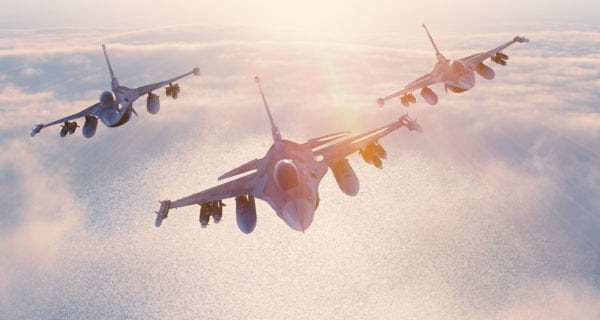
If Iran were to launch a coordinated first strike, it could overwhelm Israeli defenses, damage critical infrastructure, and disrupt the Air Force’s ability to respond.
In any confrontation involving the United States, Israel, and Iran, the question of who strikes first carries enormous strategic weight.
This is not simply a matter of military advantage but of shaping the political narrative, controlling escalation, and determining how the conflict unfolds in its earliest and most decisive hours.
In a region where missile ranges are short, warning times are minimal, and command structures are vulnerable, the opening move can define the entire trajectory of the war.
For Israel, the first strike has always been tied to survival. Iran possesses a large arsenal of ballistic missiles, cruise missiles, drones, and proxy forces positioned across the Middle East. Many of these systems are mobile, concealed, or embedded within civilian areas.
If Iran were to launch a coordinated first strike, it could overwhelm Israeli defenses, damage critical infrastructure, and disrupt the Air Force’s ability to respond.
A pre‑emptive Israeli strike, by contrast, could degrade Iran’s launchers, command centers, and air defenses before they are activated, dramatically reducing the scale of incoming fire.
From a Romanian forced labor camp to a proud IDF legacy
This logic echoes the lessons of the 1967 Six‑Day War, where Israel’s opening strike determined the outcome within hours.
For the United States, the first-strike question is tied to deterrence and alliance credibility. Washington must signal that attacks on Israel or American forces will be met with overwhelming force.
If Iran were to strike first and the U.S. responded slowly or ambiguously, it could embolden Tehran and its regional partners, undermining American influence across the Middle East.
A decisive American first strike—if triggered by clear Iranian escalation—would demonstrate resolve, protect regional bases, and prevent Iran from dictating the pace of the conflict.
For Iran, avoiding being struck first is equally critical. A U.S.–Israeli opening blow could destroy key elements of its nuclear program, cripple its air defenses, and eliminate senior IRGC commanders.
Iran’s strategy therefore emphasizes ambiguity, dispersal, and the use of proxies to complicate attribution and delay direct retaliation.
Ultimately, the importance of the first strike lies in its ability to shape the psychological and operational landscape.
In a conflict where minutes matter and miscalculation can spiral into regional war, the side that controls the opening move often controls the narrative, the tempo, and the strategic high ground.