Bible Prophecy, Signs of the Times and Gog and Magog Updates with Articles in the News
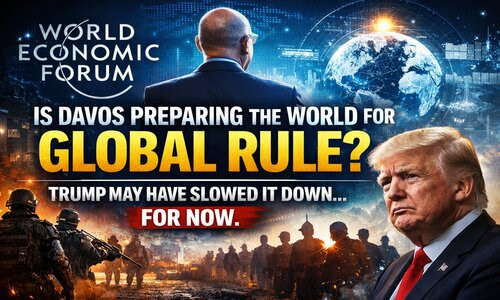
Trump vs. Davos: A Temporary Disruption To A Long-Term Global Plan
The World Economic Forum’s 56th Annual Meeting has kicked off with what Swiss daily Blick described as a “record storm” of arrivals. More than 3,000 participants from 130 countries — including roughly 65 heads of state, hundreds of CEOs, central bankers, global NGO leaders, tech titans, and media executives — descended on the small Alpine town of Davos beginning January 19. Switzerland has reportedly never handled a week of diplomatic jets, private charters, and high-level security coordination on this scale before.
That alone tells us something important: Davos still matters.
For nearly five decades, the World Economic Forum has positioned itself not merely as a conference, but as a convener of global power — a place where economic policy, environmental priorities, technological frameworks, and political narratives are aligned behind closed doors. Deals aren’t officially signed there, but directions are set. Language is agreed upon. Consensus among elites is formed. And when consensus is formed at Davos, it often finds its way into legislation, corporate policy, international treaties, and cultural norms within months or years.
That influence is precisely why Davos has become a source of deep concern — and outright fear — among many conservatives and Christians in the United States.
A Global Vision That Collides With National Sovereignty
At the heart of the unease surrounding the World Economic Forum is its openly stated ambition: global coordination, global standards, and global governance mechanisms that transcend national borders. The WEF regularly speaks of a “shared global future,” “stakeholder capitalism,” and “systems-level transformation.” To its supporters, this language signals cooperation. To its critics, it signals consolidation of power.
Americans, particularly conservatives, have long favored national sovereignty, constitutional limits, and decentralized authority. The idea that unelected global bodies — populated by corporate executives, foreign leaders, and ideological activists — might influence domestic policy is anathema to that tradition. Christians, in particular, bristle at the idea that moral, economic, and even biological frameworks could be dictated by global consensus rather than biblical conviction or democratic accountability.
Davos does not answer to voters. It does not campaign. It does not face term limits. Yet its fingerprints appear on climate mandates, ESG scoring systems, digital identity frameworks, and public-private partnerships that increasingly shape everyday life.
COVID, Climate, and the Taste of Control
For many skeptics, the COVID-19 pandemic was a turning point. During that crisis, the WEF championed sweeping lockdowns, vaccine passports, travel restrictions, and emergency powers — all under the banner of collective safety. Whether one supported or opposed those measures, the reality was clear: global coordination replaced local decision-making almost overnight.
The WEF’s infamous promotion of the “Great Reset” — a reimagining of capitalism and society following COVID — only intensified concerns. Critics saw it as an attempt to use crisis as leverage to accelerate social and economic transformation without public consent.
Environmental policy has followed a similar trajectory. Climate goals promoted at Davos often translate into energy restrictions, agricultural regulations, and financial penalties that disproportionately affect working-class families while leaving global elites largely untouched. Private jets fly into Davos by the hundreds, even as ordinary citizens are told their lifestyles are unsustainable.
To many Americans, this feels less like stewardship and more like selective enforcement — rules for the public, exemptions for the powerful.
Beyond Economics: Digital Control and Cultural Influence
Beyond health and climate, the WEF has been accused of pushing toward other forms of global control: digital currencies controlled by central banks, digital ID systems tied to financial and social access, artificial intelligence governance frameworks, and coordinated censorship policies under the guise of combating “misinformation.”
Each of these may be defensible in isolation. Taken together, they paint a picture of a world where access to money, movement, speech, and employment could one day hinge on compliance with global standards set far from the communities they affect.
For Christians who read Scripture seriously, this convergence is unsettling.
Trump: The Disruptor Davos Didn’t Expect
Enter Donald Trump.
Whatever one thinks of his personality or rhetoric, Trump represented a direct challenge to the Davos worldview. He rejected globalism in favor of nationalism. He withdrew the United States from international agreements that he believed undermined American workers and sovereignty. He questioned the authority of global institutions and refused to play the role expected of him on the world stage.
Under Trump, the U.S. pulled out of the Paris Climate Accord, challenged the World Health Organization, renegotiated trade deals, and openly criticized multinational elites. He also encouraged alternative alliances and economic frameworks that competed with the existing global order.
This was a sharp break from the Obama and Biden administrations, which largely embraced global institutions, multilateral agreements, and the language of global governance. For Davos, Trump was not merely inconvenient — he was destabilizing.
A Prophetic Pause, Not a Permanent Stop
Many Christians view Trump’s disruption not as a solution, but as a delay.
The Bible is clear that a global system of economic and political control will one day emerge, culminating in a global leader who consolidates authority in unprecedented ways. Scripture describes a world unified not by freedom, but by coercion — where buying and selling are regulated, allegiance is demanded, and resistance is costly.
The question is not if such a system will arise, but how.
Is the World Economic Forum the final mechanism? Probably not on its own. But is it helping lay the groundwork — normalizing global governance, conditioning populations to accept centralized control during crises, aligning corporate and political power — that could eventually enable such a system? Many believers think the answer is yes.
Trump may have slowed that momentum in the United States. But the ambition of Davos has not diminished. If anything, it has adapted. Without full U.S. cooperation, progress is slower — but only until political winds shift again.
The Storm Before the Storm
As Davos convenes once more amid record arrivals and unprecedented coordination, Americans would do well to pay attention — not with panic, but with discernment.
Power is gathering. Visions are being cast. And while no single meeting determines the future, the direction of travel is becoming clearer.
The storm over Davos is not just about jets in the Alps. It’s about a world wrestling over who gets to decide how humanity lives — nations and families, or global elites and institutions.
For Christians, the response is neither fear nor blind trust, but vigilance, truth, and faith — knowing that no global forum, however powerful, outruns the sovereignty of God.
Americans’ Trust In Pastors Hits Historic Low
Pastors in the United States face a culture that no longer gives them the benefit of the doubt.
Public levels of trust in pastors continue to drop, reaching a new low in 2025. In Gallup’s latest Honesty and Ethics Survey, 27% of U.S. adults say clergy members have high or very high levels of honesty and ethics–a three-point decline from 2024’s previous record low.
Half of Americans rate their honesty as average, while around 1 in 5 say it’s low or very low. Specifically, 6% give pastors a very high rating for their honesty, 21% high, 48% average, 12% low, 6% very low, and 7% aren’t sure.
While the drop in trust continues for pastors, Gallup has found a rebound in Americans’ confidence in the church. In 2025, 36% of U.S. adults said they had a great deal or fair amount of confidence in the church or organized religion, up from a low of 31% in 2022 and 32% in 2024.
27% of U.S. adults say clergy members have high or very high levels of honesty and ethics, a three-point decline from 2024’s previous record low, according to Gallup.
Broad erosion of trust across professions
Despite the continued decline, pastors still rank among the top half of professions, because trust has eroded across professions. Of the 20 careers asked about in 2025 that were previously included in the survey, 15 experienced declines.
Among a core group of 11 professions that Gallup has consistently tracked since 1999, the average positive rating reached a new low of 29% in 2025, down from 30% last year.
Currently, only nurses (75%), military veterans (67%), medical doctors (57%), and pharmacists (53%) have high levels of trust among a majority of Americans. Clergy are among the next group that Gallup categorizes as “tilt positive,” in that the high or very high ratings outweigh the low or very low ratings.
Professions considered tilt positive are high school teachers (50%), police officers (37%), accountants (35%), funeral directors (32%), and clergy (27%).
While other careers receive similar high honesty and ethics ratings as clergy, more Americans give them low ratings. These include labor union leaders (27% high v. 30% low) and journalists (28% v. 42%).
Members of Congress (7% high v. 71% low) and telemarketers (5% v. 62%) are the least trusted professions.
Continued decline for pastors
From when Gallup began rating 23 professions in the early 2000s, the honesty rating of clergy has fallen the most, down from an average of 56% in 2000-2009 to 27% today. The 29-point decline is the steepest among professions.
Previously, a broad majority of the U.S. held pastors in the highest regard. In 1985, 67% of Americans rated pastors as high or very high in honesty and ethics. After falling somewhat in the late 1980s, the ratings of pastors remained clearly above 50% for the 90s, even rising back to 64% in the aftermath of the 9/11 terrorist attack in 2001.
In early 2002, however, The Boston Globe uncovered and reported on a sex abuse scandal involving Roman Catholic priests and subsequent coverups. In the following years, additional sex abuse reports in other denominations and Christian groups were exposed. The public perception of pastors began to sour.
The last time most Americans believed clergy had high or very high honesty and ethical standards was in 2012. The rating of pastors has declined every year except one since then.
Most and least trusting of pastors
Pastors face lower levels of inherent trust among some segments of the population. Women (26%) are less likely than men (30%) to rate their honesty and ethics as high. Additionally, non-white Americans (18%) are less trusting than white Americans (33%).
Politically, Republicans (36%) have higher levels of trust than Democrats (25%) or Independents (24%). Independents are the most likely to say they rate pastors low or very low–21% compared to 15% of Republicans and 14% of Democrats.
Comparing the Republicans and Republican-leaning Independents who give pastors high marks for honesty (36%) with the Democrats and Democratic leaners who do the same (21%) reveals a 15-point trust gap, the seventh largest partisan gap.
Pastors are also less likely to find trust among younger adults, those with less formal education, and those with lower household incomes.
Pastors are less likely to find trust among Democrats, Independents, younger adults, those with less formal education, and those with lower household incomes, according to Gallup.
Almost 2 in 5 Americans 55 and older (38%) have high levels of trust in pastors compared to 24% of 35-45-year-olds and 17% of those 34 and under.
Those who are high school graduates or less (15%) are half as likely to say they have high levels of trust in pastors compared to Americans with some college (30%) or who are college graduates (38%).
Additionally, as household incomes increase, so does the likelihood of higher rankings of pastors’ honesty. Those making less than $50,000 a year (19%) are less trusting of clergy than those making between $50,000 and $100,000 (28%) and those bringing in $100,000 or more annually (34%).
‘Wipe them off the face of this earth’ – Trump responds to Iranian death threats
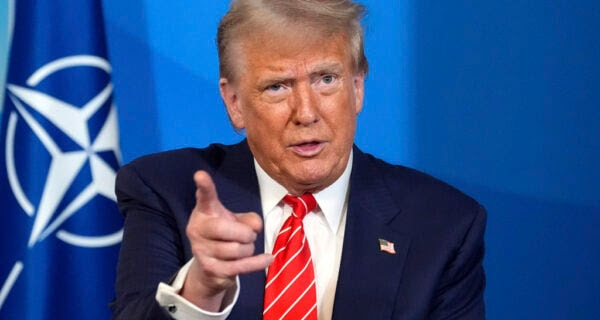
President Trump says he has left “very firm instructions” for how the US should respond if he is assassinated, warning Iran will be “hit so hard.”
President Donald Trump on Tuesday responded to threats from Iran suggesting that he could be assassinated over his support for anti-regime protesters, warning Tehran that he has directed the US military to target Iran in the event he is assassinated.
Speaking with Katie Pavlich in an interview with NewsNation, Trump was asked to comment on reports that pro-regime forces in Iran are continuing to kill protesters and to respond to threats by the Iranian government.
“They shouldn’t be doing it,” Trump said, adding that he has already ordered the military to strike Iran in the event that he is assassinated.
“But I have left notification, if anything ever happens… the whole country is going to get blown up.”
Referencing a 2024 assassination plot against him that was linked to Iran, Trump criticized then-President Joe Biden for failing to openly threaten Iran, adding that the US should be committed to retaliating with overwhelming force in the event of an assassination – even one not targeting a sitting president.
Netanyahu threatens ‘very sharp response’ if Iran attacks
“Originally, Biden should have said something, you know, when they made a statement.”
“If I were here and they were making that statement to somebody, even not a president… I would absolutely hit them so hard.”
“But I have very firm instructions, if anything happens, they are going to wipe them off the face of this earth.”
Last week, Iranian state television aired an image of the president which was widely interpreted as a veiled assassination threat.
The graphic showed Trump following the assassination attempt in Butler, Pennsylvania, in 2024, in which he was wounded. The image included the caption “This time it will not miss the target.”
Magog / Iran ready to fight ‘with everything it has’ if US strikes, says foreign minister
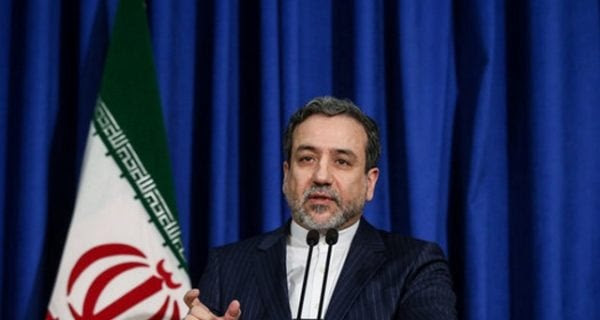
Iran’s foreign minister says that if the US strikes, Tehran will use every weapon at its disposal in response.
Iran warned Tuesday that it is prepared to respond to American strikes by using every weapon at its disposal to hit back at the United States.
On Tuesday, The Wall Street Journal published an op-ed article penned by Iranian Foreign Minister Abbas Araghchi.
In the piece, Araghchi defended the regime’s violent crackdown on protesters this month while reiterating Iran’s accusations that foreign powers have incited violence at the demonstrations.
“The violent phase of the unrest lasted less than 72 hours,” Araghchi wrote, while downplaying the regime’s mass killings of demonstrators.
Araghchi also addressed warnings by President Donald Trump that the US could intervene militarily in response to the violent crackdown.
Iran, the foreign minister warned, will not hold back in its response to an American air campaign, as it did after the one-day campaign against Iranian nuclear facilities in June 2025.
“Unlike the restraint Iran showed in June 2025, our powerful armed forces have no qualms about firing back with everything we have if we come under renewed attack,” Araghchi wrote.
Huckabee: Iran’s ultimate objective is the US
On June 23, Iran launched 14 ballistic missiles toward the American air base in Al Udeid, Qatar, in retaliation for the US strikes on Iranian nuclear facilities.
Of the 14 missiles launched, only one managed to hit the base, with the remainder either missing the target or being shot down.
No casualties or major damage were reported in the attack.
“This isn’t a threat, but a reality I feel I need to convey explicitly, because as a diplomat and a veteran, I abhor war.”
“An all-out confrontation will certainly be ferocious and drag on far, far longer than the fantasy timelines that Israel and its proxies are trying to peddle to the White House. It will certainly engulf the wider region and have an impact on ordinary people around the globe.”
IDF chief visits air base as Mideast tensions rise amid Magog / Iran threats
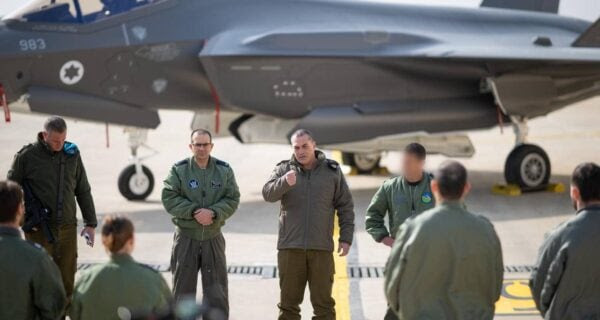
“We are prepared for different scenarios and constantly improving our capabilities in order to achieve victory in the overall campaign against our enemies,” Zamir said.
As tensions with Iran intensify amid escalating rhetoric and a growing U.S. military buildup in the region, IDF Chief of Staff Lt. Gen. Eyal Zamir visited Nevatim Air base on Wednesday to review the readiness of the base and its aircrews for a potential rapid escalation.
During the visit, Zamir examined operational preparedness and the Air Force’s ability to absorb Israel’s advanced F-35i “Adir” fighter jets, as the fleet continues to expand.
“The Air Force is the strategic arm of the IDF,” Zamir said at the base. “You are at the forefront of the offensive and defensive effort in near and distant arenas over the past two years of fighting.” He said the Air Force has gained unique combat experience in recent operations, including Operation Am Kalavi, and stressed that the IDF will apply those lessons “to ensure the security of the State of Israel at all times.”
Zamir highlighted the scope of Israeli air activity across the region, saying Air Force pilots, backed by the full range of IAF units and in cooperation with Military Intelligence, are striking “throughout the Middle East” to remove threats and protect Israeli civilians.
Governments around the world urge citizens to leave Iran immediately
“We are prepared for different scenarios and constantly improving our capabilities in order to achieve victory in the overall campaign against our enemies,” he said. “This is our responsibility and our mission.”
The chief of staff also noted that three additional F-35i aircraft joined the Israeli Air Force this week, calling their arrival “a significant milestone” in strengthening the IDF’s operational capabilities. “We will continue in the coming years to strengthen the Air Force as a strategic arm prepared to confront and defeat any challenge,” he said.
The visit comes as the United States continues reinforcing its military presence in the Middle East amid repeated Iranian threats to retaliate against Israel and U.S. bases in the region if Washington launches strikes.
The buildup includes the expected arrival of the USS Abraham Lincoln carrier strike group, the deployment of at least 12 U.S. F-15 fighter jets and four KC-135 refueling aircraft to Jordan, and additional Patriot and THAAD missile defense systems.
Open-source flight monitoring has also recorded a surge in U.S. Air Force cargo activity, with at least eight C-17 aircraft transiting through Ramstein Air Base over the past 24 hours, alongside reports that 9 to 10 aerial refueling tankers are currently en route from the continental United States toward the region.