Bible Prophecy, Signs of the Times and Gog and Magog Updates with Articles in the News
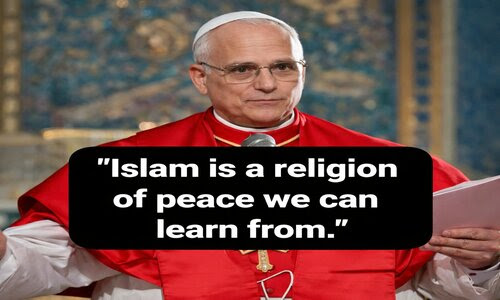
Is The Pope Sanctifying Europe’s Surrender To Islam?
When U.S. President Donald Trump sent Vice President JD Vance to negotiate with members of the Iranian regime in Islamabad, people initially thought that Vance–reportedly the most outspoken voice in the Trump administration against going to war with Iran–would be a soft touch.
When the talks in Pakistan broke down, however, Vance’s position could hardly have been tougher. Having seen the Iranian regime up close, he said, he was absolutely certain that these people must never be allowed to get nuclear weapons.
In recent days, he has again taken a position which contradicted previous assumptions about his worldview.
The MAGA movement is currently convulsed by a faction of poisonous, unhinged Jewish-conspiracy theorists, led by podcaster and political commentator Tucker Carlson. Believing that Israel drags America into needless foreign wars, they’ve been inflamed to the point of hysteria by the war against Iran.
A number of these people are Catholics who have positioned themselves against Christian Zionism, largely associated with evangelical Protestantism. Younger Catholics, particularly recent converts who reject modernity, are leaning into older, more “authentic” versions of the faith–and are thus embracing its earlier virulent antisemitism.
Vance, a passionate Catholic convert, has caused great unease among the Jewish community by refusing to distance himself from this tendency.
This past week, an explosive row was detonated between Trump and Pope Leo XIV that played straight into the MAGA convulsions.
The pope called the war in Iran an “unjust war,” which was “continuing to escalate and not resolving anything.” He said God “does not listen to the prayers of those who wage war,” that “God does not bless any conflict” and that “no cause can justify the shedding of innocent blood.”
This caused Trump to lash out. “I don’t want a Pope who thinks it’s OK for Iran to have a Nuclear Weapon” he wrote on Truth Social. “Leo should get his act together as Pope, use Common Sense, stop catering to the Radical Left, and focus on being a Great Pope, not a Politician.”
Shortly afterwards, Trump reposted an AI-generated image of himself laying his hand on a hospitalized man, producing outraged claims that he was portraying himself as Jesus.
After a few hours, Trump deleted this post. But he had needlessly put rocket fuel behind those outraged at criticism of the pope rather than at what the pope himself had said. Trump, critics claimed, had now lost the Catholic vote.
Yet Vance savaged the pope’s comments. In a discussion at the University of Georgia, the vice president responded to the pontiff’s claim that “God is never on the side of those who wield the sword” by protesting, “How can you say that?”
Referring to Catholic “just war” theory, which holds that war is justified as a last resort to prevent grave, certain and lasting damage by an aggressor, provided care is taken to protect civilian lives as far as possible, Vance declared: “There’s more than a thousand-year tradition of ‘just war’ theory. Was God on the side of the Americans who liberated France from the Nazis? Was God on the side of the Americans who liberated Holocaust camps and liberated those innocent people from those who had survived the Holocaust? I certainly think the answer is yes.”
As a number of aghast Catholics have observed, the pope’s remarks were indeed against Catholic teaching itself. They’ve also reinforced suspicions that he is leading the capitulation of the church to Islamic conquest.
While lambasting America over the Iran war during the Easter weekend, the pope said nothing about the Islamist bloodbath in Nigeria at precisely that time, when dozens of Christians were gunned down and their homes set on fire.
On several occasions, he’s expressed sorrow over the victims of repeated such massacres in Nigeria and called on the authorities to protect all citizens. But he’s never called out the Islamic world for the attempt by Islamists to exterminate Christianity itself.
While the pope attacks America for waging war against Islamists, he fails to attack Islamists for their persecution and murder of Christians. He said instead last year that people should be “a little less fearful” of Islam, and this week that “Islam is a religion of peace we can learn from.”
On his visit to Algeria, immediately after the row with Trump, he appeared to promote an alliance between Muslims and Christians by signing the “Golden Book” ceremonial guestbook in the great mosque in Algiers and declaring it “a space proper to God.”
He also praised Algeria’s “rich diversity” and spoke about the importance of reciprocal respect and respecting the dignity of every person.
He thus totally ignored Algeria’s repression of Christians. The 2026 Open Doors World Watch List says that 47 churches of the Protestant Church of Algeria have been closed by the authorities, and the list puts the country in 20th place for Christian persecution around the world.
The pope said before his Algeria trip that his aim was to build “bridges between the Christian world and the Muslim world.” But building bridges between sheep and wolves merely provides the wolves with an easier way to tear the sheep to pieces.
His condemnation of the war against Iran rather than the Iranian regime itself serves to line up the Vatican with the debauched amorality of countries such as Britain, France, Italy and Spain, which have taken a similar position.
Britain’s prime minister, Sir Keir Starmer, has adopted a particularly odious attitude. Having said the Iran conflict was “not our war” and “not in our national interest,” he then tried to cast himself as a peacemaker by flying to Saudi Arabia purportedly to negotiate a ceasefire.
While the United States is bringing Iran economically to its knees by interdicting Iranian maritime traffic in the Strait of Hormuz, thus brilliantly turning the regime’s ostensible trump card against it, Starmer is sending out invitations to a risible summit to “break” Iran’s control of the Strait.
Top of their deliberations will doubtless be what gifts to put into the party bags they’ll give the Iranians to take home with them.
Shockingly, Starmer thinks that Israel has no right to defend itself against Hezbollah in Lebanon. He told the House of Commons this week: “Israel’s strikes are wrong. They’re having devastating humanitarian consequences and pushing Lebanon into a crisis. The bombing should stop now.”
He thus presented Israel totally falsely as a wanton aggressor, ignoring the thousands of rockets that Hezbollah has been firing at Israeli civilians–with all the death and destruction they’ve caused–and that show no sign of stopping.
Starmer thinks diplomacy brings peace. But more than four decades of diplomacy with Iran have resulted in thousands of Jews, Americans and others around the world being murdered, killed and wounded; a terrorized and butchered Iranian people; and the world’s most lethal terrorist state coming to the very brink of arming itself with the nuclear bomb.
Like the pope, Starmer and his fellow European fainthearts make pious incantations of peace while leaving the targets of genocidal war to swing in the wind.
This culture of appeasement reflects the dismal fact that Britain and these European nations are now on a trajectory of cultural collapse, as their countries become steadily Islamized while they refuse to defend a historic identity they no longer respect or even recognize.
Accordingly, the pope’s position should cause the utmost dismay to all who understand the need to prevent Western civilization from disintegrating.
Since religion is the moral scaffolding of a culture, it’s essential for the church to assert itself if the West is to be defended. For decades, the Church of England has tragically been instead at the forefront of civilizational decline. Now the Pope is sanctifying Europe’s surrender to Islam.
Trump’s crude and sometimes preposterous pronouncements dismay many. People’s real concern, however, should be for the survival of the civilization that only America’s president and the State of Israel are trying desperately to defend.
Is Washington About To Replace One Iranian Tyranny With Another?
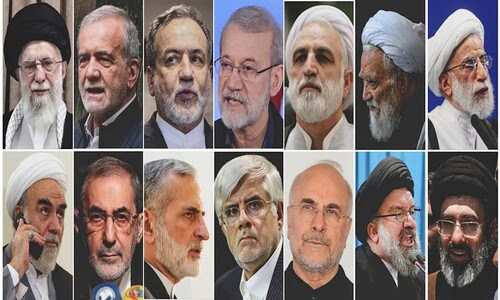
A recurring illusion in American foreign policy is that removing the most visible layer of oppression in a brutal regime, as in Haiti, Afghanistan, Libya and Iraq, is enough to claim victory. It is politically convenient and media-friendly, but in the instance of the Islamic Republic of Iran, looks to be strategically disastrous.
Today, as pressure mounts on Iran and US President Donald J. Trump signals a willingness to seize a perceived opening — most recently through a 15-day ceasefire — the same illusion is once again taking shape. The issue is no longer whether the regime in Tehran is under strain — it clearly is — but whether Washington is preparing, consciously or not, to replace a brutal clerical dictatorship with a brutal military one.
Iran has two armies. One is the “Artesh,” the regular national army that pre-dates the 1979 founding of the Islamic Republic. It presents itself as a standard professional military, and not as an ideological organization. The Artesh operates under strict government oversight, with embedded supervision that limits its autonomy. It is disciplined and not independent.
Iran’s second army is the country’s true center of power: the Islamic Revolutionary Guard Corps (IRGC), a parallel military created after the 1979 Islamic Revolution as a counterweight to the Artesh, which had previously been commanded by the Shah. The IRGC’s purpose is to defend the revolution itself. It also controls a vast business empire that accounts for a large part of Iran’s economy. It is structured with its own ground, naval and aerospace forces, and promotions depend as much on loyalty as competence.
The Basij, an auxiliary force of the IRGC, is a vast volunteer paramilitary network embedded throughout society, capable of suppressing civil dissent or protest at scale. The Basij exists to crush protests, hunt dissidents, and ensure the regime’s survival through fear and repression.
The divide is clear: the IRGC and Basij form the fanatical core, while the Artesh represents a more professional but tightly controlled layer. Neither has shown the slightest interest in any kind of liberalizing transformation.
The idea that a military structure could serve as a “moderate” transitional governing authority in Iran seems to rest on the fragile assumption that professionalism leads to moderation. Regional history says otherwise. From Egypt to Pakistan, militaries that stepped in to “restore order” entrenched their own authoritarian rule. Iran offers no reason to believe it would be different.
The former Shah’s army, the Artesh, relegated to patrolling Iran’s borders, may lack the theological zeal of the IRGC, but it has shown no commitment to dismantling the structures of repression.
Trump, for all his instinctive grasp of power dynamics, appears tempted by a shortcut — a rapid strategic win framed as geopolitical success. The reasoning is simple: weaken Iran’s regime, fracture its internal balance, and allow a more pragmatic governing authority to emerge. The plan fits a transactional worldview, but the Iranian leadership, even at levels that might seem less ideological, is nevertheless shaped by the autocracy of the past 47 years.
The Iranian people, by contrast — from the Green Movement in 2009 to the uprisings of 2017 and 2019, the protests after the death of Mahsa Amini in 2022, and even more powerfully in January 2026 — have demonstrated not just a desire for reform, but a rejection of the Islamist regime itself. Women defying compulsory veiling, students confronting armed security forces, workers striking across sectors — this is not a population asking for adjustments but a society demanding a complete break.
Any kind of real, long-term peace requires the total end of Iran’s regime, not its adaptation. The Islamic Republic unfortunately cannot be reformed, any more than could the Afghan Taliban. The regime’s legitimacy is rooted in a doctrine built on confrontation — both with the West and with its own population. Preserving any part of this ruling structure, whether through the IRGC or segments of the military, risks perpetuating the same destabilizing brutality.
Preventing Iran from acquiring nuclear weapons, while essential, addresses only one dimension of the threat. A non-nuclear authoritarian Iran remains capable of repression at home and destabilization abroad. Removing the threat of nuclear bombs does not create peace; it merely limits the scale of the potential catastrophe.
What makes the current moment so dangerous is that, if no credible alternative to the mullahs takes power — one that is rooted in popular legitimacy — the vacuum will not remain empty. It will be filled by the most organized, armed actors available — the IRGC and security apparatus — the same forces that slaughtered more than 30,000 of their own citizens on the streets in just two days.
The pattern is not new. Remove the ideological leadership in Iran, and the military leadership takes over – leading most likely to an even more unsparing grip on the unarmed Iranian people – and even more difficult to combat. The faces change, but the repression, torture and hangings stay the same.
We have seen this devastation before – in Haiti, Afghanistan, Libya and Iraq – not to mention Iran itself starting in 1979. The Iranian regime’s militaries are just as determined and deeply anchored. They are not interested in being reshaped. For Trump to declare victory based on a ceasefire, partial concessions, or the emergence of supposedly “pragmatic” actors would be catastrophically naïve.
The real danger for Washington is not failure, but the illusion of success. A deal signed, a regime weakened, a new brutal authority emerging — presented as a “solution.” It is no different from British Prime Minister Neville Chamberlain’s hapless 1938 declaration of “peace for our time.” Then, the realization that, fundamentally, nothing has changed. Trump is right to confront Iran’s regime, but the urgency to bring an end to the conflict appears to be heading toward an Iranian regime just as repressive as, or worse than, the current one.
Whatever happened to Trump’s “Help is on its way”?
To say that economic collapse will make it easier for the Iranians to change their government if they wish might sound good, but it is fantasyland. They have no weapons.
The Iranian people are not asking for a redistribution of brutality. They are asking for a new system entirely.
Will Washington recognize this distinction, or will Trump’s legacy, instead of peace, be — in Syria as well — that he simply exchanged one tyranny for another?
Would Luther Recognize This Church? ELCA’s Bishop Race Is Sign Of The Times
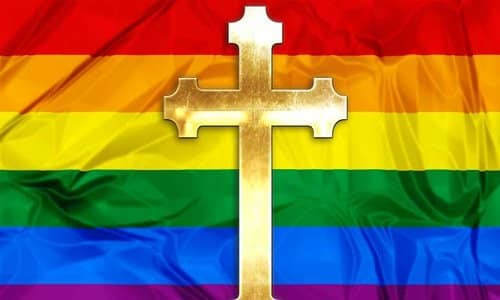
Last weekend, the Saint Paul Area Synod of the Evangelical Lutheran Church in America hosted its highly anticipated “meet the candidates” forum for the next bishop. For those still holding to historic Christian teaching, the reactions likely fell into two camps: shock–or a weary lack of surprise.
Shock, because of just how openly the candidates reflect a theological departure from Scripture. And yet, for others, no surprise at all–because this moment feels less like a sudden fall and more like the inevitable result of years of gradual drift
This was not merely a routine leadership event. It was a revealing snapshot of where the denomination stands today–and perhaps more importantly, where it is heading. Of the five candidates presented, three are in openly same-sex relationships, and all are aligned with gender-affirming theology. That reality is not incidental; it is central. The future leadership of the synod is being drawn from a pool that already reflects a decisive shift away from traditional biblical doctrine on sexuality and identity.
And then there is the setting. The forum took place at Roseville Lutheran Church–a congregation that many say tells the story of the ELCA in microcosm. Once known for more biblically grounded leadership, the church chose to remain within the denomination as it evolved. Today, it has a transgender-identifying pastor. For critics, that transformation is not just symbolic–it is deeply instructive. What was once unthinkable within Lutheran pastoral leadership is now normalized, even platformed at a major synod event.
Taken together, the candidates and the venue form a kind of theological statement. This is not a denomination wrestling quietly with difficult questions. It is one that has, in many respects, already reached its conclusions–and is now elevating leaders who embody them.
Supporters of these developments often frame them in terms of inclusion, compassion, and relevance in a changing culture. And to be clear, the Christian mandate to love others is non-negotiable. The church is called to minister to all people, including those experiencing gender dysphoria or same-sex attraction. But historically, that love has always been paired with a call to transformation–to repentance, to renewal, to alignment with God’s design rather than the redefinition of it.
That tension is at the heart of the current controversy. In the Gospel of Matthew 19:4, Jesus points back to creation itself: “male and female He created them.” For centuries, the church has understood this as foundational–not just to theology, but to anthropology. When church leaders now openly challenge or reinterpret that framework, it is not a secondary issue. It is a reworking of core doctrine.
What makes this moment particularly significant is how institutionalized these changes have become. This is not a fringe movement operating on the edges of the church. It is embedded in the leadership pipeline. Candidates are not being reluctantly tolerated despite their views–they are being advanced, presented, and seriously considered because those views align with the current trajectory of the denomination.
And that raises a difficult but necessary question: who bears responsibility for this direction?
It is easy to point to denominational leaders or seminary systems. But the reality is more complex. Churches are sustained by congregations–by individuals who attend, give, and participate. Continued engagement, even when marked by quiet discomfort, can function as a form of affirmation. At what point does staying become a statement in itself?
History offers a sobering comparison. Martin Luther did not set out to divide the church, but he refused to ignore what he saw as clear departures from biblical truth. The Reformation was born not out of convenience, but conviction. It came at a cost. And it forced believers to decide where they stood.
Today, many find themselves facing a different but related crossroads. The question is no longer whether the ELCA is shifting–that is evident. The question is how individuals and congregations will respond.
The cultural pressures shaping this moment are undeniable. Across the United States–and particularly in regions like Minnesota–views on sexuality and gender have changed rapidly. But the historic role of the church has never been to follow culture. It has been to anchor itself in truth, even when that truth is unpopular.
What unfolded last weekend was more than a candidate forum. It was a window into a denomination redefining itself in real time. For some, it represents progress. For others, it signals profound compromise.
Either way, the direction is becoming clearer–and harder to ignore.
The deeper issue now is not just who will be elected bishop. It is whether the church itself still recognizes the authority it once claimed to stand upon.