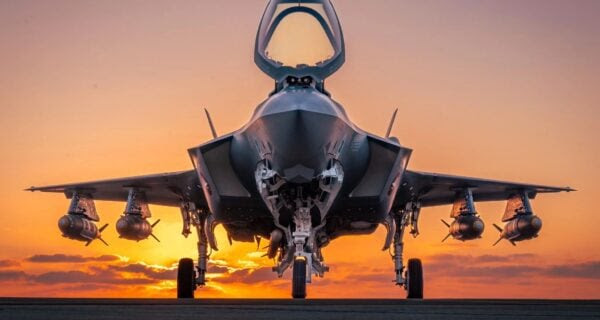
THE EAGLE (F35) OF THE MIDDLE EAST
Israel operates approximately 200+ F-16s and has 48 active F-35s.
Exact numbers fluctuate due to ongoing deliveries, maintenance, and upgrades, but the breakdown is as follows:
F-35 Fleet (Stealth Fighters)
- Active Aircraft: Israel currently has 48 F-35I “Adir” fighter jets in its operational arsenal.
- Recent Deliveries: Three jets were delivered in January 2026, finalizing an initial procurement of 50 jets.
- Future Fleet: Israel signed agreements in 2024 and 2026 to procure a third and fourth squadron. This will bring Israel’s total F-35 fleet to 75 aircraft in the coming years.
F-16 Fleet (Multi-Role Fighters)
- Active Aircraft: The Israeli Air Force operates an estimated 149 to over 200 active F-16s across several variants
- Largest Fleet Outside the US: Historically, Israel has acquired a total of more than 300 F-16s. This inventory includes a specialized, custom-adapted variant known locally as the F-16I “Sufa”
Test Everything: Discern Truth In An Age Of Signs And Wonders

One of the greatest challenges facing the modern church is not atheism, secularism, or even persecution. It is discernment.
In an age where anyone can create a ministry, declare themselves an apostle, post a testimony online, and instantly gain thousands of followers, Christians are increasingly being asked to accept extraordinary claims with little or no evidence. Too often, many do exactly that.
A recent example comes from Australia, where self-styled apostle David Vaka claimed that Jesus physically appeared during a Pentecost service on the Sunshine Coast. According to Vaka, “The King of Glory Himself turned up in person.” He described seeing Jesus wearing a massive crown and moving through the room, personally crowning attendees with kingly authority and power.
Vaka further stated that he had previously witnessed angels appearing and ministering to people, but this was the first time he had seen Jesus descend in such a manner. He also claimed God spoke through him to the city’s mayor regarding a vision to transform the Sunshine Coast into a “Kingdom City.”
Yet despite the magnitude of these claims, no photographs, video footage, independent eyewitness documentation, or verifiable evidence has been presented.
That fact alone should not necessarily cause Christians to mock or dismiss the story outright. God is capable of anything. The Bible records numerous supernatural encounters. The God who parted the Red Sea, raised Lazarus, and appeared to Saul on the road to Damascus certainly possesses the power to reveal Himself however He chooses.
The issue is not whether God can do such things.
The issue is whether Christians are obeying Scripture’s command to test such claims.
The Apostle John warned believers, “Beloved, do not believe every spirit, but test the spirits to see whether they are from God” (1 John 4:1). Notice that John does not tell Christians to automatically believe spiritual claims. Nor does he tell them to automatically reject them. He tells them to test them.
That command is more important today than ever.
The modern church often swings between two extremes. Some believers reject anything supernatural and become practical skeptics. Others accept nearly every miracle story, prophetic word, angelic visitation, heavenly encounter, or apostolic declaration without asking a single question.
Neither approach is biblical.
Discernment requires examination.
Throughout Scripture, signs and wonders alone were never considered sufficient proof that someone spoke for God. In fact, the Bible repeatedly warns that false signs and wonders will accompany deception.
Jesus Himself warned that false christs and false prophets would arise and perform “great signs and wonders” capable of deceiving many if possible (Matthew 24:24).
Paul warned that the coming of the lawless one would be accompanied by “all power and false signs and wonders” (2 Thessalonians 2:9).
The book of Revelation describes miraculous displays that persuade entire populations to follow a counterfeit religious system.
In other words, supernatural activity by itself is not proof of divine approval.
That truth makes discernment absolutely essential.
Unfortunately, many Christians evaluate claims based on emotion rather than Scripture. If the speaker is charismatic, popular, passionate, or carries an impressive title, the claims are often accepted without question.
Yet the Bible never instructs believers to trust a man because he calls himself an apostle, prophet, pastor, or evangelist.
We are told to examine the message.
Does it align with Scripture?
Does it point people toward Christ or toward the personality making the claim?
Does it exalt God’s Word or elevate mystical experiences?
Does it encourage biblical humility or create spiritual elitism?
These questions matter because deception rarely arrives wearing a name tag that says “False Teacher.” It usually comes wrapped in Christian language, accompanied by spiritual excitement, and promoted by people who appear sincere.
Perhaps one of the most concerning aspects of modern Christianity is how quickly many believers are captivated by experiences while neglecting biblical knowledge.
The Bereans in Acts 17 provide the opposite example. Even when listening to the Apostle Paul himself, they searched the Scriptures daily to verify whether what he taught was true.
Think about that.
They tested the words of an actual apostle.
Today many Christians refuse to test the words of self-appointed apostles.
The result is confusion, division, and vulnerability to deception.
As the world moves closer to the prophetic events described in Scripture, discernment will become increasingly important. Jesus repeatedly warned believers not to be deceived. That warning appears again and again because deception will become one of the defining characteristics of the last days.
Christians should remain open to God’s supernatural power. We should believe He still works miracles. We should never place God inside a theological box.
But neither should we abandon discernment.
Every testimony should be tested.
Every prophecy should be examined.
Every spiritual claim should be weighed against Scripture.
Truth does not fear investigation.
And in a time when signs and wonders increasingly dominate Christian headlines, believers must remember that our ultimate authority is not an experience, a vision, a miracle claim, or a self-proclaimed apostle.
It is the unchanging Word of God.
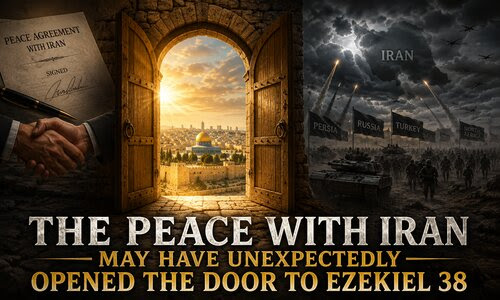
The Peace With Iran May Have Unexpectedly Opened The Door To Ezekiel 38
For much of the past year, Israel has achieved what many believed was impossible.
It has battered Iran’s military infrastructure. It has weakened Hezbollah. It has struck deep into Iranian territory. It has demonstrated intelligence and military capabilities that few nations on earth can match. Even many of Israel’s critics would acknowledge that the Jewish state emerged from this conflict having inflicted tremendous damage on its enemies.
And yet, despite all those battlefield victories, Israel now finds itself confronting a strategic paradox.
It may have won the war, only to discover that the peace is far more dangerous.
The emerging U.S.-Iran agreement championed by President Trump has been met with widespread skepticism and outright hostility across much of Israel’s political spectrum. Israeli media outlets, opposition leaders, security analysts, and even members of Netanyahu’s own coalition have criticized the agreement as one that leaves many of the core threats facing Israel unresolved.
Reports indicate that key issues such as Iran’s missile arsenal, support for regional proxy groups, and aspects of its nuclear program may remain outside the scope of the current negotiations.
That is the heart of Israel’s dilemma.
Iran has been weakened, but not defeated.
Its military capabilities have been degraded, but not eliminated.
Its missile stockpiles remain significant. Its drone capabilities remain intact. Its proxy network has been damaged but not dismantled.
Hezbollah is perhaps the clearest example. Israel has succeeded in pushing the terror organization farther away from its northern border and has dramatically reduced its operational freedom. Yet Hezbollah still exists. Its leadership structure remains. Its fighters remain. Its ideology certainly remains. Even today, Israeli leaders insist that they will retain freedom of action in Lebanon because they do not trust that the threat has disappeared.
From a military perspective, Israel achieved much.
From a strategic perspective, the outcome is far murkier.
The deeper concern emerging in Jerusalem is not simply the agreement itself but what it reveals about the future of U.S.-Israel relations regarding Iran.
For years, Israeli governments operated under the assumption that they could influence American policy through Congress, public opinion, and longstanding alliances in Washington. During the Obama years, Prime Minister Benjamin Netanyahu openly challenged the White House over the Iran nuclear deal. He addressed Congress. He mobilized supporters. He fought publicly against policies he believed endangered Israel.
Today the situation is very different.
President Trump remains enormously influential within both the Republican Party and among evangelical Christians who have traditionally been some of Israel’s strongest supporters. Yet Trump’s priorities are increasingly centered on American economic interests, energy stability, avoiding prolonged wars, and securing diplomatic agreements that can reduce regional instability.
Those priorities do not always align perfectly with Israel’s security calculations.
Israeli analysts increasingly fear that once the agreement is signed on Friday, any future Israeli military action against Iran could be viewed in Washington as an effort to sabotage American diplomacy.
That reality leaves Israel with fewer options than it has enjoyed in decades.
Ironically, Netanyahu may find that challenging Obama was easier than navigating Trump.
Obama could be opposed publicly.
Trump is far more difficult to confront because many of Israel’s traditional allies in Washington are reluctant to challenge him directly. Even strong pro-Israel voices appear cautious about publicly criticizing the president’s approach.
Meanwhile, Iran may emerge from this arrangement with substantial economic relief while surrendering relatively little of its long-term strategic position. If sanctions are eased, investments resume, and trade routes reopen, Tehran could gain valuable breathing room to rebuild capabilities over time. Critics inside Israel fear exactly that outcome.
This is why many Israelis are viewing the agreement not as the culmination of victory but as the beginning of a new and uncertain chapter.
Yet for Christians who study Bible prophecy, there is another layer to this story.
The book of Ezekiel describes a future scenario in which Persia—modern-day Iran—again emerges as part of a coalition that ultimately moves against Israel. The remarkable aspect of Ezekiel 38 and 39 is not merely that Israel faces overwhelming threats. It is that God repeatedly emphasizes that He Himself intervenes to save His people.
Not America.
Not NATO.
Not military alliances.
God.
That does not diminish the importance of the U.S.-Israel relationship. The United States remains Israel’s most important ally and the partnership has produced enormous benefits for both nations.
But Scripture reminds us that Israel’s ultimate security has never rested in Washington, London, or any earthly capital.
Perhaps that is one of the lessons emerging from today’s events.
The war exposed a growing gap between America and Israel regarding how to handle Iran. It demonstrated the limits of Israeli influence over U.S. decision-making. It revealed how quickly geopolitical priorities can shift.
Most importantly, it showed once again that no alliance is permanent and no political arrangement is guaranteed.
Israel may have won significant victories on the battlefield.
But the long-term strategic questions remain unanswered.
And if Ezekiel is correct, the next confrontation with Iran may arrive under very different circumstances—with Israel discovering that the ally it once relied upon is no longer willing to fight the same battle.
That is why the ultimate lesson of this moment is not about military power, diplomacy, or oil prices.
It is about where Israel places its trust when the next crisis comes.