Bible Prophecy, Signs of the Times and Gog and Magog Updates with Articles in the News
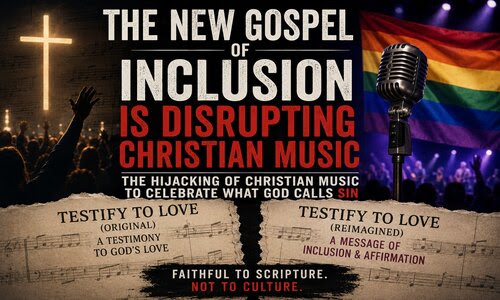
The New Gospel Of Inclusion Is Disrupting Christian Music
For generations, Christian worship music has served a sacred purpose. It was never primarily about entertainment, self-expression, or cultural relevance. Worship was designed to direct hearts toward God, proclaim biblical truth, encourage believers, and point sinners to the saving grace of Jesus Christ. The greatest Christian songs endure because they exalt God rather than man. They remind us of who He is, what He has done, and our need for repentance and redemption.
That is why the growing trend of reworking Christian songs into vehicles for affirming lifestyles contrary to Scripture is so troubling.
The latest example comes from the rerelease of the beloved contemporary Christian hit “Testify to Love.” Nearly three decades after the song became one of the defining anthems of Christian radio, former Avalon member Michael Passons has partnered with country artist Ty Herndon and singer Melissa Greene to create a new version featuring LGBTQ themes.
Passons, who publicly came out as gay in 2020, described the project as a “full-circle moment” after leaving Avalon years earlier. Supporters have praised the song as an anthem of inclusion, healing, and affirmation for those who have experienced what is often called “religious trauma.”
But Christians must ask an important question: inclusion into what?
The issue is not whether God loves every person. Scripture repeatedly affirms that He does. The issue is whether Christian worship music should be used to affirm behavior that Scripture consistently identifies as sinful.
The answer is no.
The Bible teaches that all people are sinners in need of salvation. Whether the sin is greed, pride, lust, adultery, drunkenness, or homosexual behavior, God’s call is always the same: repentance and transformation through Christ. Christian music has historically reflected that message. The goal was not to reassure people in their sin but to lead them out of it.
Yet increasingly, some artists appear determined to redefine Christian music’s purpose. Instead of pointing people toward God’s standards, they seek to reshape God’s standards around modern cultural values.
What makes the controversy surrounding “Testify to Love” even more significant is that the reworked version reportedly surged to No. 1 on the iTunes Christian chart shortly after its release. Supporters celebrated the achievement as evidence that attitudes within portions of the Christian music audience are changing and that a growing number of listeners embrace a more inclusive vision of faith.
But the chart success raises a more sobering question. How many listeners fully understand the theological shift taking place beneath the surface?
Many Christians hear a familiar melody and remember the song’s original message without realizing that it is now being presented within an entirely different framework. What was once a testimony to God’s transforming love is increasingly being used as a symbol of affirming identities and lifestyles that historic Christianity has consistently taught require repentance. The debate is no longer occurring on the fringes of Christian culture. It is now reaching the very charts and platforms that helped shape modern worship music for an entire generation.
Supporters of the rerelease have been remarkably candid about their broader goals. In interviews and public statements surrounding the project, many have described it as part of a larger effort to reconcile LGBTQ identity with Christianity and to challenge traditional interpretations of Scripture. In other words, the conversation extends far beyond a single song. The song itself has become a vehicle for advancing a larger theological argument–that Christianity must evolve alongside changing cultural attitudes regarding sexuality and identity.
That is why songs like “Testify to Love” are being repurposed. The objective is not simply musical creativity. It is theological revision.
By attaching LGBTQ affirmation to familiar worship songs, activists gain something powerful: emotional credibility. Music bypasses intellectual defenses and speaks directly to the heart. If beloved Christian songs can be reinterpreted through a new lens, then biblical teachings themselves begin to feel negotiable.
This strategy is not new.
One of the earliest and most influential examples was Ray Boltz. For years, Boltz was one of Christian music’s biggest stars, known for songs such as “Thank You” and “Watch the Lamb.” In 2008, he publicly announced that he was gay and later became a prominent advocate for LGBTQ acceptance within Christian circles.
Another major example is Jennifer Knapp. After years as a respected Christian recording artist, Knapp publicly acknowledged being in a same-sex relationship and became one of the most visible voices arguing that Christianity and homosexual practice can coexist without contradiction.
Former members of groups such as Avalon are now joining that same movement. The support surrounding the new “Testify to Love” project has also included encouragement from artists associated with Point of Grace and others within the broader contemporary Christian music community who have increasingly embraced progressive theological positions.
What connects many of these stories is not simply a personal struggle with sin. Every Christian battles sin. Rather, it is the public effort to redefine sin itself.
That distinction matters.
Christianity has always welcomed sinners. In fact, there are no other kinds of people. The church is filled with former addicts, adulterers, thieves, liars, idolaters, and countless others who found forgiveness through Christ. What Christianity has never done is celebrate the very sins from which Christ came to save us.
When worship music becomes a tool for affirming behaviors Scripture condemns, it ceases to function as worship. Instead, it becomes a vehicle for cultural messaging dressed in Christian language.
This is precisely why these controversies generate such strong reactions. They are not merely debates about music styles or artistic freedom. They are debates about authority.
Who gets the final word on truth?
Is it Scripture, or is it culture?
Every generation of Christians faces pressure to conform God’s Word to the spirit of the age. In previous eras, the battles centered around different issues. Today, sexuality and gender have become some of the primary fault lines.
The tragedy is that many artists who once used their gifts to proclaim biblical truth are now using those same gifts to challenge it. Songs originally written to glorify Christ are being repackaged to affirm identities and behaviors that Scripture calls people to leave behind.
Christians should respond with both conviction and compassion. We should never hate those who disagree with biblical teaching. We should pray for them, love them, and share the Gospel with them. But love does not require abandoning truth.
In fact, genuine love depends upon it.
The power of worship music is immense because music shapes what people believe. It teaches theology long after sermons are forgotten. That is why believers must be discerning about the messages attached to the songs they sing.
The question facing the church is not whether Christian music should evolve with changing culture. The question is whether Christian music will remain faithful to the unchanging Word of God.
The answer to that question will determine whether future generations are taught to testify to God’s love–or merely to humanity’s desire for affirmation.
Pride Month Has Begun – Or Did It Ever End? The Rainbow Flag That Never Comes Down.
As June begins, a familiar ritual is unfolding across much of the Western world.
Corporate logos are being transformed into rainbow-colored versions of themselves. Social media feeds are filling with Pride Month messages. Government agencies, sports leagues, entertainment companies, major retailers, and countless public institutions are once again rolling out campaigns celebrating LGBTQ identities and causes.
For millions of Americans, it has become one of the most recognizable annual events on the cultural calendar. The rainbow banners appear. The themed advertising campaigns begin. Companies that sell everything from hamburgers to banking services suddenly become eager participants in conversations about sexuality and gender identity.
Americans are told that “Pride Month” has arrived and that celebration is expected. Yet a growing number of people are beginning to ask a simple question: Has Pride Month really begun–or has it ever actually ended?
For decades, Pride Month was presented as a single month dedicated to recognizing those who identify as LGBTQ. Today, however, the movement has expanded far beyond June. What was once marketed as a month-long observance has become a year-round cultural phenomenon.
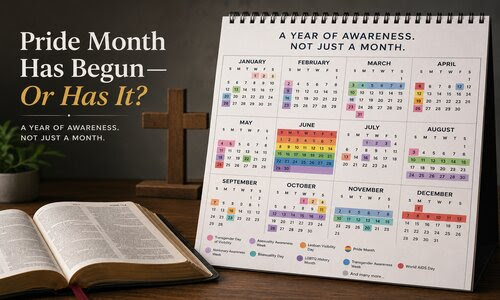
Advocacy organizations now recognize dozens of LGBTQ-related awareness days, weeks, and months throughout the calendar. International Transgender Day of Visibility is observed on March 31. International Asexuality Day follows on April 6. Lesbian Visibility Day takes place on April 26. Harvey Milk Day is celebrated on May 22. Pride Month occupies June. International Drag Day arrives in July. Celebrate Bisexuality Day is recognized in September. LGBTQ History Month fills October, along with National Coming Out Day and International Pronouns Day. November includes Transgender Awareness Week and Transgender Day of Remembrance. December begins with World AIDS Day.
The point is not to debate every date on the calendar. The point is that LGBTQ observances now stretch across much of the year. By some estimates, LGBTQ-related awareness campaigns, commemorations, and celebrations occupy nearly one-third of the calendar year.
Think about that for a moment.
One out of every three days is connected to some form of LGBTQ recognition, awareness, remembrance, or celebration.
Whether one supports or opposes the movement, it is difficult to argue that it suffers from a lack of visibility.
In fact, few groups in modern Western society receive more sustained institutional recognition than the LGBTQ movement. From corporations and universities to government agencies, sports leagues, entertainment companies, and media outlets, public affirmation has become a year-round reality rather than a month-long observance.
For many Christians, this raises an important question: When does awareness become promotion? When does tolerance become celebration? And when does celebration become ideological conformity?
The issue is not whether people should be treated with dignity and respect. Scripture teaches that every human being is made in the image of God and possesses inherent value. Christians are commanded to love their neighbors, even when profound disagreements exist.
The concern is that modern Pride celebrations increasingly demand more than tolerance. They demand affirmation.
There is a significant difference between allowing people to live according to their own choices and requiring society to celebrate those choices.
Historically, Pride events were presented primarily as civil rights demonstrations. Today, many Pride celebrations openly center around sexual identities, sexual behaviors, gender identities, and romantic preferences. Christians are left asking why sexual preference has become one of the most celebrated aspects of human identity.
Imagine if society devoted months of observances, awareness campaigns, corporate promotions, educational programs, and public celebrations to almost any other category of personal behavior. Most people would find it excessive. Yet when it comes to sexuality and gender identity, the cultural expectation appears to be endless affirmation.
The message is impossible to miss.
Corporate marketing campaigns. Public schools. Children’s programming. Professional sports leagues. Streaming platforms. Government agencies. Social media companies. Entertainment awards shows.
The celebration is not confined to June.
It is everywhere.
And for Christians attempting to raise children according to biblical convictions, that reality creates growing tension. Families increasingly find themselves navigating a culture that not only rejects biblical teachings regarding sexuality but actively seeks to replace them with an entirely different worldview.
Yet perhaps the most troubling development is not what is happening in Hollywood, corporate boardrooms, government agencies, or public schools.
It is what is happening in churches.
As June begins, numerous mainline Protestant denominations are once again preparing Pride Month worship services, Pride celebrations, Pride liturgies, and LGBTQ-themed church events. Denominations such as the United Church of Christ, the Evangelical Lutheran Church in America (ELCA), the Presbyterian Church (USA), the Christian Church (Disciples of Christ), the United Methodist Church, and The Episcopal Church have increasingly woven Pride Month observances into their annual church calendars.
Many congregations will display rainbow flags alongside crosses. Others will organize special Pride worship services, Pride-themed sermons, and public celebrations specifically affirming LGBTQ identities and relationships.
For supporters, these events are viewed as expressions of inclusion and acceptance.
For many Bible-believing Christians, however, they represent something far more serious: a reversal of the church’s historic mission.
The New Testament presents the church as a place where all sinners are welcomed but where no sinner is affirmed in sin. The Gospel invitation has always been accompanied by a call to repentance. Jesus welcomed tax collectors, adulterers, and outcasts, but His message consistently included the command to “repent and believe.”
The church’s role has never been to mirror the culture. Its role has been to proclaim truth to the culture–even when that truth is unpopular.
Yet increasingly, some denominations appear more interested in affirming contemporary sexual ideologies than proclaiming biblical teaching regarding sexuality, marriage, and holiness. What previous generations of Christians viewed as behaviors requiring repentance are now being celebrated from pulpits, incorporated into worship services, and elevated as expressions of spiritual faithfulness.
This raises a sobering question: If the church no longer calls people away from sin, what exactly is it calling them to?
Throughout history, the church has often faced pressure to conform to prevailing cultural values. The challenge facing Christians today is not entirely new. What is new is the speed and enthusiasm with which some churches have embraced ideas that directly conflict with thousands of years of Christian teaching.
A church that refuses to call sinners to repentance may attract cultural applause, but it risks abandoning the very message that gives people hope. The Gospel is not good news because it affirms us as we are. It is good news because Christ transforms us into what we were created to be.
Perhaps the most uncomfortable question surrounding Pride Month is one that advocates rarely address.
If unprecedented levels of visibility, affirmation, representation, and celebration are the answer, why do so many troubling statistics remain?
Despite extraordinary cultural support, studies continue to show elevated rates of depression, anxiety, self-harm, and suicidal ideation among those who identify as LGBTQ.
That reality should not be used to mock anyone’s pain. Every life matters. Every struggle deserves compassion.
But it does raise an important question.
If affirmation and celebration are the cure, why does the crisis persist?
Perhaps the answer lies deeper than politics, representation, or social approval.
Scripture teaches that every human being–regardless of race, background, orientation, identity, wealth, or status–shares the same fundamental problem: separation from God.
The deepest human need is not affirmation.
It is reconciliation.
The greatest crisis facing humanity is not a lack of visibility.
It is a lack of truth.
And the solution is not found in another awareness campaign, another corporate logo change, another month of celebration, or another cultural movement.
It is found in the Gospel of Jesus Christ.
This is why many Christians increasingly view Pride Month not as a simple call for tolerance, but as evidence of a culture searching desperately for meaning in identities that were never designed to carry the weight of human purpose.
The modern world tells people to look inward for fulfillment.
The Gospel tells people to look upward.
One says, “Celebrate yourself.”
The other says, “Deny yourself, take up your cross, and follow Christ.”
Those two messages are fundamentally incompatible.
As June begins, Christians should respond neither with fear nor hostility. They should respond with conviction, compassion, courage, and truth. They must refuse to compromise biblical teaching while remembering that every person they encounter is someone Christ died to save.
Because in the end, no amount of cultural celebration can heal what only the Creator can restore.
And that is something worth remembering–not just in June, but every day of the year.