Bible Prophecy, Signs of the Times and Gog and Magog Updates with Articles in the News
The Saudi ‘No’ Puts Abraham Accords Into Deep Freeze
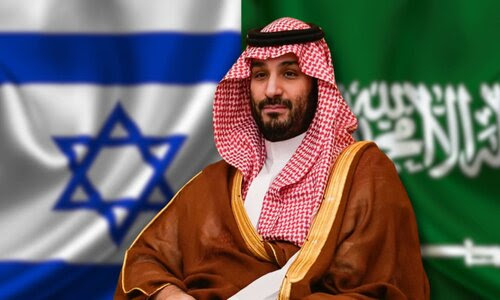
Riyadh has chosen its words with care, yet the meaning could hardly be more clear. Saudi Arabia will not recognize the State of Israel — not under the present Israeli government and — here comes the poison pill — not before the creation of an independent Palestinian state along the 1949 “Auschwitz” armistice lines, with East Jerusalem as its capital.
The Saudi foreign minister has framed this stance as a strategic principle rather than a negotiating position. A 2025 survey conducted by the Washington Institute for Near East Policy revealed that 99% of Saudi citizens view normalization with Israel as a negative development. The Abraham Accords, once touted as a breakthrough, have quietly moved, in Saudi political conversation, into the deep freeze.
Once US President Donald J. Trump, without Saudi Arabia lifting a finger, relieved the kingdom of its foremost adversary, Iran, and removed the major threat to the kingdom, what would Saudi Arabia need Israel for anyway? To the Saudis, the Abraham Accords doubtless look like an agreement signed by others, but never embraced by the one Arab power that truly mattered.
Only the packaging has changed. After the UN adopted the 1947 partition plan, the Arab League and the Arab states rejected it and opposed any form of Jewish sovereignty on any part of the land, and chose war instead of the two-state solution on offer from the international community.
In September 1967, the Arab League, at its summit in Khartoum, delivered the famous three “no’s”: no peace with Israel, no recognition of Israel, no negotiations with Israel. Notably, the declaration made no mention of a Palestinian state, which the late senior PLO official Zuheir Mohsen significantly pointed out in 1977, had not yet been invented:
“The Palestinian people does not exist. The creation of a Palestinian state is only a means for continuing our struggle against the state of Israel for our Arab unity. In reality, today there is no difference between Jordanians, Palestinians, Syrians and Lebanese. Only for political and tactical reasons do we speak today about the existence of a Palestinian people, since Arab national interests demand that we posit the existence of a distinct Palestinian people to oppose Zionism.”
Judea and Samaria were wrested in 1967 from Jordan, which had controlled those territories since 1948 without ever suggesting a Palestinian entity there, either. The Arab League’s Khartoum resolution was never truly about borders. It expressed a fundamental rejection of Jewish sovereignty on land the Arab world, guided by religious doctrine, considered permanently to be held in trust (waqf, endowment) for Allah. What has evolved since then is not the refusal itself, but the language used to express it.
Today’s Saudi position, cloaked in the vocabulary of international law and Palestinian self-determination, serves the same purpose: to make any recognition of Israel conditional on terms Riyadh knows Jerusalem cannot accept. Where Khartoum was blunt and openly hostile, the contemporary version is polished, presentable and “politically correct” in Western foreign ministries — and therefore more potent.
The kingdom no longer conceals its antisemitic undertones that accompany this repositioning. In January 2026, the Anti-Defamation League took the unusual step of issuing a public statement highlighting its alarm over the sharp rise in antisemitic rhetoric in Saudi Arabia and the growing public attacks on the Abraham Accords by prominent Saudi figures. Two weeks later, the front page of the Saudi daily Al-Jazirah labeled the United Arab Emirates a “Zionist Trojan horse” in the Arab world. Such commentary appears in outlets operating under close royal supervision, signaling what the leadership wishes to be heard.
The diplomatic record aligns with the rhetorical shift. In September 2025, Saudi Arabia and France co-hosted a high-profile conference at the UN General Assembly, where multiple countries announced their recognition of a non-existent Palestinian state. The initiative explicitly endorsed the “right of return” and sought to reinforce the legitimacy of UNRWA — the UN agency whose long-documented role in employing Hamas operatives in Gaza has raised serious questions for decades. A country genuinely interested in narrowing the gap with Israel would not spearhead an international campaign promoting outcomes that would be an existential threat to Israel. Saudi Arabia has chosen what side it is on.
Israel’s response is shaped not by ideology but by hard-won experience. The results of creating an independent Palestinian entity are already known: the experiment has already been conducted. In 2005, Israel unilaterally withdrew from the Gaza Strip — every Jewish civilian was expelled, every IDF soldier pulled out, and complete territorial control handed over to the Palestinian Authority. What followed was the emergence of a jihadist emirate, the firing of tens of thousands of rockets at civilians in Israel — a country smaller than the state of New Jersey (roughly 22,000 sq.km.) — and the horrors of October 7, 2023.
The Saudi demand is essentially that Israel repeat that same failed experiment on the hills of Judea and Samaria, overlooking Ben-Gurion International Airport and Tel Aviv, and surrounding Jerusalem on three sides. No Israeli government, regardless of its political makeup, can agree to such terms. The late Abba Eban, serving as Israel’s foreign minister, had called the pre-1967 “border” — merely an armistice line where the fighting had stopped in 1949 — “the Auschwitz lines.” Riyadh appears to understand this perfectly, which is precisely why its condition was framed as it was.
At its core, Saudi Arabia’s reluctance to recognize Israel is theological as well as a political power grab, lest Israel gain too much stature in the neighborhood. The Saudi monarch carries the title of Custodian of the Two Holy Mosques, conferring a unique religious legitimacy unmatched by any other Sunni capital. Granting formal recognition to a sovereign Jewish state in the heart of Dar al-Islam — territory historically conquered for the Muslim nation (umma) — would require conceding a doctrinal point that strikes at the very foundation of the Saudi monarchy.
The kingdom’s “Vision 2030” has modernized the surface — introducing movie theaters, allowing women to drive, and launching futuristic projects such as NEOM. It has not, however, rewritten the religious basis of the throne’s legitimacy. Saudi Crown Prince Mohammed bin Salman, whose dependence on this religious legitimacy has only grown since the Khashoggi murder, is unlikely to risk it for a normalization with a country that, since defeating Saudi Arabia’s main enemy, Iran, may now be more of a problem than a benefit. Israel’s strategic value is simply not needed anymore.
Israel, for its part, can extract a certain short-term strategic benefit from a weakened but still surviving Iranian regime. As long as Tehran continues to threaten Sunni capitals, Israel remains an indispensable regional player, and the broader architecture of the Abraham Accords retains some rationale. Yet no Israeli government will base its long-term security on such a calculation, not to mention what a betrayal it is of the Iranian people, whom Trump encouraged to give up so much in the hope of real freedom.
What comes after in Iran may prove more consequential. The Sunni world has never been monolithic. The Muslim Brotherhood, officially designated a terrorist organization by Saudi Arabia, Egypt, the United Arab Emirates, Bahrain and even Austria, continues to enjoy sponsorship and amplification from Qatar and Turkey. In January 2026, the Trump administration formally labeled the Egyptian, Jordanian, and Lebanese branches of the Muslim Brotherhood as terrorist entities, sharpening a fault line long obscured by the shared priority of containing Iran.
Turkey under President Recep Tayyip Erdoğan, although not in open conflict with Israel, currently poses a more organized threat to Jerusalem than at any point in modern history: neo-Ottoman ambitions, active military and political support for the Syria’s HTS regime, sheltering Hamas leadership, and promoting jihadist fatwas from the Qatar-based International Union of Muslim Scholars.
Qatar, meanwhile, plays an even more institutionalized double game: hosting America’s largest regional military base while protecting Hamas commanders, financing Muslim Brotherhood networks, and deploying Al Jazeera TV network as the ideological megaphone for the entire project.
Should the Iranian regime eventually collapse — whether through internal revolt or popular uprising, the longstanding rivalry between the anti-Muslim Brotherhood bloc (UAE, Morocco, Bahrain) and the Qatar-Ankara axis would inherit the central role long played by Iran. Saudi Arabia, Egypt and the UAE would then face that confrontation having lost the one common enemy that had justified their alignment. In such a landscape, they would need a capable partner possessing the technological and military edge they cannot readily develop themselves. Israel is that partner, whether or not formal recognition ever materializes.
No Arab state is prepared to recognize Israel as a Jewish state rooted in Jewish faith and history: doing so would mean accepting permanent Jewish sovereignty over land that Islamic tradition regards as territory conquered to be held in perpetuity for Islam. The Arab League’s response to the 1948 UN partition plan was a genocidal invasion of the newly born Jewish state by the armies of five Arab states. Khartoum repeated this rejection in 1967. Saudi Arabia continues the same refusal today in language carefully tailored for Western chancelleries.
October 7, 2023 showed, in the most brutal terms, what the Saudi formula produces when implemented. Israeli security cannot rest any hope on a recognition that will not come. It will depend instead on the determined elimination of the Iranian regime and its terrorist proxies when the opportunity arises, and the fight for power that might well define the Sunni world once the Shia threat no longer binds it together.
The Dangerous Illusion Of “Safe” Christian Colleges – Parents Beware

A fresh wave of graduating seniors is about to walk across high school stages this spring, diplomas in hand and dreams of the future ahead of them. For many Christian families, one of the biggest decisions now looming is where those students will attend college. And for countless parents, the assumption still remains the same: a Christian college must surely be the safest and best place for a young believer to grow academically while also deepening their faith.
After all, these schools often promise biblical values, Christian community, chapel services, faith-based learning, and professors who supposedly teach through the lens of Scripture.
But increasingly, many Christian parents are discovering a troubling reality: not every college using the word “Christian” actually upholds a biblical worldview.
As families begin researching colleges this year, they must do far more than simply glance at mission statements or trust marketing brochures. In today’s cultural climate, discernment has become essential because many institutions that still promote themselves as Christian are simultaneously embracing ideologies and practices that directly conflict with historic biblical teaching.
Over the past several years, numerous Christian universities have found themselves embroiled in controversy over LGBTQ activism, drag performances, gender ideology, and theological compromise. What once would have been unthinkable at many Christian schools is now increasingly normalized.
Baylor University, one of the nation’s best-known Baptist institutions, has repeatedly faced controversy surrounding LGBTQ issues on campus. Reports have highlighted disputes over pro-LGBTQ student events, activist groups, and growing pressure within the university to shift further away from traditional biblical teaching on sexuality. For many conservative Christian families, Baylor has become symbolic of the broader theological drift occurring inside portions of Christian higher education.
Meanwhile, some Catholic universities have gone even further, hosting “Lavender Graduation” ceremonies celebrating LGBTQ-identifying students. In several cases, reports have described drag performances connected to campus celebrations. Schools tied to these controversies reportedly include institutions such as Georgetown University, Seattle University, and Fordham University. These universities still prominently market their Christian heritage while simultaneously embracing movements many Christians believe openly contradict Scripture.
Other schools have faced similar criticism. Bethel College, a Mennonite-affiliated Christian college in Kansas, drew backlash after hosting annual drag shows on campus. Local residents and Christian critics questioned how a school rooted in historic Christian tradition could actively promote events that many believers view as fundamentally incompatible with biblical teaching. Yet defenders of the events framed them as expressions of inclusion and acceptance.
Seattle Pacific University, a historically Free Methodist university, has also become a national flashpoint in the battle over Christian identity and sexuality. Years of internal conflict erupted as students and faculty pushed aggressively for LGBTQ affirmation and policy changes while university leadership attempted to maintain traditional biblical standards. Protests, sit-ins, lawsuits, and public division followed, exposing how deeply fractured many Christian institutions have become over core doctrinal issues.
And these examples are only scratching the surface.
Many Christian parents still operate under assumptions that may have been true decades ago but are far less reliable today. They see crosses on websites, Bible verses in promotional materials, and words like “faith-centered” or “Christ-centered” in advertisements and assume the institution remains firmly grounded in biblical truth.
But appearances can be deceiving.
Years ago, Christian researchers warned that many Christian colleges were already compromising foundational biblical doctrines beneath the surface. Ken Ham and Greg Hall’s book Already Compromised documented research suggesting that many self-described Christian colleges had quietly embraced secular philosophies while continuing to market themselves as biblically faithful institutions.
According to the research, many professors at Christian colleges openly questioned the authority of Scripture, rejected biblical creation, embraced progressive theology, or promoted worldviews deeply influenced by secular academic culture.
Author Randy Alcorn later addressed what he called “false advertising by Christian colleges,” warning that many parents would be stunned if they truly understood what some professors and departments actually believed behind classroom doors.
Sadly, the problem has only intensified with time.
Today’s college campuses are not merely academic environments–they are worldview formation centers. Students are not only learning career skills. They are learning how to think about morality, sexuality, truth, identity, faith, and even the authority of God Himself.
That is why this issue matters so deeply.
Parents are not simply investing tens of thousands of dollars into an education. They are entrusting schools with the spiritual and intellectual shaping of their children during one of the most formative seasons of life.
And too many Christian families are doing so without asking hard questions.
What do the professors actually believe? What speakers are invited to campus? What student organizations are promoted? What worldview dominates the social atmosphere? How are biblical beliefs treated when they conflict with modern cultural trends? These are no longer optional questions for Christian parents–they are essential ones.
To be fair, not every Christian college has abandoned biblical conviction.
There are still schools that genuinely strive to uphold Scripture, cultivate authentic Christian community, and prepare students to serve Christ faithfully in their future careers. Strong Christian colleges still exist, and when families find the right one, the experience can be deeply valuable spiritually, academically, and personally.
A healthy Christian college can strengthen faith, encourage spiritual maturity, develop leadership, build lifelong Christian friendships, and prepare students to impact the culture rather than be consumed by it.
But families can no longer afford to assume that every institution carrying the “Christian” label actually offers that environment.
This year’s graduating seniors are entering a world filled with confusion, competing ideologies, and intense pressure to compromise biblical convictions. Sadly, some of that pressure is now coming from institutions that still market themselves as Christian.
That is why parents must do their homework carefully.
Because choosing a college is no longer simply about finding the right degree program. It is about determining who and what will shape the heart, mind, and worldview of the next generation.
Drone Supremacy: The New Arms Race Emerging From The Ukraine War
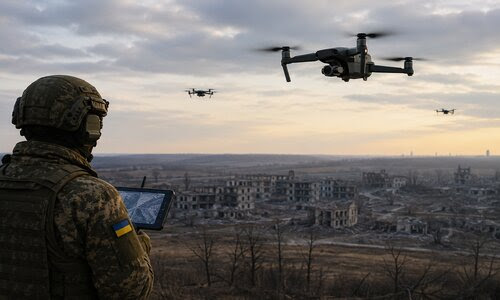
Drone warfare has become one of the defining forces of the Russia–Ukraine war, reshaping not only how battles are fought but also how territory is contested, held, and even denied without traditional infantry engagement. What began as a supporting capability has evolved into a central pillar of modern warfare—so much so that analysts increasingly describe the front lines in Ukraine not as trenches alone, but as layered “kill zones” dominated by persistent aerial surveillance and strike drones.
One of the most striking developments is the sheer scale of drone deployment. Across the battlefield, Ukrainian forces are believed to be operating tens of thousands—possibly hundreds of thousands—of drones in circulation, supported by decentralized production and rapid frontline distribution. This has enabled what military observers often refer to as a “drone wall”: a dense, overlapping network of reconnaissance and attack systems that can detect, track, and strike targets in real time. In practice, this means Ukrainian units can monitor large stretches of territory continuously, making traditional troop movements far more dangerous and expensive.
This shift has helped stall aspects of Russia’s invasion strategy in several ways. Even when Russia maintains advantages in manpower and artillery, its ability to maneuver large formations has been constrained by constant aerial observation and precision strikes. Infantry advances that once relied on surprise or massed concentration are now exposed almost instantly. As a result, some positions are effectively held or denied not by soldiers alone, but by drones that function as eyes, scouts, and strike platforms simultaneously.
In some sectors of the front, drones are even being used to assist in taking or holding territory with minimal direct infantry engagement. Small unmanned systems can drop explosives into trenches, disrupt supply lines, and force withdrawals from positions that would previously require costly ground assaults. The battlefield has become increasingly asymmetric—not in terms of armies, but in terms of visibility and reaction time.
Russia, for its part, has also invested heavily in drone warfare, but reports suggest a different strategic posture. Rather than committing all available systems to Ukraine, there are claims that Moscow is stockpiling large quantities of next-generation drones, potentially for future operations. Among the most discussed are fibre-optic FPV drones, which rely on physical cable links rather than radio signals. This makes them far more resistant to electronic warfare, a domain in which Ukraine and its allies within NATO have developed significant defensive capabilities.
According to Ukrainian and Russian intelligence reporting cited in open analysis, Russia may have diverted large numbers of these fibre-optic systems into rear depots since late 2025. Estimates suggest stockpiles could already reach around 130,000 units, with potential to grow toward 200,000 within months. In theoretical planning scenarios, some analysts have even suggested that in a Baltic theater conflict, there could be as many as four drones per NATO soldier—a figure intended to illustrate saturation rather than literal battlefield deployment ratios.
These concerns are particularly focused on the Baltic states—specifically Estonia, Latvia, and Lithuania—which some defense analysts argue could be vulnerable to rapid, high-intensity drone saturation due to their geography and proximity to Russia. The logic behind such speculation is not that drones alone could win a war, but that massed swarms could overwhelm early warning systems, disrupt command-and-control, and create shock conditions before conventional forces fully mobilize.
Reports attributed to groups such as Volya—a political analysis organization—have even suggested that elements within the Russian defense establishment view such a strategy as a way to exploit perceived hesitation among European states. These claims remain unverified, but they reflect a broader anxiety in European security circles about the pace at which drone warfare is evolving compared to defensive adaptation.
At the center of these developments is the question of where drone warfare goes next. The war in Ukraine has already demonstrated that drones can function as persistent artillery, reconnaissance networks, and psychological tools of attrition. The next phase is likely to be defined by autonomy, swarming algorithms, and counter-drone escalation cycles that evolve almost monthly.
This is where fibre-optic systems could become strategically significant. Unlike conventional drones, which rely on radio-frequency links that can be jammed or spoofed, fibre-optic FPV drones are physically tethered, allowing operators to maintain control in heavily contested electronic warfare environments. In a battlefield increasingly defined by signal disruption, that single design change can restore a decisive advantage.
One of the main reasons Russia has struggled to fully capitalize on its advantages in manpower and industrial capacity is precisely because of Ukraine’s drone-centric defensive model. Even with superior resources in some categories, Russian forces have repeatedly encountered a battlefield where visibility equals vulnerability.
Yet the evolution of drone warfare is far from settled. It is not just changing how wars are fought—it is changing what it means to hold territory at all. And as both sides accelerate production, stockpiling, and innovation, the war in Ukraine may be remembered less as a traditional conflict and more as the moment modern drone warfare became the dominant language of the battlefield.
Fallen Angels? Congresswoman Sparks Debate Linking UFOs To The Nephilim

The recent release of long-awaited UFO-related government documents has once again pulled the public imagination toward one of the most persistent and controversial questions of modern times: what exactly are unidentified anomalous phenomena, and how should they be interpreted?
The latest batch of files–released following a directive associated with President Donald Trump–includes historical State Department cables, FBI records, and NASA mission transcripts now made available through a newly launched Pentagon portal. Officials have framed the release as part of a broader push for transparency, encouraging the public to examine the material and draw their own conclusions.
Yet even as government agencies continue to emphasize caution and scientific restraint, the cultural conversation surrounding UFOs has taken a sharply different turn in some political and religious circles.
Among the most striking responses came from Rep. Lauren Boebert, who suggested that some of the phenomena described in these records may not be extraterrestrial at all–but spiritual in nature. Speaking in the context of renewed interest in UFO disclosures, she framed the issue through a biblical worldview, pointing to Old Testament references to fallen angels and the Nephilim.
“God is the creator of the universe,” Boebert said. “He’s never not going to create. So it’s always been something in my mind to say, ‘how can we be the only ones?’” She went on to connect modern unexplained sightings to ancient scripture, stating that “the Old Testament… tells us about fallen angels and Nephilim. I mean, this is in the Bible.”
Her comments extended further into speculative territory, suggesting that some encounters might involve “portals” or spiritual dimensions rather than physical spacecraft. “I wouldn’t put it as Marvin the Martian kind of thing,” she added, “but I do believe that this is more spiritual, and if you really want to go there, demonic.”
These remarks have reignited a long-running tension in the UFO debate: whether unexplained aerial phenomena should be understood strictly through the lens of aerospace technology and misidentification–or whether they intersect with deeper metaphysical or theological interpretations.
From a scientific standpoint, the Pentagon’s most recent public assessment has remained consistent. Investigators have stated they have found no verified evidence of recovered alien craft or confirmed extraterrestrial life. Many sightings, according to defense analysts, can be attributed to experimental military systems, atmospheric conditions, sensor errors, or misidentified conventional aircraft.
Still, the persistence of unexplained cases leaves space for interpretation–and in that space, theological frameworks have increasingly resurfaced.
Central to Boebert’s comments is the biblical concept of the Nephilim, a mysterious group mentioned briefly in Genesis 6:1-4. The passage describes a time when “the sons of God” and “the daughters of men” produced offspring known as Nephilim, often translated as “giants” or “mighty men of old.”
Interpretations of this passage have varied for centuries. One traditional view holds that the “sons of God” were fallen angels who interacted with humans, producing hybrid offspring–an idea later echoed in some ancient Jewish writings such as the Book of Enoch. In this interpretation, the Nephilim are seen as powerful, corrupt beings associated with violence and moral decay in the pre-flood world.
Other scholars argue the text is more symbolic or genealogical in nature, suggesting the “sons of God” may have been human rulers or descendants of Seth, with the Nephilim representing powerful or “giant-like” humans rather than supernatural hybrids. The Bible itself offers limited detail, and later passages–such as Numbers 13:33–refer again to Nephilim-like figures, describing them as unusually large and formidable inhabitants of Canaan.
What makes the Nephilim narrative particularly compelling in modern UFO discourse is not consensus, but ambiguity. The ancient text leaves room for interpretation, and in moments of cultural uncertainty, that ambiguity often becomes a canvas onto which contemporary anxieties and curiosities are projected.
This is where the UFO debate and biblical speculation begin to overlap. For some believers, unexplained aerial phenomena feel like a continuation of ancient spiritual warfare narratives–unseen forces interacting with the human world in ways that defy scientific classification. For others, such interpretations risk conflating myth, metaphor, and modern aerospace mystery in ways that obscure more grounded explanations.
Still, the cultural power of these ideas is undeniable. UFO disclosures, particularly when tied to secrecy and government classification, tend to create interpretive gaps. Into those gaps flow everything from advanced foreign surveillance theories to spiritual warfare frameworks.
What is emerging is not a single explanation, but a layered landscape of belief systems attempting to make sense of the unknown.
The release of additional UFO-related documents is expected in the coming months, and with each new disclosure, the debate is likely to intensify. Whether viewed as classified technology, atmospheric misidentification, or something more metaphysical, the phenomenon continues to resist easy categorization.
In the end, the most important question may not be what the files contain–but why humanity is so quick to reach beyond the visible world in search of meaning. For some, the answer is found in physics and defense analysis. For others, in ancient texts and spiritual frameworks like the Nephilim narrative.
And for many in the middle, the tension itself remains unresolved: a reminder that the boundary between mystery and belief is often thinner than we assume.