Bible Prophecy, Signs of the Times and Gog and Magog Updates with Articles in the News
Argentine President Arrives in Israel, Signs ‘Isaac Accords’ with Netanyahu,
Among the key announcements was the launch of a direct flight route between Tel Aviv and Buenos Aires on El Al, expected to begin operating later this year.
Argentine President Javier Milei arrived in Israel on Sunday morning for a high-profile visit that underscores deepening ties between Jerusalem and Buenos Aires.
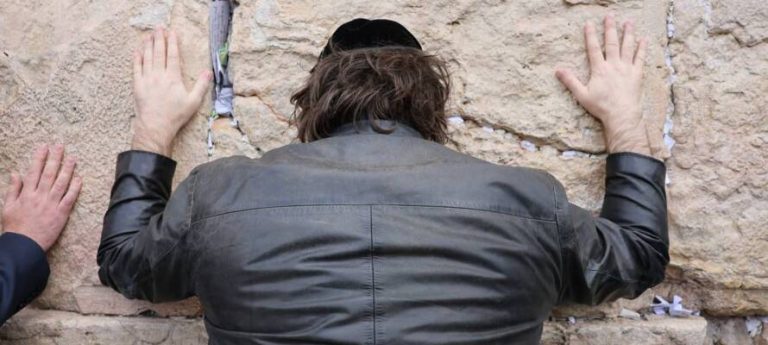
Shortly after landing, Milei visited the Western Wall in Jerusalem, marking the symbolic opening of a visit expected to combine diplomacy, public gestures of support, and historic firsts.
Later Sunday, Milei met with Prime Minister Benjamin Netanyahu in Jerusalem, where the two leaders held talks and signed a series of agreements and memorandums of understanding.
The agreements, dubbed the “Isaac Accords,” are seen as a significant step in expanding cooperation between Israel and Argentina, as part of a broader effort to strengthen ties with Latin American countries.
During the ceremony, Netanyahu warned that tensions with Iran remain high. “This is not over. At any moment, there could be new developments with Iran,” he said, adding that Israel and its allies “stand together against the great threat of Iran.”
Among the key announcements was the launch of a direct flight route between Tel Aviv and Buenos Aires on El Al, expected to begin operating later this year. The new route will significantly reduce travel time between the countries.
In the evening, Milei is set to attend a rehearsal at Mount Herzl for Israel’s Independence Day torch-lighting ceremony. He will light a torch during the dress rehearsal, with the footage expected to be broadcast nationwide after canceling his original plan to remain in Israel for the main Independence Day event.
On Monday, Milei is scheduled to receive an honorary doctorate from Bar-Ilan University and meet with families of hostages who were released from Gaza. Later in the day, he is expected to hold talks with President Isaac Herzog at the President’s Residence.
On Tuesday, Milei is expected to visit the Church of the Holy Sepulchre in Jerusalem in the afternoon before departing Israel later that night.
Milei’s visit, his third to Israel in as many years, reflects his strong alignment with Israel and the United States, and comes amid growing cooperation between the two countries across diplomatic, economic, and strategic fronts.
Strait of Hormuz Tensions Escalate Despite Trump’s Upbeat Tone,
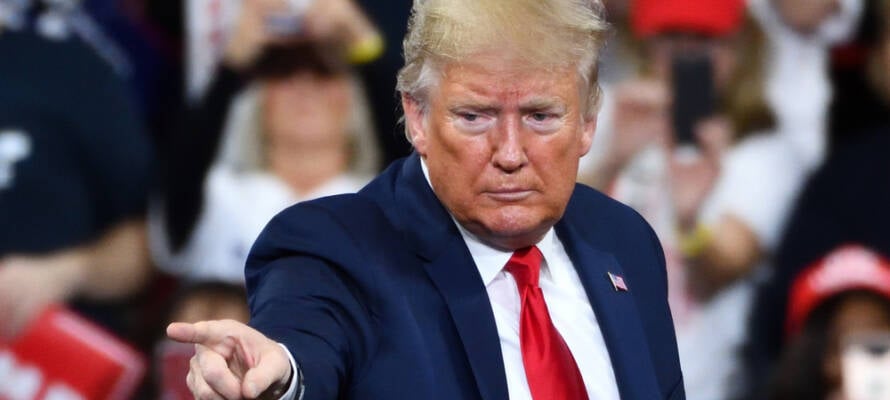
Trump hinted that Tehran will give up its 60% enriched uranium, which led to sharp reactions from Iranian hardliners.
Despite President Donald Trump striking an optimistic tone and hinting at “pretty good news” regarding Iran on April 17, 2026, tensions in the Strait of Hormuz escalated the next day, as at least two merchant vessels came under fire while attempting to transit the waterway.
The incidents happened just hours after Iran announced it was reimposing military control over the Strait, citing continued U.S. enforcement of a naval blockade on Iranian ports and what Tehran described as repeated violations.
The move reversed a brief reopening agreed to days earlier under a temporary ceasefire framework and coincided with renewed warnings issued by Islamic Revolutionary Guard Corps commanders and media, underscoring the fragility of the current pause in fighting as its expiration approaches.
In recent days, Trump has spoken of successful negotiations with some Iranian counterparts, centered around Parliament Speaker Mohammad-Bagher Ghalibaf and Foreign Minister Abbas Araghchi.
Trump hinted that Tehran will give up its 60% enriched uranium, which led to sharp reactions from Iranian hardliners. Some even called for the arrest and execution of negotiators, saying they engaged in treason.
Radical Islamist politician and former presidential candidate Saeed Jalili challenged earlier claims that the new supreme leader, Mojtaba Khamenei, has endorsed the talks and concessions to the United States.
“If all these are commands from the leader, then he should record an audio or video message and issue it publicly,” he reportedly said.
Mojtaba Khamenei has not been directly heard from or seen in public since his father was killed in the first moments of the U.S.-Israel air campaign on February 28, 2026.
Many Iranians and analysts assume he is either dead or incapacitated and that unknown elements—most likely from the Revolutionary Guard—are issuing written statements in his name.
Social media posts from prominent hardliners in Iran revealed shock and disgust over what Trump claimed were the tentative results of behind-the-scenes negotiations.
Ghalibaf himself rejected Trump’s claims in a post that some observers noted was issued after the U.S. markets closed on April 17. Some claimed that even the timing of the denial was coordinated with Washington.
Ghalibaf said the U.S. president “made seven claims in one hour, all seven of which were false”; that the United States could not “win the war with these lies, and they certainly will not get anywhere in negotiations either”; and that if the blockade continues, the Strait of Hormuz will not remain open.
Targeting of oil tankers on April 18 was an indication that either Trump made optimistic assumptions or he put Ghalibaf in an embarrassing position by claiming what amounted to be an almost complete Iranian surrender.
Whether intentionally or not, Trump’s claims put the hardcore elements of the Iranian regime in disarray.
“The handover of enriched uranium is not merely a technical nuclear concession; it is also a political-psychological blow to the pillars of deterrence and the prestige of the Velayat-e Faqih system,” an Iranian observer abroad noted.
On April 17, hardline politician Alaeddin Boroujerdi declared that Iran will not retreat from its positions, asserting that Iranian missile strikes caused extensive destruction in parts of Tel Aviv and that Tehran hit U.S. bases during the war.
He added that the United States and Israel had “begged” for negotiations early on and warned that Iran is moving to formalize measures over the Strait of Hormuz to turn it into a source of revenue.
There is also the possibility that the Iranian regime is again using “good cop/bad cop” tactics, as they did in the past during nuclear talks, by having hardliners condemn any concession.
While then-Foreign Minister Mohammad Javad Zarif was negotiating with the Obama administration, hardline figures—including Islamic Revolutionary Guard Corps commanders and conservative politicians—simultaneously issued threats, rejected concessions, and warned against trusting the West.
During the negotiations, Revolutionary Guard officials publicly expanded missile tests and criticized the talks, while then-Supreme Leader Ali Khamenei alternated between conditional backing and sharp skepticism.
This dual-track messaging allowed Tehran to maintain negotiating space: Diplomats could appear pragmatic and open to compromise, while hardliners raised the cost of failure and signaled limits—effectively reinforcing Iran’s leverage at the table.
“The Gavlan Will Be Desolate”: IDF Encircles Bint Jbeil as Ancient Gog Magog Prophecy Appears.
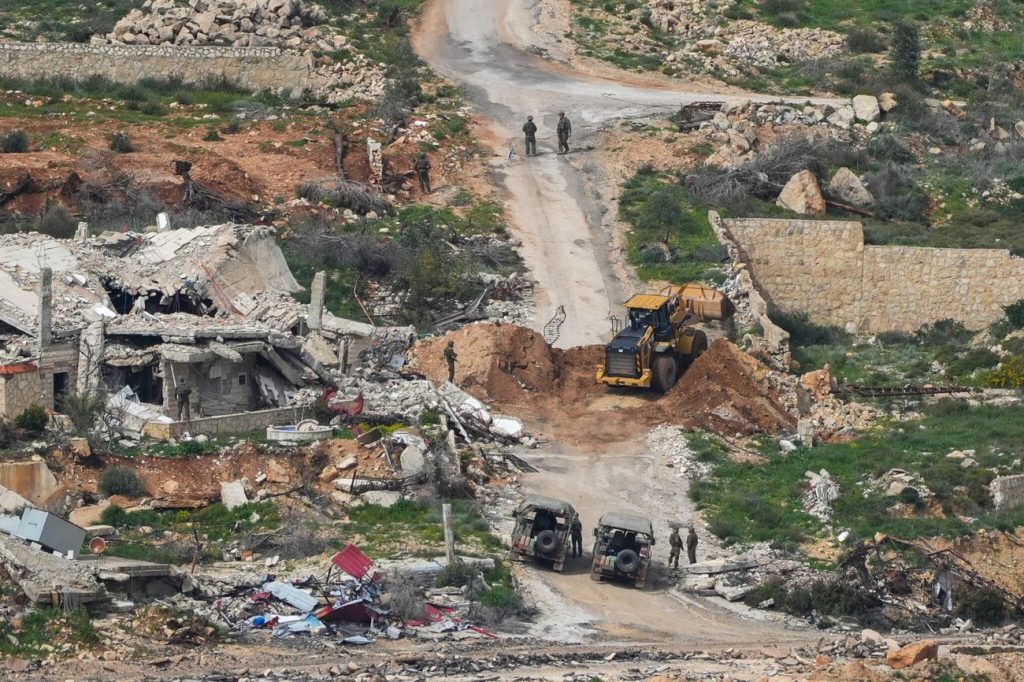
IDF forces from the 98th Division completed the encirclement of the Shiite city of Bint Jbeil in southern Lebanon on Monday, according to the IDF spokesperson. The army said the decision to take control of the city was made after it was identified as the main source of rocket fire toward Israeli border communities, including Avivim, Yir’on and nearby areas.
Troops from the Paratroopers, Commando, and Givati brigades, operating under the 98th Division, expanded ground operations over the past week to surround the town before launching the assault. At the start of the operation, the IDF estimated approximately 150 Hezbollah terrorists were in the area. Hezbollah had massed a sizable force there for what was intended to be a cross-border attack into Israeli territory — but the operatives were caught off guard. They did not detect the quiet advance of Israeli troops, who moved in and encircled them from three sides.
The IDF killed more than 100 Hezbollah terrorists in the area through close-quarters combat and airstrikes, destroyed dozens of infrastructure sites, and located hundreds of weapons. The IDF estimates that only several dozen Hezbollah operatives remain active inside Bint Jbeil. A senior IDF official told i24NEWS: “It will take at least a few more days to complete the operation.”
The IDF said Hezbollah had been preparing for combat in Bint Jbeil “in a military manner” rather than as a guerrilla force, including by placing weapons depots inside residential buildings and basements, with fighting taking place in dense urban terrain and surrounding agricultural areas. During a targeted search of a local school, IDF troops found more than 130 weapons, including dozens of Kalashnikov rifles, handguns, and other tactical weapons, alongside Hezbollah flags and organizational insignia — further evidence of the terrorist group’s use of civilian infrastructure. The IDF also said it had identified Hezbollah activity inside a government hospital in the town, with terrorists observed monitoring troops and opening fire from a hospital window.
Standing inside the ruins of the Bint Jbeil stadium on Monday, 98th Division commander Brigadier General Guy Levy addressed his troops with words that cut through the rubble and the smoke: “Bint Jbeil 2000 — there was someone here who spoke and boasted about webs and spiders. Today, that man no longer exists, the stadium is gone, and his words are worth nothing.” That stadium was the site where Hassan Nasrallah, assassinated by Israel in 2024, delivered his infamous “spider’s web” speech after the IDF’s withdrawal from southern Lebanon in 2000 — a speech that became the founding mythology of Hezbollah’s self-styled “resistance.” Now Israeli forces are dismantling that mythology, one building at a time.
The assault has involved isolating the area, surrounding it, and coordinating between ground troops and air units. Officials said the operation is being carried out slowly but with heavy firepower, following an initial maneuver designed to surprise Hezbollah forces. The Hezbollah terror organization described the battle for Bint Jbeil as deeply “symbolic” to the organization, and it has attempted to reinforce its positions both inside the town and in surrounding areas — so far, unsuccessfully.
The Christian towns of Debel and Ain Ebel to the southwest, which have kept Hezbollah infrastructure out of their areas to avoid being targeted by Israel, proved critical to the IDF’s advance. Hezbollah’s own officials admitted Israel was able to advance particularly effectively on Bint Jbeil from the direction of those Christian villages.
The Ancient Prophecy Behind the Battle
The Jewish Sages foresaw the battle and fall of Bint Jbeil nearly two thousand years ago. The Torah blogger Yeranen Yaakov cited Dov Bar Leib, who quoted Tractate Sotah 49b, which lists the signs of the Ikveta d’Meshicha — the “footsteps of the Mashiach” (Messiah), which Rashi explains is “after the exile ends but before the arrival of the Messiah.” Among those signs is a cryptic geographical declaration: “v’haGavlan yeshom” — “and the Gavlan will be desolate.”
The full passage from Sotah reads: “The meeting place of the sages will become a place of promiscuity, and the Galilee shall be destroyed, and the Gavlan will be desolate, and the men of the border shall go round from city to city but will find no mercy.”
For centuries, commentators debated the precise geographic identity of the Gavlan. R’ Dov Bar Leib, drawing on a close reading of Sefer Yehoshua (Joshua 13), has made a compelling case that the Gavlan refers not to a location inside modern Israel, but to the ancient territory of the Givlim — the people of Gebel — in southern Lebanon. The Bible itself draws this map.
“The Lord said to Joshua: You are old, advanced in years, and very much of the land still remains to be taken possession of.” (Joshua 13:1)
Sefer Yehoshua (Joshua 13) lists the lands that remained unconquered at the end of Joshua’s campaigns. The text explicitly names Eretz HaGivli — the Land of the Givlim, known in Arabic as Jbail — among those unredeemed territories north of Israel’s border. Drawing a line from Banyas to Tzidon (Sidon) reveals the outer boundary of Joshua’s conquests. Everything north of that line — including the region of Jbail and its offspring settlement — was supposed to be conquered as part of Eretz Canaan but was not.
Commentaries explain that the “Gavlan” is the Bashan. In the Bible (Numbers 21:33–35; Deuteronomy 3:1–7), the Bashan was given to half of the tribe of Menashe. It is in the northeast, including the Golan, parts of Syria, and northern Jordan.
Indeed, the pre-Messiah War of Gog and Magog is prophesied to come from the north.
Therefore prophesy, O mortal, and say to Gog: Thus said Hashem: Surely, on that day, when My people Yisrael are living secure, you will take note, and you will come from your home in the farthest north, you and many peoples with you—all of them mounted on horses, a vast horde, a mighty army. Ezekiel 38: 14-15
The city of Jbail itself — known to the Greeks as Byblos, one of the most ancient cities in human history, located 35 km north of modern Beirut — was the original capital of the Givlim. Around the time of the Exodus from Mitzrayim (Egypt), as the population of Jbail grew, a group of settlers traveled south and founded a daughter city in southeastern Lebanon. They called it Bint Jbail — “Daughter of Jbail” in Arabic. That city is the Hezbollah stronghold now being encircled and demolished by the IDF.
The Maharsha, the great 16th-century Talmudic commentator Rabbi Shmuel Eidels, in his commentary on the parallel passage in Tractate Sanhedrin, identifies the Gavlan of the messianic signs with this same region of Eretz HaGivli described in Sefer Yehoshua. In other words, the Gavlan that the Sages said would become desolate before the coming of Mashiach is, according to this reading, precisely the territory now being reduced to rubble by the IDF’s 98th Division.
Bint Jbeil was never conquered by Yehoshua (Joshua). It was never incorporated into the Jewish commonwealth. It sat for millennia as a piece of Eretz Canaan still outside Jewish sovereignty — and in recent decades became the self-declared “Capital of the Resistance,” the place from which Hezbollah rained rockets on Israeli children and launched its military cult of death.
Now the IDF is making it desolate.
Nasrallah declared Israel “weaker than a spider’s web” from that stadium in 2000. He is dead. The stadium is rubble. The spider’s web has been torn apart. The Gavlan is becoming desolate — right on schedule, according to a Talmudic text written long before Hezbollah, Lebanon, or the modern State of Israel existed.
In 2015, the Rebbe (spiritual leader) of the Mishkoltz sect of Hasidic Jews spoke about the appearance of the Gog and Magog War in current events.
“There will continue to be uprisings worldwide, the Rebbe predicted. “And everything is for Israel’s benefit!
“My heart tells me,” concluded the Rebbe, “that God is having mercy on the nation of Israel and despite what the prophets have prophesied – that the Gog Magog War needs to be within Jerusalem- nevertheless God sweetened this, and He is currently making it in Syria.”
“The proof is that it is brought down by the Sages (Sifri Devarim 1) that the gates of Jerusalem are destined to reach Damascus. If that is the case, instead of the war being in Jerusalem with the inhabitants of Israel suffering from it, God widened Jerusalem until Damascus so that the great war would be there – as we currently see that Russia entered with powerful forces into Syria and even China made it known that it is going there – which apparently will cause a Third World War with the US and its neighbors and tremendous bloodshed until they destroy and annihilate each other.”
“Remaining for us now is the task to be united among ourselves and to be careful to stay away from arguments and Leshon Hara because the Mashiah is already here and hears everything,” the Rebbe concluded.
The Sages gave us these signs so that when we see them, we would recognize where we stand in history. According to the signs, we are standing at the threshold of Moshiach.