Bible Prophecy, Signs of the Times and Gog and Magog Updates with Articles in the News
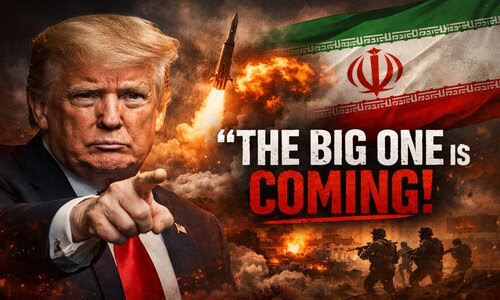
Decapitation Was Just The Beginning: Trump Warns ‘The Big One Is Coming’
Fourteen countries. That is how many evacuation alerts the United States has now issued as this rapidly expanding conflict with Iran deepens. Fourteen warnings do not signal a short, surgical campaign. They signal preparation. They signal escalation. They signal that Washington believes what comes next may be bigger than anything we have seen so far.
And then came the words that sent shockwaves through Washington and beyond.
In a recent interview with Jake Tapper, President Donald Trump reportedly suggested that “the big one is coming.” According to Tapper’s account, the president projected that this military operation could last “about a month,” while cautioning that the timetable is fluid. He also hinted that more U.S. casualties may be ahead.
Those are not throwaway lines. They are signals.
Because if the United States and Israel have already eliminated Iran’s long-tenured supreme leader, Ali Khamenei, along with significant portions of the regime’s upper command, what exactly qualifies as “the big one”?
The Calm Before a Wider Storm?
The decapitation of Iran’s leadership was historic — arguably one of the most aggressive regime-targeting operations in modern warfare. Removing Khamenei and key figures within days sent a clear message: the objective was not symbolic retaliation. It was structural collapse.
But decapitation does not always end a war. Sometimes it begins a more chaotic phase.
Iran’s power structure has long relied on layered command networks, proxy militias, and asymmetric warfare doctrine. Even without central leadership, regional commanders and aligned militias remain capable of launching large-scale retaliation. Hezbollah in Lebanon, militia groups in Iraq and Syria, Houthi forces in Yemen — the architecture of response is still intact.
When Trump says “the big one is coming,” he may be referencing a final blow designed to cripple Iran’s remaining military infrastructure. That could mean sustained air campaigns against missile sites, cyber operations targeting command-and-control systems, or strikes against naval capabilities in the Strait of Hormuz.
Or it could mean something even more consequential: a coordinated campaign to permanently dismantle Iran’s Revolutionary Guard structure.
If that is the case, we are not watching the end of a war. We are watching its midpoint.
Why the Evacuations Matter
Evacuation alerts across 14 countries are not issued lightly. They are preemptive shields.
When the U.S. government begins urging citizens to leave multiple regions simultaneously, including our key ally Israel, it signals credible intelligence of imminent danger — not just theoretical risk. It suggests that U.S. officials anticipate retaliatory strikes not limited to a single battlefield.
Retaliation could take many forms:
Missile attacks on U.S. bases in the Gulf
Cyberattacks on American infrastructure
Terror operations by sleeper cells or lone actors
Attacks on embassies or civilian targets
If Washington expects retaliation to expand beyond conventional military targets, evacuation warnings make strategic sense. You move civilians first — before you move aggressively.
This aligns with another revealing comment: Trump has reportedly hinted that more American casualties may be coming. Presidents do not prepare the public for losses unless they believe the probability is real.
That preparation serves two purposes. It steels public opinion. And it lowers the shock factor when losses occur.
The One-Month Window
Tapper’s reporting that Trump projected a possible one-month duration is equally telling.
Public support for war historically declines sharply after the initial surge of unity. The American public can tolerate short, decisive action. It struggles with drawn-out uncertainty. Trump understands that political reality.
A month suggests a strategic objective: hit hard, dismantle critical capabilities, absorb expected retaliation, and conclude before fatigue sets in.
But wars rarely follow calendars.
Retaliatory cycles can extend timelines quickly. If Iran’s proxies respond with sustained regional strikes, the U.S. may feel compelled to respond in waves. If American casualties mount, political pressure could either intensify the campaign or force reconsideration.
Fluidity is the defining characteristic of conflict. What begins as a four-week campaign can become a regional confrontation lasting far longer.
What Could ‘The Big One’ Actually Be?
When analysts and military strategists think about what “the big one” might mean in this context, several broad categories of escalation come to mind — spanning from conventional bombardment to unconventional, asymmetric warfare.
Yet beyond those familiar paths, there is also the possibility of new technology playing a decisive role. This is not science fiction; recent events suggest that militaries are experimenting with tools that could alter how battles are fought on the ground.
Here are four possibilities:. Massive Infrastructure Strikes
A coordinated campaign to hit Iran’s remaining air defenses, missile stockpiles, and naval assets across multiple fronts could qualify as a “big one” — overwhelming the adversary with sheer scale and speed.
- Cyber Shock and Awe
Cyber operations could be used to incapacitate critical infrastructure: communication networks, energy grids, banking systems, and even military command and control. A crippling cyber blow could have effects as real and destabilizing as kinetic warfare.
- Proxy Network Dismantling
Rather than focusing solely on Iranian soil, a strategy could emerge that seeks to neutralize allied proxy forces across the region — from Lebanon’s Hezbollah to Yemen’s Houthis — transforming a limited war into a broader campaign of attrition.
- New and Emerging Technology in Warfare
This category moves beyond traditional weapons and into the realm of disruptive warfighting technology. Recent high‑profile operations have already sparked debate about whether emerging systems were used to incapacitate enemy forces with effects that seem almost futuristic.
In January 2026, during the U.S. mission to capture Venezuela’s president — an operation that reportedly neutralized much of his personal guard — there were claims of a so‑called “sonic weapon” being deployed. Survivors and analysts described the effects as intense sound waves that left soldiers incapacitated — vomiting blood and unable to stand — leading to speculation that acoustic or other directed energy technologies were used to rapidly disorient and disable defenders without traditional kinetic force.
That incident, whether involving an acoustic weapon, a directed energy weapon (DEW), or another form of emerging tech, underscores how the battlefield of 2026 is beginning to incorporate tools once thought to belong in science fiction. Analysts have debated whether such systems — sometimes referred to informally in the media as “discombobulators” — formed part of the tactical advantage during the capture.
Beyond acoustics, militaries around the world are exploring other categories of advanced systems, such as high‑power microwave weapons that can disable electronics, AI‑enabled targeting systems, and even laser‑based defense systems capable of intercepting drones and missiles with pinpoint precision.
These emerging technologies — once purely theoretical — are rapidly transitioning into operational tools. If “the big one” were to involve a leap into the widescale deployment of such systems, the dynamics of battlefield advantage could shift dramatically. This isn’t necessarily about science fiction death rays; instead, it’s about technology that can suppress, disrupt, or incapacitate forces in ways not seen in large‑scale conflict until now.
Any of these would be escalatory. All carry the risk of expanded retaliation.
The Casualty Factor
Trump’s suggestion that more U.S. casualties are likely is perhaps the most sobering element.
Casualties change narratives. They turn abstract geopolitical analysis into human tragedy. And they test national resolve.
If American service members are killed in retaliatory missile strikes or terror attacks, public sentiment could shift dramatically — either toward overwhelming force or toward calls for de-escalation.
The administration appears to be preparing Americans psychologically. That preparation indicates expectations of intensity.
The Global Implications
Energy markets are watching closely. The Strait of Hormuz remains one of the world’s most critical oil chokepoints. Even limited disruption could spike global prices. Cyber retaliation could ripple into financial systems.
Evacuation alerts across 14 nations suggest this is not being viewed as a localized event. It is being treated as a regional instability risk with global economic consequences.
All of this points to one reality: the conflict is not winding down.
It is entering a more dangerous phase.
The Unpredictable Month Ahead
Trump’s comment that the operation may last “about a month” underscores both confidence and uncertainty. The objective appears defined. The duration is aspirational.
But war does not move according to press briefings.
If “the big one” is indeed coming, it likely represents a decisive attempt to end Iran’s capacity to retaliate meaningfully. Yet decisive strikes often trigger desperate responses.
And desperate responses are rarely small.
The evacuation alerts. The casualty warnings. The fluid timetable. The language of escalation. All of it points to an administration preparing not for closure — but for climax.
Americans should pay attention.
Because if leadership has already fallen and Washington is still warning that something larger is ahead, then what we have witnessed so far may only be the opening act.
The next month may define not just the outcome of this conflict — but the balance of power in the Middle East for years to come.
Supply and Demand: The Real Clock Ticking in This Conflict
Wars are often framed as contests of courage, strategy, and political will. But beneath the speeches and battlefield maneuvers lies a far more fundamental force: supply and demand. If this conflict has revealed anything in its first three days, it is that modern war is not just about who fires first — it is about who has enough inventory to finish quickly.
The United States openly acknowledged that it accelerated its timeline because of a narrow strategic window. That window was not merely political. It was logistical. For months, assets were quietly moved into position — carrier strike groups, missile defense batteries, air refueling tankers, precision munitions stockpiles. The goal was not open-ended engagement. The goal was a one-month war. And to ensure that timeframe, you must have overwhelming supply ready to meet explosive demand.
Israel demonstrated this principle immediately. In the first hours of what it dubbed “Roaring Lion,” the Israeli Air Force launched the largest opening salvo in its history — 200 fighter jets striking more than 500 targets, deploying 500 munitions in a tightly coordinated wave. Within 72 hours, the IDF reported striking 600 Iranian targets using 2,500 bombs. That level of output is not improvisation. It is stockpiling turned into decisive force.
The United States moved with similar intensity. On the first day alone, American forces struck 900 targets, nearly double Israel’s count. Meanwhile, U.S. naval and air assets dismantled the majority of Iran’s navy, removing its maritime leverage from the equation almost overnight.
Why such speed? Because in war, prolonged timelines multiply risk. The longer a conflict drags on, the more strain is placed on missile inventories, interceptor supplies, and industrial replenishment rates. Demand spikes violently. Supply must already be in place.
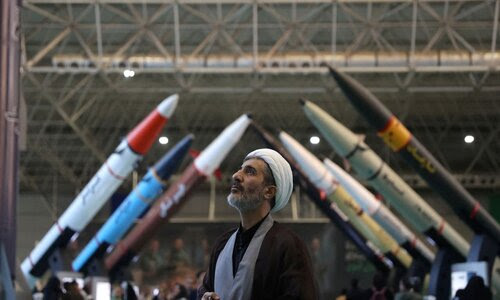
The clearest example of this dynamic is unfolding in the missile war. Israel and the United States understand a basic truth: no launchers means no missiles. Intelligence assessments indicated Iran possessed roughly 2,500 ballistic missiles prior to the operation, with production accelerating by dozens per month and ambitions to reach 8,000 by 2027. That trajectory represented an existential threat.
Within two days, approximately 200 ballistic missile launchers — roughly 50 percent of active launch capacity — were destroyed. Hundreds of missiles were eliminated outright. Production of an estimated 1,500 additional missiles was prevented by strikes on explosives plants and engine-mixing facilities. Four key mixing centers critical to ballistic missile engines were hit. The central explosives production site — essential for warheads, rockets, cruise missiles, and UAVs — was dismantled.
This is supply chain warfare. It is not enough to shoot down incoming missiles. You must destroy the assembly lines that produce them.
That same principle explains the methodical targeting order. First, decapitate leadership. Second, dismantle air defenses. Third, eliminate launchers and firepower arrays already loaded for launch. Fourth, target production infrastructure. Each step reduces Iran’s ability to regenerate supply.
The result is strategic suffocation. Iran’s air force has been neutralized. Its navy has been largely eliminated. Half its ballistic missile launch capacity is gone. Its research facilities have reportedly been damaged in ways that could delay development for years. Without missiles, and without air or naval leverage, a regime becomes exposed — a sitting duck in purely military terms.
But supply constraints are not one-sided.
There are already reports that Arab nations are requesting additional U.S. missile defense support. Patriot batteries. Interceptor reloads. Regional shield reinforcement. The problem is simple: there are only so many interceptors to go around. Anti-missile systems are extraordinarily effective, but each defensive missile costs millions of dollars and must be physically present to function.
If the demand for interceptors across Israel and U.S. regional bases spikes faster than production or pre-positioned stockpiles can accommodate, defensive strain becomes a real factor. That is precisely why Iran’s launchers are being targeted so aggressively. Reducing incoming volume protects finite interceptor supply.
In economic terms, both sides are racing against depletion curves.
For the United States and Israel, the objective is to front-load the conflict — expend high volumes of precision munitions early, destroy regeneration capacity, and shorten the war before supply lines tighten. For Iran, the objective was to expand missile stockpiles to raise the cost of confrontation. That buildup was accelerating. The strategic window existed because intelligence indicated that waiting longer would mean facing a far larger arsenal.
Supply and demand do not just determine markets. They determine the length of wars.
A quick war requires overwhelming initial supply.It requires pre-positioned assets, stockpiled munitions, synchronized intelligence, and production capacity already humming. It requires eliminating the enemy’s capacity to replenish faster than you expend.
History shows that wars rarely end quickly when either side believes it can regenerate faster than it loses. What we are witnessing is an attempt to break that cycle immediately — to destroy not just weapons, but the ability to build them.
The next few weeks will reveal whether the strategy holds. If missile production remains crippled, if launch capacity continues to shrink, and if interceptor inventories remain sufficient to absorb retaliation, the one-month objective may be achievable.
If supply falters — on either side — the demand of war will stretch beyond projections.
Modern warfare is often described in moral or geopolitical terms. But beneath the rhetoric lies a simple equation: whoever controls the supply chain controls the timeline.
And in this conflict, time is everything.
Palestinians Show Nothing Has Changed As They Align With Iran In New Conflict
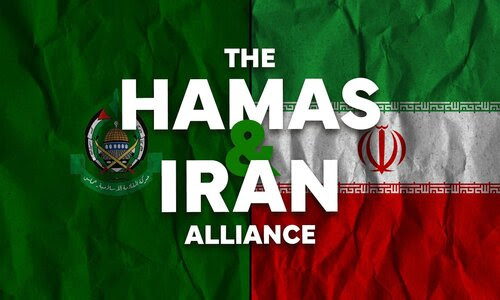
Shortly after airstrikes on Iran began on February 28, several Palestinian groups, including Hamas and Palestinian Islamic Jihad (PIJ), issued strong condemnations of Israel and the US and voiced support for the Iranian regime. They also called on Arabs and Muslims to stand united against Israel and the US.
Palestinian support for the Iranian regime did not come as a surprise. For decades, the Iranian regime had provided significant financial and military support to both Hamas and PIJ. This backing is a cornerstone of Iran’s “Axis of Resistance” strategy, which aims to project regional influence to counter Israeli and US interests in the Middle East.
In the past, the Palestinians supported Iraqi dictator Saddam Hussein’s 1990 invasion of Kuwait.
In 2003, the Palestinians took to the streets to voice support for Saddam Hussein against the US invasion. Some of them chanted, “Dear Saddam, bomb Tel Aviv.” Many Palestinians have also sided with the Iran-backed Hezbollah terror group in previous rounds of fighting with Israel.
Consequently, the Palestinians lost the backing of several Arab countries, including those that used to provide them with financial aid, especially Saudi Arabia and Kuwait.
Since then, according to various reports, Iran has been providing up to $100 million annually to Palestinian terror groups, with the majority going to Hamas. Documents captured by the Israel Defense Forces (IDF) in 2024 revealed that Iran transferred about $154 million to Hamas’s military wing between 2014 and 2020 alone. The Iranian regime, in addition, has provided technical expertise for Hamas to manufacture its own missiles locally in Gaza. Members of Hamas’s military wing, the al-Qassam Brigades, have also received specialized training in Iran on operating UAVs and sabotaging military targets.
Without Iran’s backing, Hamas would not have been able to carry out its October 7, 2023 invasion of Israel and murder, torture, mutilate, rape and kidnap hundreds of Israelis and foreign nationals.
PIJ is also heavily dependent on Iran, receiving approximately $70 million annually, alongside weapons, technical training, and logistical support from Iran’s Islamic Revolutionary Guard Corps (IRGC).
By aligning themselves with the Iranian regime, the Palestinian terror groups have brought death and destruction on their people in the Gaza Strip, especially in the aftermath of the 2023 invasion of Israel. These groups, however, do not care about the well-being and safety of their people and are prepared to sacrifice thousands of Palestinians as part of the Jihad (holy war) to destroy Israel.
Iran’s late Supreme Leader Ali Khamenei, for his part, never hid his thoughts about Israel and the US. Just last year he called Israel a “cancerous tumor” and branded the US a partner in its crimes. Like his Palestinian proxies, Khamenei was always prepared to sacrifice as many Palestinians as possible as part of the Jihad against Israel and the US. A year earlier, Khamenei told then Hamas leader Ismail Haniyeh:
“The divine promise to eliminate the Zionist entity [Israel] will be fulfilled and we will see the day when Palestine will rise from the river to the sea.”
Within hours of the start of the current Israeli-US offensive against Iran, Hamas said in a statement:
“The Islamic Resistance Movement (Hamas) condemns in the strongest terms the American-Zionist aggression against the Islamic Republic of Iran, and we affirm that this American-Zionist aggression constitutes a direct targeting of the entire region, and an assault on its security, stability, and sovereignty.
“While we affirm our solidarity with the Islamic Republic of Iran in confronting the aggression, we call upon the Arab and Islamic nation to unite and stand in solidarity to thwart this aggression and its objectives…”
Senior Hamas official Bassem Naim, who leads a comfortable life in Qatar, claimed that the attack on Iran was “driven solely by alignment with the strategic objectives and expansionist agenda of the Zionist entity, led by [Israeli Prime Minister] Benjamin Netanyahu.”
According to PIJ:
“The blatant American-Israeli aggression launched by the administration of President Donald Trump and the government of war criminal Benjamin Netanyahu against the Islamic Republic of Iran is a dangerous escalation threatening our region and the peoples of our Arab and Islamic nation. It is a continuation of the aggressive approach aimed at redrawing the region’s maps in favor of the Zionist entity, liquidating the Palestinian cause, and breaking the will of free peoples. The courageous Iranian people have the right to defend themselves. The peoples of our Arab and Islamic nation and the sons of our Palestinian people are called upon to close ranks and unify their positions to confront this aggressive scheme that targets everyone.”
The Popular Front for the Liberation of Palestine (PFLP), a faction of the PLO (which is headed by Palestinian Authority President Mahmoud Abbas), called on “liberation forces and freedom-loving people worldwide to declare solidarity with Iran and escalate popular protests in various arenas.
A Palestinian group called “the Fatah Movement of the Intifada” stated:
“We declare our full solidarity with the Islamic Republic of Iran, represented by its wise leadership, army, resistance, and brotherly people. The Islamic Republic has the right to respond and defend itself. The American administration is the greatest enemy of the progress of the peoples of our region and our nation.”
These Palestinian statements should be viewed as a direct threat not only against Israel, but also against the US.
Unfortunately, the Palestinians have not learned from the self-defeating decisions they made in the past, when they chose to align themselves with the enemies of Israel and the US.
The Palestinian terror groups that continue to control the Gaza Strip, led by Hamas, seem determined to pursue their Jihad against Israel, notwithstanding the death and destruction they inflict on the Palestinians.
US President Donald Trump’s “Board of Peace” will never be able to bring security and stability to the Middle East so long as these groups continue to maintain a civilian and military presence in the Gaza Strip. The Palestinians have again shown that they do not hesitate to side with the enemies of Israel and the US.
Removing Iran’s mullahs from power is not enough. The Israeli-US military operation should be expanded to include the Iranian regime’s proxies.