Bible Prophecy, Signs of the Times and Gog and Magog Updates with Articles in the News
NATO to release Turkey , Turkey to Join BRICS and then Gog and Magog are Ready for Biblical Attack
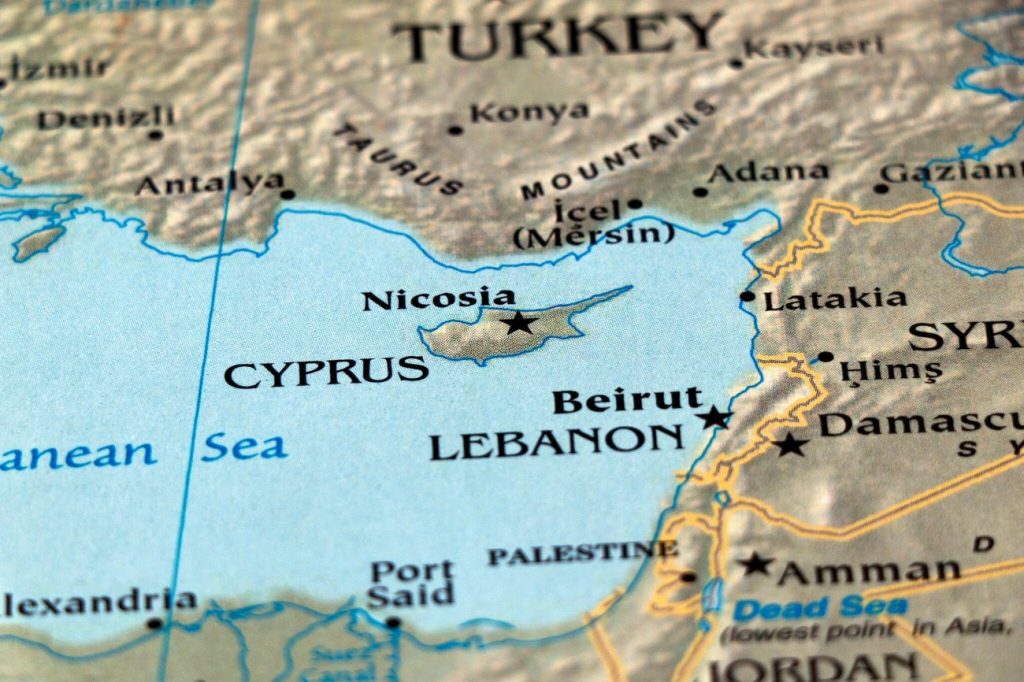
Expel Turkey from the NATO alliance and bring in Cyprus and Israel as members.
“I’m so disappointed in NATO, because this was a test for NATO,” said President Trump on March 26 while speaking about the Iran war.
While President Trump has long criticized the UN and NATO, there is a major difference between the tremendous failings of the two organizations. A quick review of their structures shows that while the U.N. is probably impossible to course-correct, NATO is a very different story.
The U.N. is bloated, paralyzed, and utterly incapable of meeting the challenges of the world today. NATO, on the other hand, is much smaller and has a mission that is vastly more important to U.S. interests. So what can be done to make NATO better? One step that would send a clear signal to Europe that Washington is serious about reforming NATO would be to advocate expelling Turkey.
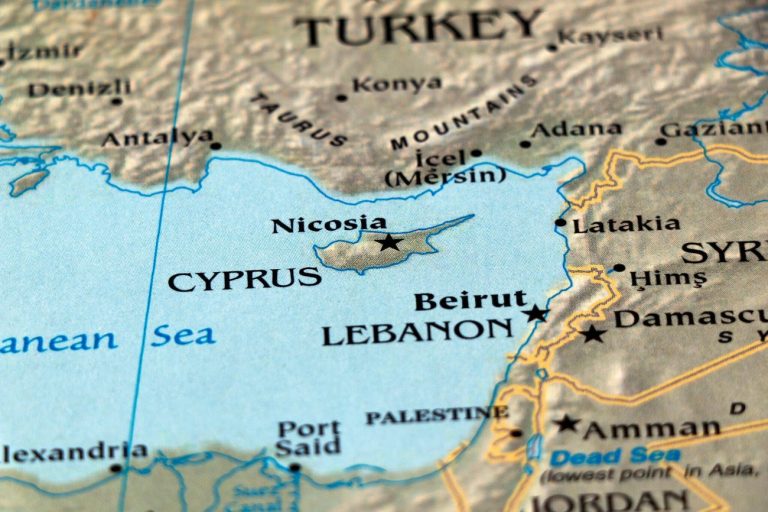
In July 1974, Turkey invaded Cyprus, and thousands died. To this day, a Turkish puppet state occupies 36% to 37% of the island nation. NATO member Greece, along with Cyprus and Israel, has grown increasingly concerned about Turkey’s extremism and its close relationship with Iran.
Turkey has already signaled that it has moved on from NATO. As a dialogue partner of the Shanghai Cooperation Organisation, it has shifted directly into the orbit of SCO members that include such American adversaries as Iran, China, and Russia.
If Turkey were to leave NATO, a natural result could be Cyprus and Israel joining it.
If Cyprus and Israel were brought into NATO, it would strengthen the alliance. Israel’s presence would add the proven, real-world experience with missile defense systems that NATO lacks. As long as Turkey is part of NATO, it is against Israel’s best interests to share this technology.
NATO member Greece, along with Cyprus and Israel, has grown increasingly concerned about Turkey’s extremism, as well as its close relationship with Iran.
At a summit in Jerusalem on Dec. 22, Greece, Cyprus, and Israel adopted a strident tone and agreed to strengthen trilateral cooperation in the Mediterranean. Israeli Prime Minister Benjamin Netanyahu, Greek Prime Minister Kyriakos Mitsotakis, and Cypriot President Nikos Christodoulides signed a joint declaration to advance an energy deal and pledged to “reinforce our ongoing trilateral cooperation on security, defense, and military matters.”
Clearly addressing Turkey and its president, Recep Tayyip Erdoğan, during a joint press conference, Netanyahu stated: “To those who fantasize they can re-establish their empires and their dominion over our lands, I say: Forget it. It’s not going to happen. Don’t even think about it.”
Erdoğan responded by sharply criticizing Israel and Cyprus. “We will not permit the violation of the rights and interests of Turkish Cypriots,” he said. About Israel, he added: “Turkey … will not back down, we will not stay silent, we will not forget; we will never leave Gaza alone.”
It is also worthwhile to consider who might come after Erdoğan.
Turkish Foreign Minister Hakan Fidan is often mentioned as a possible successor and has repeatedly condemned Israeli actions. On Nov. 30, while in Iran, he described Israel as “the biggest threat to stability in the Middle East,” even as he touted expanded Turkish cooperation with Iran on energy, trade, border security, and regional security matters.
In August, Fidan said that “Israel’s reckless attacks on Gaza, Lebanon, Yemen, Syria, [and] Iran are the clearest sign of a terrorist-state mentality defying international order,” and accused Israel of “committing genocide in Gaza for the past two years, ignoring basic humanitarian values right before the world’s eyes.”
For years, Turkey has described Hamas as a “liberation movement” and has not formally designated it as a terrorist organization. Hamas has used Turkish territory as a base for coordination, recruitment, and financial operations linked to terrorism. U.S. and allied security services have repeatedly warned about networks tied to Hamas activities on Turkish soil.
Since at least 2023, senior Hamas leaders have had connections with Turkey. Ismail Haniyeh, the former head of Hamas’s political bureau, was killed in Tehran in July 2024, and Turkey publicly mourned his death.
Turkey’s ruling party, the AKP, and Hamas share ideological roots in the broader Muslim Brotherhood movement. Erdoğan has been a vocal critic of Israel’s response to the Hamas-led terrorist attacks in southern Israel on October 7, 2023, and has used his international platform to offer political support to Hamas. He has also consistently rejected characterizing Hamas as a terrorist organization.
The sooner NATO is reformed—and without Turkey—the safer Europe, the Mediterranean, and the Middle East will be.
Trump: We’ll ‘take out’ all of Iran Today, ‘destroy every bridge and power plant’
The warning followed Tehran’s formal rejection of a proposed ceasefire in the five-week conflict with the United States and Israel.
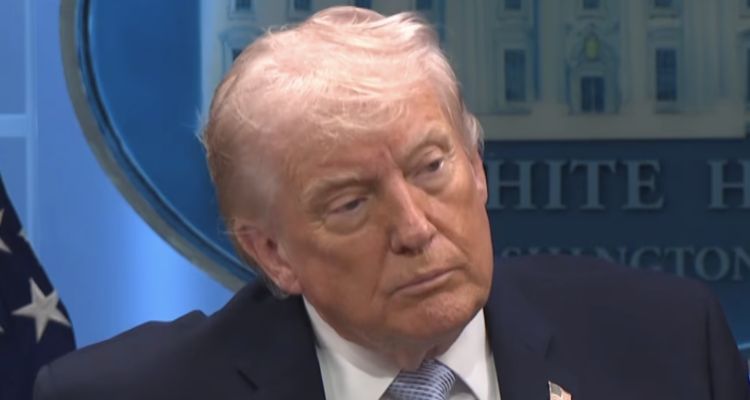
President Donald Trump on Monday threatened to destroy key Iranian infrastructure within hours if Tehran refuses US demands, after Iran rejected ceasefire proposals and instead called for a permanent end to the war.
At a White House briefing, Trump said the United States was prepared to launch sweeping strikes targeting bridges and power facilities across Iran by Tuesday.
“Every bridge in Iran will be decimated,” he said, adding that “every power plant in Iran will be out of business, burning, exploding and never to be used again.”
“It will happen over a period of four hours—if we want it to,” Trump said. “We don’t want that to happen.”
The warning followed Tehran’s formal rejection of a proposed ceasefire in the five-week conflict with the United States and Israel.
Iranian officials, speaking through the state-run IRNA news agency, said their response outlined broader conditions aimed at ending the war entirely.
“In this response, which consists of ten paragraphs, Iran, based on previous experiences, while rejecting a ceasefire, emphasized the need for a permanent end to the war while respecting Iran’s considerations,” IRNA reported.
The report said Iran’s position includes demands for “an end to conflicts in the region, a protocol for safe passage through the Strait of Hormuz, reconstruction [reparation of war damages], and lifting sanctions.”
Trump said military escalation could be avoided if Iran meets US conditions, which include halting its nuclear program, ending ballistic missile development, ceasing support for proxy groups and reopening the Strait of Hormuz. “We’re never going to let Iran have a nuclear weapon,” he said, calling Iranian leadership “mentally disturbed people.”
Iran has already moved to restrict access through the Strait of Hormuz, a vital corridor between the Persian Gulf and the Gulf of Oman that carries roughly one-fifth of the world’s oil supply, in response to ongoing US and Israeli strikes.
Despite previously suggesting the conflict could conclude within two to three weeks, Trump signaled uncertainty about its trajectory. Asked whether the war was de-escalating or intensifying, he said, “I can’t tell you. It depends on what they do.”
During the briefing, Trump’s Middle East envoy Steve Witkoff, who has been involved in negotiations with Iran, was present but did not speak.
‘Secret Muslim:’ King Charles blasted for giving Ramadan message while refusing same for Easter
Other royal analysts pointed to historical context, noting that Easter messages have rarely been issued by British monarchs.
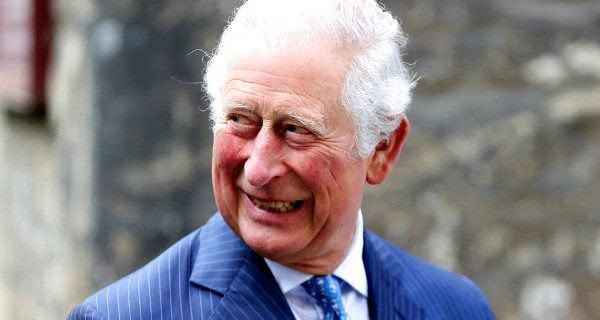
King Charles III’s decision not to issue an Easter message this year has drawn criticism from some Christian observers in the United Kingdom, with royal commentators saying the move surprised many and raised questions about the monarch’s public messaging.
Buckingham Palace said the absence of a message does not break with royal protocol, telling GB News that an Easter address is not a fixed annual tradition like the Christmas broadcast.
Even so, some commentators said the decision stood out, particularly after the king publicly marked Ramadan earlier this year.
In February, Charles shared a message wishing Muslims a “blessed and happy Ramadan” on social media.
Royal commentator Neil Sean told Fox News Digital that the lack of an Easter message “came as a shock to most U.K. Christians.”
“We expect a message from the monarch,” Sean said.
He added, “It’s not clear why he’s decided to not offer a message up, which is why the British people are angry… but more so when he made video contributions filmed inside royal palaces for Eid and Ramadan.”
Netanyahu wishes Christians ‘a blessed and joyful Easter’
Sean said the criticism has gone further in some quarters, with accusations emerging that Charles is a “secret Muslim.”
Other royal analysts pointed to historical context, noting that Easter messages have rarely been issued by British monarchs.
Richard Fitzwilliams told Fox News Digital that Queen Elizabeth II delivered just one such message during the COVID-19 pandemic.
“Queen Elizabeth only gave one Easter message, during the COVID-19 pandemic, which has justly become famous as it was so beautifully crafted,” Fitzwilliams said. “The king did give an Easter message last year and a Royal Maundy message in 2024.”
The royal household did acknowledge the holiday through its official Instagram account, posting an image of a cross alongside the message: “Happy Easter. He is risen!”
The caption read: “Wishing you a joyous Easter Sunday to Christians celebrating in the UK, the Commonwealth and around the world today.”
Ian Pelham Turner said the decision could spark unnecessary controversy, describing it as a move likely to generate backlash among some audiences.