
Seek & Strike: Israel’s drone swarm revolution (REV 9 PROPHECY)
Israel’s Directorate of Defense Research & Development (DDR&D), part of the Ministry of Defense, has announced major funding for the development of Seek & Strike swarms.
These systems, jointly developed with Elbit Systems and the IDF Ground Forces, represent a significant leap in autonomous warfare capabilities.
The Seek & Strike concept involves coordinated groups of drones that can simultaneously conduct surveillance, identify targets, and execute precision strikes.
Unlike traditional UAVs, which operate individually, swarms are designed to function as a networked unit, sharing data in real time and adapting to battlefield conditions.
This makes them highly effective in complex environments such as urban combat or against adversaries deploying large numbers of rockets, drones, and fighters.
According to DDR&D, the drones are equipped with advanced ISR (intelligence, surveillance, reconnaissance) capabilities, terrain dominance features, and strike payloads tailored for both open and urban battlefields.
They can be deployed rapidly, operate with minimal human oversight, and deliver decisive effects at lower risk to soldiers.
The importance of these swarms for future wars cannot be overstated.
Israel faces threats from Iran, Hezbollah, and other regional actors who increasingly rely on massed drone attacks, precision rockets, and asymmetric tactics.
Seek & Strike swarms provide a technological countermeasure, enabling the IDF to neutralize threats quickly and efficiently.
Their ability to overwhelm enemy defenses, disrupt communications, and deliver pinpoint strikes gives Israel a critical edge in maintaining deterrence.
Beyond combat, DDR&D has also emphasized the role of swarms in force protection and casualty management.
By integrating AI‑driven systems, the IDF can reduce exposure of frontline troops while ensuring rapid response to evolving threats.
The Seek & Strike program began pilot testing in 2022, with initial swarms deployed for training in 2023. By 2024, DDR&D expanded funding after successful operational trials in Gaza.
Full integration into IDF combat brigades is expected by 2026, marking a decisive shift toward autonomous battlefield dominance.
This investment reflects Israel’s broader strategy of maintaining a qualitative military edge through innovation.
As warfare shifts toward autonomous systems and contested electromagnetic environments, Seek & Strike swarms embody the future of military operations—fast, adaptive, and lethal.
PASTOR DIRK SAYS
The Bible Prophesied on this in Rev 9 See Attached Article
SIGNS OF THE TIMES
1000 Pastors from the Doctrine of Demons called Christian Zionism / Christian Leaders arrive in Israel – The Largest Delegation since Statehood 1948

The Friends of Zion (Christian Zionist a Doctrine of Demons) Ambassador Summit 2025 aims to transform these participants into trained pro-Israel “ambassadors” who will carry Israel’s story back to tens of millions of evangelical (Christian Zionist a Doctrine of Demons) supporters in America.
PASTOR DIRK SAYS
A Doctrine of Demons was created for Christians that Loves Israel and the Zionist believe System (The Old Covenant) Christian Zionism is a Dual Covenant – These Christians approves a Dual Covenant to reach Heaven., Read more about it in the article attached
GOG AND MAGOG UPDATE
Gog / Russia’s upgraded Shahed drones reshape the threat facing Israel and Ukraine
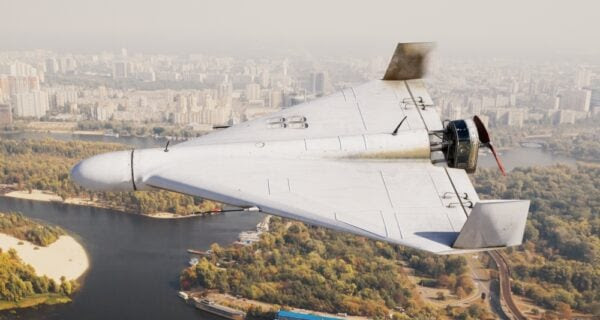
Recent reporting from Ukrainian and other sources indicates that Russia has substantially upgraded the original Iranian-made Shahed suicide drones—modifications that could pose new and more complex threats, not only to Ukraine but also to Israel, should Moscow transfer the technology or components to Tehran.
The most consequential innovation is the replacement of the Shahed’s rudimentary “motorbike” engine with a compact turbojet, increasing its speed by as much as a factor of three.
Iranian government-controlled media outlets, along with anonymous social media accounts that echo the Islamic Republic’s messaging, have intensified their assertions about a major military buildup to compensate for the setback Iran suffered during Israel’s June 2025 air campaign.
Many analysts, inside and outside Iran, speculate that a second Israeli offensive is only a matter of time, prompting Tehran’s insistence that it must demonstrate an ability to respond forcefully.
Claims about an expanding ballistic-missile arsenal now circulate on Iranian social media. Iranian commentators say that Tehran could overwhelm Israeli air defenses with a barrage or sustain a prolonged exchange that eventually depletes expensive U.S. and Israeli interceptor stocks.
Some assert implausibly that Iran could launch up to 2,000 ballistic missiles in a single salvo. Given military and logistical realities, such boasts resemble psychological posturing by a defeated state rather than credible strategic assessments.
The development of faster Shahed drones, however, represents a different challenge.
In the June 2025 conflict, Israel established air dominance over Iran, which sharply limited Tehran’s ability to prepare and launch large numbers of missiles simultaneously: Many would be detected during their lengthy launch sequence and destroyed on the ground.
Shahed drones, by contrast, require almost no preparation time and can be launched with minimal warning.
If Russia provides Iran with the upgraded jet-powered variant, flight times would drop dramatically.
Drones launched from Iran’s western border regions could reach northern Israel in under two hours. Their higher velocity—reportedly 310-375 mph, compared with the Iranian model’s sub-125 mph speed—would complicate interception.
During previous Iranian attacks, almost all propeller-driven Shaheds were shot down, often with U.S. and allied aircraft assisting.
The faster Russian variant would still be vulnerable to Western fighter jets, but a larger number might slip through Israel’s air-defense net, especially if Iran launched them in swarms.
Even if most are intercepted, Israel still would have to expend interceptor missiles costing hundreds of thousands of dollars each to destroy drones that cost Iran only tens of thousands of dollars to manufacture.
The economics of the exchange—premium interceptors versus relatively cheap drones—works in Iran’s favor in any saturation attack.
The central question is whether Russia will share the technology. For two decades, Moscow has been reluctant to provide Tehran with advanced weaponry—especially modern combat aircraft.
But Tehran delivered a major boost to Russia’s war effort in 2022 by supplying Shahed drones, enabling Russia to strike deep into Ukrainian cities. Moscow may feel compelled to reciprocate, at least partially.
A more probable scenario is that Russia shares only technical specifications and engineering guidance. In that case, Iran would need to procure suitable small turbojet engines, build prototypes, and conduct flight tests—a process that could take months.
If Russia, China, North Korea, or an illicit procurement network decides to supply ready-made engines, Iran could accelerate production dramatically. This is the juncture at which Israeli and Western intelligence services must remain intensely vigilant.
Another concerning development emerged on December 1, when photographs appeared of a Russian jet-powered Shahed variant fitted with a Soviet-era R-60 short-range air-to-air missile.
If verified, this would mark an attempt to transform the Shahed from a simple suicide drone into a rudimentary airborne threat to enemy aircraft.
Although such a platform would not pose a significant challenge to advanced jets such as the F-16, the addition of an air-to-air weapon complicates the task for forces attempting to counter drone swarms and reveals a technological trajectory that Russia—and potentially Iran—may pursue.
Iranian sources increasingly have invoked the prospect of a multi-front conflict with Israel should hostilities resume. Israeli and Arab media likewise report that Tehran is preparing its regional allies—including Hezbollah, Iraqi militias, the Houthis, and factions in Syria and Judea and Samaria—for a broader confrontation.
U.S. officials have warned Baghdad that Israel will strike inside Iraq if Iran-backed militias intervene. In short, Tehran appears to be positioning its “Axis of Resistance” for synchronized action against Israel.
Iran’s renewed efforts to rearm itself and rally its remaining proxies may herald a prelude to a second Israeli offensive. Tehran’s refusal to make substantive concessions to Washington risks paving the way for expanded U.S. support for an Israeli decision to strike—an outcome Iranian leaders claim to fear yet seem politically unwilling to avert.
Laser Defense Arrives: Iron Beam to Become Operational on December 30 2025
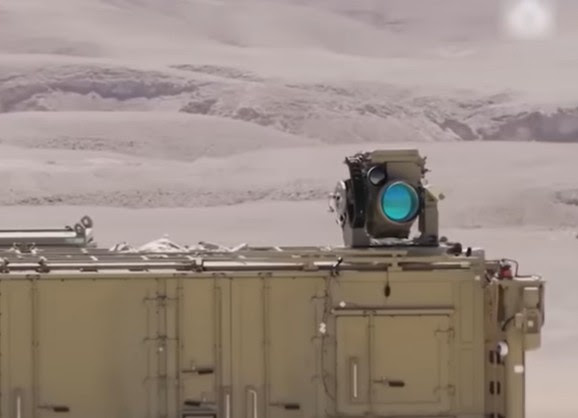
The Iron Beam, Israel’s first high-energy laser interceptor, has completed development and testing and will be handed to the IDF on December 30.
Turkey pushes for closer ties with Iran despite mounting sanctions as both countries pursue regional ambitions
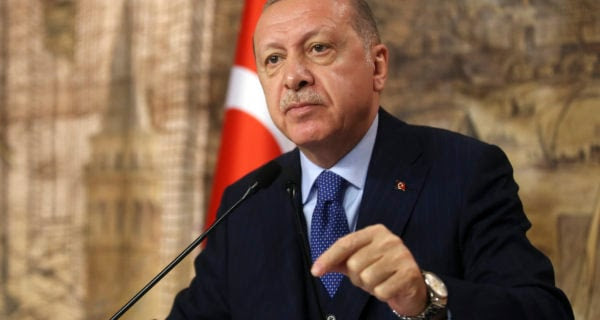
Despite the recent reimposition of UN sanctions on Iran, Turkey has called for closer diplomatic and trade relations with the Iranian regime, as both countries seek to bolster their influence in the Middle East while openly targeting Israel.
In a new interview with the semi-official Iranian news outlet ISNA, Turkey’s Ambassador to Iran, Hicabi Kırlangıç, said Ankara was working to expand bilateral cooperation with Tehran by leveraging existing capabilities to increase economic ties between the two countries.
“One of the obstacles to expanding trade relations between Iran and Turkey is the issue of sanctions. However, we should not cling to this excuse and refrain from trying to increase trade relations,” Kırlangıç said.
“The goal is to raise the level of trade relations to $30 billion, but we are still far from this figure,” he continued, emphasizing the vast potential for economic growth and the need for careful planning to achieve it.
The Turkish diplomat’s latest remarks followed Foreign Minister Hakan Fidan’s visit on Sunday to Tehran, where he also pushed for stronger bilateral cooperation between the two countries and denounced what he called “unfair sanctions” on Iran.
In a joint press conference with Iranian Foreign Minister Abbas Araghchi, Fidan reaffirmed Turkey’s support for Tehran while calling for the country’s nuclear program to be addressed through dialogue amid ongoing discussions to restart nuclear talks with the West.
After repeated unsuccessful negotiations over Iran’s nuclear program, European countries launched the process to reinstate wide-ranging UN sanctions earlier this year under the so-called snapback mechanism, adding further pressure on Tehran, which was already facing mounting US sanctions.
Fidan called for the removal of these “unrighteous” sanctions, stressing that the Iranian regime must resolve outstanding issues “on the basis of international law.”
“Turkey has always stood with Iran and will continue to stand with Iran within the framework of international law,” the top Turkish diplomat said, adding that “these unfair sanctions should be lifted.”
During their high-level meeting in Tehran, officials from both countries vowed to significantly expand cooperation on trade, energy, border management, and regional security, noting that economic ties remain well below their potential.
As part of their announced initiatives, the two nations agreed to build a new joint rail line that will serve as a strategic trade corridor between Asia and Europe, with construction expected to take three to four years and cost roughly $1.6 billion.
Fidan also said both countries consider Israel “the biggest threat to stability in the Middle East,” pointing to the war in Gaza, tensions in Lebanon and Syria, and broader concerns over what he called “Israeli expansionist policies.”
“The international community must fulfill its responsibilities,” he said, calling for stronger global pressure on the Jewish state.
Amid international efforts to uphold the Israel-Hamas ceasefire and chart a path for post-war Gaza, Turkey — a longtime backer of Hamas — has been pushing to expand its role in Gaza’s reconstruction efforts, which experts have warned could potentially strengthen Hamas’s terrorist infrastructure.