Bible Prophecy, Signs of the Times and Gog and Magog Updates with Articles in the News
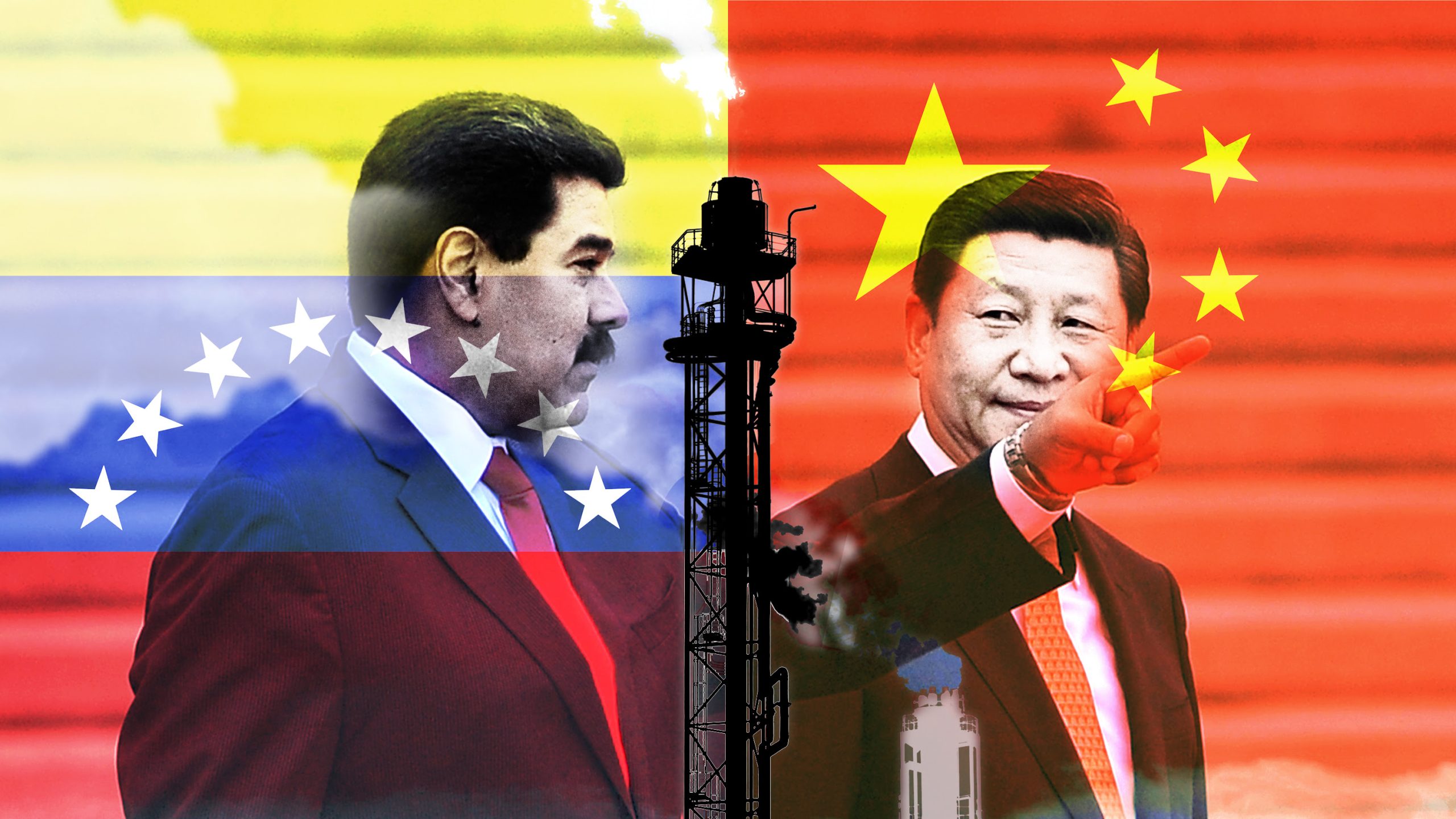
Venezuela, China, And The Oil Beneath It All: The Chessboard Just Tilted
The dramatic events that unfolded in Venezuela over the past few days have stunned the world. The U.S. capture of Nicolás Maduro is already being framed as a decisive moment–either a long-overdue intervention against an autocrat or a dangerous act of imperial overreach. But almost everyone is missing the far larger picture. What just happened in Venezuela is not a regional crisis. It is a geopolitical earthquake. And its shockwaves are already being felt in Beijing and Moscow.
This is not simply about Maduro. It is also about oil, power, precedent–and a global chessboard that just shifted in a way few fully understand.
From Washington’s perspective, Venezuela has long been a strategic prize. It sits atop the largest proven oil reserves on Earth–more than Saudi Arabia–and has spent years drifting into the economic and military orbit of America’s two greatest rivals. The Trump administration has gambled that by removing Maduro and reshaping Venezuela’s government, it can push both China and Russia out of the Western Hemisphere in one bold stroke
But gambles have consequences. And China and Russia are not minor stakeholders being brushed aside. They are furious because they have spent decades–and tens of billions of dollars–building Venezuela into a critical pillar of their global strategy.
Russia’s investment has been overtly military and strategic. Over the past twenty years, Moscow sold roughly $20 billion in weapons to Venezuela and signed a major strategic partnership agreement as recently as May 7th. Venezuela was not just a customer; it was a foothold–a symbol that Russia could project power into America’s backyard.
China’s involvement runs even deeper. Beijing lent Venezuela more than $60 billion through oil-backed loans, turning the country into what many analysts quietly described as a Chinese economic colony. Venezuela became one of China’s most important overseas energy suppliers, with Beijing purchasing more Venezuelan oil than the rest of the world combined.
Tankers carrying Venezuelan crude to China often take convoluted routes, involving ship-to-ship transfers and months-long journeys to obscure the oil’s origin–an extraordinary effort that underscores just how vital those barrels are to China’s long-term energy security.
This is why the timing matters. Just hours before Maduro was captured, Chinese diplomats were meeting with him in Caracas, reaffirming their commitment to a “strategic relationship” and a “multipolar world.” From Beijing’s perspective, this was not just a diplomatic embarrassment. It was a humiliation. A trusted partner was taken out immediately after China publicly reaffirmed its backing.
That context explains the unusually sharp language now coming out of Beijing. China has “strongly condemned” the U.S. action, calling it a blatant violation of sovereignty and international law, and has demanded Maduro’s immediate release. Those demands will be ignored–but the anger will not dissipate.
And here is where the story turns truly dangerous.
Within China, social media commentary is already drawing uncomfortable parallels. The average Chinese citizen does not parse international law or nuanced justifications offered by Washington. They see headlines. They see a superpower using force to remove a government it dislikes. And many are now asking a simple, unsettling question: If the U.S. can do this in Venezuela, why can’t China do the same in Taiwan?
The same logic echoes in Russia, where officials are openly condemning the action as armed aggression and calling for Maduro’s release. From Moscow’s point of view, how can the United States demand restraint or trust in negotiations over Ukraine after demonstrating that sovereignty is conditional when strategic interests are at stake?
Yes, there are differences. The U.S. will argue Maduro was illegitimate, corrupt, and dangerous. China and Russia will argue that such distinctions are irrelevant when force is used to topple a government. Precedent matters–not in law journals, but in public perception. And perception shapes domestic support for future action.
This is why Venezuela matters far beyond Latin America. It sits at the intersection of oil and power. Control over Venezuelan energy flows affects global markets, Chinese supply chains, and Russian influence. By moving decisively, Washington has effectively slapped both Beijing and Moscow in the face–and told them that decades of investment can be erased overnight.
An emergency UN Security Council session has already been called for. There will be speeches, condemnations, and diplomatic theater. But no resolution will undo what has been done. A line has been crossed.
Even if the U.S. Senate votes next week to restrict further military action, the precedent remains. The chessboard has changed. China’s Venezuelan strategy lies in ruins. Russia’s trust in Western diplomacy is further eroded. And the idea that power–not principle–ultimately decides outcomes has been reinforced in the minds of millions.
This is how great-power conflict escalates–not always through immediate war, but through accumulated grievances, perceived hypocrisy, and the slow normalization of force as policy. Venezuela may seem distant. But the ripples now extend to Taiwan, Ukraine, and every contested region where oil, power, and ambition collide.
We are no longer watching isolated crises. We are watching the opening moves of a much larger game. And history suggests that once the board is set like this, retaliation–one way or another–is only a matter of time.
When the Cartoon Ends: Dilbert’s Creator’s Faces Death & Questions Of Eternity

When a man who built a career skewering corporate absurdity suddenly stares down mortality, the punchlines fall away. What remains are the questions that have haunted humanity since the beginning: What happens next? Did my life matter? And is there something — or Someone — beyond this?
Scott Adams, the creator of Dilbert, now paralyzed and battling terminal prostate cancer, has publicly said he plans to convert to Christianity. The announcement, shared candidly with millions, was not wrapped in church language or theological precision. Instead, it came in the voice of a rational skeptic facing the end of his life — thoughtful, respectful, and deeply human.
Adams has long described himself as agnostic, skeptical of certainty itself. But in recent weeks, as his prognosis has turned grim, something has shifted. Conversations with Christian friends, reflections on death, and what he describes as a “risk-reward” calculation have nudged him toward faith. “You’re never too late,” he said, acknowledging both time running out and hope still lingering.
At the heart of Adams’ reasoning is a modern echo of Pascal’s Wager — the idea that when certainty is impossible, belief is the most rational choice. If God exists, the reward is infinite. If He does not, little is lost. For a man whose mind has long wrestled with simulation theory and the nature of reality, Adams sees Christianity as the only worldview that definitively answers the question after death. “Any skepticism I have about reality would be instantly answered if I wake up in heaven,” he said plainly.
For many watching, especially those living with chronic illness or facing their own mortality, Adams’ honesty is striking. He is not posturing. He is not pretending certainty. He is standing at the edge of life and admitting what so many feel but rarely say out loud: I don’t know — but I hope.
And yet, as soon as Adams expressed that hope, the noise began.
Online reactions ranged from encouragement and prayer to theological correction and criticism. Christian thinkers were quick to point out what Adams still misunderstands — namely, that Christianity is not about living a “good life” to earn heaven, nor is salvation a wager hedging cosmic bets. Frank Turek reminded readers that salvation is a gift of grace, not an achievement. Megan Basham gently but firmly emphasized that the Gospel is not about insurance against hell, but about surrender to Christ.
Their critiques are theologically sound. Adams does, indeed, have more to learn about grace. Christianity is not a transaction; it is a transformation. It is not “I win if I’m right,” but “I am saved because I am not.”
But here is the tension worth sitting with: Adams is at the beginning of a journey, not the end. And beginnings are often clumsy.
Scripture itself gives us room for this. The thief on the cross did not have time to master doctrine. He did not parse atonement theories. He simply turned, in desperation and trust, and said, “Remember me.” Jesus did not correct his theology. He offered him paradise.
What nearly derailed Adams, by his own admission, was not doubt — but debate. After the flood of well-meaning messages insisting there is “one right way” to convert, Adams confessed that the arguing almost talked him out of it altogether. That confession should sober the Church.
PASTOR DIRK SAYS . ITS NEVER TO LATE TO FOLLOW THE STEPS 2 HEAVEN
Abraham Accords partners, Israel and Morocco, begin new phase of defense coordination
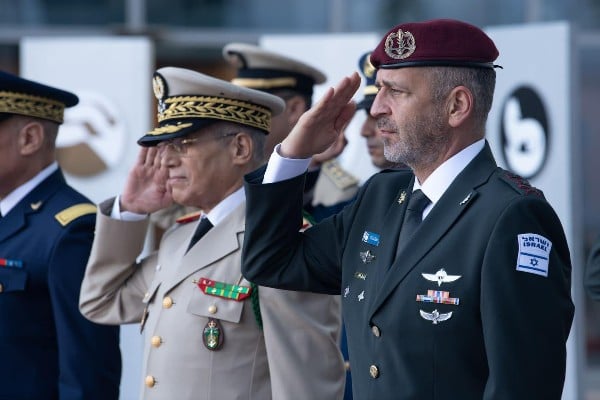
Israel and Morocco agreed this week on a joint military work plan for 2026, formalizing the next stage of defense coordination during a bilateral military forum held in Tel Aviv, the Israel Defense Forces said.
The agreement was finalized at the third meeting of the two countries’ Joint Military Committee, a gathering that coincided with five years since Jerusalem and Rabat normalized relations under the Abraham Accords.
Israeli officials described the session as a practical step toward translating diplomatic ties into sustained security cooperation.
According to the IDF, the Moroccan delegation took part in a series of closed-door professional discussions with senior Israeli officers, alongside briefings and site visits connected to Israel’s defense establishment. The talks were overseen by the IDF Planning Directorate together with the Tevel Division, which manages military relations with foreign partners.
Rather than focusing on tactical coordination, the centerpiece of the visit was a strategic-level forum examining long-term force development and identifying shared priorities for future cooperation.
The IDF said the panel addressed how both militaries assess evolving threats and align planning concepts, with the goal of improving interoperability and mutual understanding.
In parallel with the working sessions, Moroccan representatives toured IDF units and held meetings linked to Israel’s defense industries and operational directorates.
The IDF said these visits were intended to give the delegation direct exposure to Israel’s military capabilities, organizational structure, and planning processes.
Israeli officials framed the meeting as part of a steady deepening of ties that has progressed incrementally since normalization.
The IDF said the Joint Military Committee has become a central mechanism for managing defense relations between the two countries and for setting multi-year agendas rather than one-off engagements.
In its statement, the IDF characterized Morocco as a “key partner for regional stability,” adding that the latest meeting marked another milestone in expanding security cooperation. While no operational details of the 2026 work plan were released, officials indicated that the framework is intended to guide joint activity, consultations, and exchanges over the coming year.
The Tel Aviv meeting follows previous committee sessions hosted alternately by the two sides and reflects an effort to institutionalize military dialogue as diplomatic relations between Israel and Morocco enter their sixth year.
Netanyahu, Trump agree on Iran strike if no deal reached
A Lebanese newspaper aligned with Hezbollah reported Monday that Israeli Prime Minister Benjamin Netanyahu and U.S. President Donald Trump reached broad understandings in their most recent meeting, including a readiness to launch a military strike against Iran if no agreement is reached on their terms, alongside coordinated moves in Gaza and efforts to preserve Lebanese “neutrality.”
According to Al-Akhbar, the information received in Beirut from senior international sources and Western embassies indicates that Netanyahu and Trump agreed on three central tracks: an attack on Iran should it refuse to accept conditions that include a complete halt to its nuclear program and an end to support for regional proxy forces, entry into the next phase of fighting in Gaza, and the maintenance of Lebanese neutrality as long as Hezbollah does not intervene.
The report, which was cited in Israel by Israel Hayom, claims that U.S. officials believe Iran’s acceptance of such terms would not only avert a strike but could also lead to a broader settlement in Lebanon. Conversely, an attack on Iran or a collapse of the regime would have direct consequences for Lebanon, significantly weakening Hezbollah due to its dependence on Tehran.
Al-Akhbar added that the concept of Lebanese “neutrality” is explicitly conditional. Any involvement by Hezbollah in a confrontation would be met with a wide and deep Israeli response targeting the group’s strongholds in Beirut’s Dahiyeh neighborhood and the Bekaa Valley in eastern Lebanon. The paper stressed that neutrality would not mean a halt to ongoing Israeli strikes.
The report also cited a source claiming that Saudi Arabia is intensifying diplomatic efforts with Iran to push it toward an agreement with the West, driven by fears that war or internal chaos in Iran could spill over into the Gulf. Riyadh, according to the source, is concerned that regime collapse could eventually push Tehran into a destabilizing role as a self-appointed “policeman of the Gulf.”
The claims come amid increasingly blunt warnings from Trump in recent days, including his statement that he would “absolutely” back renewed Israeli strikes on Iran’s missile and nuclear programs if Tehran attempts to rebuild them, as well as threats of action if the regime continues to kill protesters as unrest spreads across the country.