Bible Prophecy, Signs of the Times and Gog and Magog Updates with Articles in the News
California Is Shaking Again – Why The Next Big One Won’t Just Stay In California
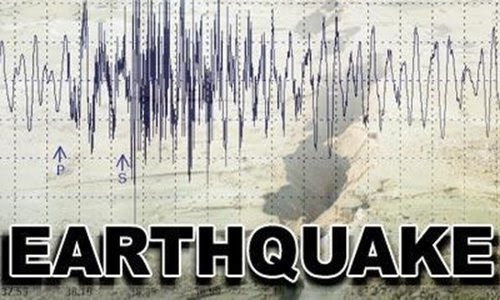
The West Coast is shaking again. In recent weeks, seismic activity along the Pacific Ring of Fire–particularly along California’s coastline and inland fault systems–has intensified. What many hoped would be a brief period of tremors has instead become a steady drumbeat of geological reminders that California sits on borrowed time.
In the San Francisco Bay Area alone, hundreds of small earthquakes have been recorded in just days. While most are minor and barely felt, their cumulative effect is unsettling. Earthquakes, unlike hurricanes or wildfires, offer no warning. They arrive without sirens, without forecasts, without mercy. And scientists have been clear for decades: the Big One is not a question of if, but when.
To understand why this matters–far beyond California–we must look honestly at what different earthquake scenarios would actually mean.
When the Earthquake Is “Manageable”
A magnitude 6.0 to 6.9 earthquake, while considered “strong,” would be survivable in many areas due to modern building codes. But survivable does not mean painless.
In this scenario, older buildings–particularly unreinforced masonry structures common in historic districts–would suffer severe damage. Power outages could last days. Gas lines would rupture, sparking fires similar to those that devastated San Francisco in 1906. Hospitals would be overwhelmed with injuries. Schools and workplaces would close indefinitely.
Economic losses would likely range from $50 to $150 billion, depending on the location. Insurance companies would strain, but the system would hold. Life would resume–but with scars.
When the Big One Hits
A magnitude 7.5 to 7.9 earthquake along the San Andreas Fault is the scenario most seismologists quietly lose sleep over.
In this case, entire neighborhoods could be rendered uninhabitable within minutes. Bridges and overpasses would collapse. Major freeways–lifelines for commerce and emergency response–would be severed. Ports in Los Angeles and Oakland, critical arteries for global trade, could be shut down for months.
Estimates from past studies suggest thousands of deaths, tens of thousands of injuries, and economic losses exceeding $500 billion. Millions could be displaced overnight.
Communication networks would falter. Cell towers would go down. Internet service would be intermittent or unavailable. In an age where nearly everything–from banking to emergency alerts–depends on connectivity, this alone would amplify chaos.
Temporary shelters would fill immediately. Hotels would be destroyed or unsafe. Rent prices in surrounding states would skyrocket as refugees flee inland. California would not just face homelessness–it would export it.
The Catastrophic Scenario Few Want to Imagine
A magnitude 8.0+ earthquake, though less frequent, remains within the realm of possibility. In this worst-case scenario, parts of California would resemble a war zone.
Water systems could fail entirely, leaving millions without clean drinking water. Fires could burn unchecked for days. Airports would close. Ports would be crippled. Entire regional economies would freeze.
The cost? Trillions of dollars. The humanitarian impact would rival major global disasters. Federal disaster relief would be stretched to its limits, forcing difficult decisions nationwide.
And that’s when the story stops being “about California.”
Why the Entire Nation Would Feel It
California is not just another state. If it were its own country, it would rank among the world’s largest economies. It produces a massive share of U.S. agriculture, technology, entertainment, manufacturing, and international trade.
A major earthquake would immediately rattle financial markets. Stock exchanges would plunge. Supply chains already fragile from years of global instability would snap. Food prices would rise nationwide. Fuel costs would spike. Shipping delays would ripple across the economy.
At the same time, America’s global posture would weaken. A nation struggling with a massive domestic humanitarian crisis is less able to project strength abroad. Adversaries would notice. Markets would notice. Allies would worry.
In short, the ground shaking in California would be felt in New York, Texas, Washington, and beyond.
The Uncomfortable Truth
Earthquakes are uniquely cruel disasters. They punish complacency. They do not care about political debates, budgets, or optimism. California has done much to prepare–but preparation does not equal immunity.
The recent surge in seismic activity may amount to nothing more than a geological reminder. Or it may be the prelude to something far larger. No one can say for certain.
But one thing is clear: when the earth moves, denial offers no shelter.
The question is not whether California will face another major earthquake. The question is whether we–as individuals, communities, and a nation–are willing to confront the consequences honestly before the ground forces us to.
Because when the shaking starts, it will already be too late to prepare.
A Detransitioner’s $2M Jury Verdict Threatens The Child Mutilation Pipeline

A recent jury verdict marks the first tremor in a building earthquake that may sever the transgender child mutilation pipeline, setting the stage for a host of lawsuits that threaten to end the medical establishment’s promotion of “gender-affirming care.”
Transgender activists push gender confusion and child mutilation in the name of “civil rights,” but we all know the dirty secret: Health care companies make a killing when teenagers sign up for a lifetime of harmful “treatments” before they’re able to offer informed consent.
In fact, activists, influencers, teachers, counselors, and medical staff have effectively created a child mutilation pipeline, leading young people to identify as the gender opposite their sex and to take experimental “treatments” to make their body resemble their claimed identity.
The Child Mutilation Pipeline
Activists and influencers push the idea that a person’s inner sense of “gender” overrides his or her biological sex, and that it is “healthy” to change body chemistry in pursuit of this identity. Teachers and counselors mainstream this idea in schools, even working to hide claimed gender identities from parents.
Doctors diagnose kids with “gender dysphoria,” the painful and persistent sense of identifying with the gender opposite one’s biological sex, and recommend “treatments.” Each step along the process involves more harms and often sets minors on the path to more invasive “treatments.”
The first step, often called “social transition,” involves peers and authority figures using pronouns and names that align with the kid’s gender identity. Even this acts as a “powerful psychotherapeutic intervention that radically changes outcomes,” according to psychologist Dr. Stephen B. Levine.
Next, kids who haven’t undergone puberty may take gonadotropin-releasing hormones that authorities use to “chemically castrate” sex offenders. Doctors also use the drugs to extend the lives of the elderly by fighting certain cancers that feed upon estrogen or testosterone, yet some minors use them off-label to delay the natural process of puberty.
Tellingly, a Food and Drug Administration study found an “increased risk of [suicidal thoughts] and depression” among minors using these drugs to treat “gender dysphoria.”
Not only are these drugs not “fully reversible” as activists claim, but David Gortler, a pharmacologist who previously worked in the Food and Drug Administration, ran a preliminary analysis of FDA data and found 70,000 adverse reports for these “puberty-blocking” drugs. Adverse reactions included hallucinations, bone disorders, cardiac arrest, a clot in the heart, seizures, blindness, and even death.
Minors experiencing puberty or who have gone through puberty may take cross-sex hormones–featuring increased estrogen for boys or increased testosterone for girls. Men who take extra estrogen or other hormones to appear female, for example, face increased risks of infertility, diabetes, testicular and breast cancer, and early death, according to a study published last year.
Levine, the psychologist, warned that cross-sex hormones can have negative effects on fertility, bone density, brain development, and psychosocial well-being.
Finally, some patients suffer the ultimate debilitating “treatment”–the removal of healthy sex organs and their replacement with Frankensteinian approximations of the opposite sex’s organs. While some activist groups do not explicitly recommend such surgeries for minors and claim that minors do not undergo them, at least one study found that an estimated 3,678 minors have undergone surgical alterations in a five-year period (including 405 minors between the ages of 12 and 18 who underwent genital surgery).
While the lifelong impacts of these sex-rejection procedures remain less than fully known, patients who undertake each of the drug and surgical “treatments” require lasting care and become patients for life.
Last year, the Department of Health and Human Services released a peer-reviewed study finding “extremely weak evidence” that these interventions have any beneficial effect for children, and that the risks for these interventions are becoming “increasingly undeniable.”
If the child mutilation pipeline loses its veneer of scientific legitimacy, it will struggle. Yet, if it loses the ability to make doctors money, the health care industry may reconsider the entire project.
The $2 Million Verdict
That’s where the story of Fox Varian comes in.
New York doctors removed the breasts of Varian, a woman who identified as a man, when she was just 16 years old. On Friday, a New York jury found the two professionals who approved the procedure–a psychologist and a surgeon–liable for medical malpractice, The Epoch Times reported. The jury awarded Varian, now 22 and no longer identifying as a man, $1.6 million for past and future pain and suffering, and an additional $400,000 for future medical expenses.
Varian’s case represents the first detransitioner malpractice lawsuit in the nation to go to trial and win, but it will be far from the last.
Back in 2024, Ron Miller, a partner at the law firm Campbell Miller Payne, told me that detransitioner lawsuits will likely result in jury verdicts between $10 and $20 million. Miller’s firm represented Varian.
“You’re looking at lifelong medical issues that are going to require pharmaceutical drugs and therapies and treatments that just will never end,” Miller explained.
Varian’s verdict falls short of Miller’s prediction–but it proves that detransitioners can win multimillion-dollar judgments.
Miller launched his firm in order to represent detransitioners, and it seems he has no lack of business.
Journalist Benjamin Ryan has a list of 28 different detransitioner lawsuits.
If the horrific scandal that is “gender-affirming care” isn’t enough to shame doctors into stopping this insanity, perhaps multimillion-dollar judgments will.
When ‘Sinner’ Becomes An Offensive Word from The Pulpit

There are moments when a single sermon reveals far more than a pastor intends. A recent clip shared by the Christian media outlet Protestia has become one of those moments. In it, an Episcopal pastor argues that Christians should move away from the word “sinner” because it makes people uncomfortable. The statement is framed with humor and cultural sensitivity, but beneath the surface lies a devastating theological collapse–one that strikes at the very heart of the Gospel itself.
Her opening tactic sets the tone. Mimicking what she portrays as harsh preaching, she quips, “You’re all going to hell. Aren’t you glad we don’t go to that church?” The implication is clear: sermons that speak plainly about sin are outdated, unloving, or extreme. She then describes Christianity as existing on a “spectrum” of belief regarding sin and redemption, suggesting that modern believers no longer feel comfortable with identifying themselves as sinners at all.
That discomfort, however, is not evidence of spiritual maturity. It is evidence of spiritual drift.
The Bible does not treat sin as optional language, nor as a theological preference that varies by tradition. Scripture is unflinchingly clear about the human condition. “For all have sinned and fall short of the glory of God” (Romans 3:23). That verse is not a rhetorical device–it is a diagnosis. Humanity’s problem is not merely brokenness, trauma, or imperfection. It is sin. And unless sin is named, the Gospel itself becomes unintelligible.
This is where the pastor’s message moves from misguided to dangerous. When sin becomes uncomfortable to name, grace becomes unnecessary. If we are not sinners, then what exactly did Christ come to save us from? Jesus did not go to the cross to rescue humanity from low self-esteem or social discomfort. He came because we were lost. He came because we were dead in our trespasses and sins (Ephesians 2:1). Remove sin, and the cross becomes a symbol rather than a sacrifice.
Ironically, Jesus Himself had no hesitation using the language this pastor now avoids. He declared, “I did not come to call the righteous, but sinners, to repentance” (Luke 5:32). Christ did not soften the truth to spare feelings. He spoke plainly because eternity was at stake. His compassion was not found in avoiding offense, but in offering forgiveness through repentance.
The modern impulse to treat Christianity as a “spectrum” mirrors the spirit of the age far more than the authority of Scripture. Truth, according to the Bible, is not fluid. It is revealed. When pastors begin reshaping doctrine to match cultural sensibilities, they cease to be shepherds and become editors–cutting away whatever no longer fits contemporary taste.
This is not a new warning. The Apostle Paul cautioned that a time would come when people would “not endure sound doctrine, but according to their own desires…heap up for themselves teachers” who say what they want to hear (2 Timothy 4:3). A Gospel without sin is easier to preach, but it is powerless to save.
What makes this moment especially tragic is that calling ourselves sinners is not meant to crush us–it is meant to free us. Christianity begins with honesty. We confess our sin not to wallow in shame, but to magnify grace. “If we say we have no sin, we deceive ourselves, and the truth is not in us” (1 John 1:8). The good news only becomes good when we first acknowledge the bad.
The Church does not serve the world by echoing its discomfort. It serves the world by offering truth wrapped in love. When pastors abandon biblical language to avoid offense, they do not make the Gospel more accessible–they make it hollow. A Savior who saves us from nothing is no Savior at all.
The sadness many believers feel watching moments like this is justified. But it should also awaken resolve. Now more than ever, the Church must cling to the full counsel of God’s Word. Sin must be preached–not with cruelty, but with clarity. Grace must be offered–not cheaply, but powerfully. And Christ must remain at the center–not as a moral example, but as the crucified and risen Savior who came precisely because we are sinners.
To forget that is not progress. It is apostasy dressed up as compassion.
Plan For New Gaza Is Already Looking Like The Old Gaza

Ali Shaath, who has been tasked to head the Gaza administration reconstruction of the Strip, was praised by the White House last month as “a widely respected technocratic leader.” But an Israeli watchdog group said Shaath shares the radical anti-Israel ideology one would expect from a former Palestinian Authority functionary.
“His ideology is taken directly from the Palestinian Authority’s playbook of hate and terror promotion,” said Palestinian Media Watch in a statement on Sunday.
Before U.S. President Donald Trump tapped Shaath to lead the National Committee for the Administration of Gaza (NCAG), Shaath shared his views about Israel and terrorism in an April 2025 podcast, as revealed by PMW.
In the YouTube interview, Shaath declared Israel a Western colonial project. “This colonialist [Israel], who was planted by America and Western Europe … , they planted it [Israel] in Palestine since the Balfour Promise [i.e., Declaration].”
During the interview, he wouldn’t refer to Israel by its name, calling it “the occupation,” effectively denying its right to exist. In the P.A. lexicon, PMW pointed out, all of Israel is an “occupation,” and all Israeli cities are “settlements.”
Itamar Marcus, founder and director of Palestinian Media Watch, told JNS that “the American attempt to create a future for Gazans is completely dependent on the quality of the people who will rule Gaza.
“The Americans must tell the leaders that they have to have the honesty and confidence to tell Palestinians what will be for them a difficult truth: Jews are indigenous to the land with thousands of years of history, and therefore Israel has a right to exist. If the Palestinian leaders can’t even say this, there is no point in wasting time on this experiment,” he said.
“If Ali Shaath was just parroting P.A. ideology when he said these words, now is the time for him to apologize and tell Palestinians the truth. If he actually believes them, Trump must replace him before he even starts,” Marcus said.
Shaath not only espoused P.A. ideology in the interview, but he also revealed that he had engaged in its violent tactics, boasting about his role in organizing attacks on Israeli positions in Khan Yunis, the city in the Gaza Strip where he was born.
“Like every Palestinian, I did an activity with young people at school, demonstrations against the Israeli occupation, and we would stand in areas where there are checkpoints of the occupation [i.e., Israel] and their positions and throw rocks at them,” he said.
“We set this day ablaze, and I actually was the organizer of this activity for this national act in the city of Khan Yunis. I succeeded in awakening all the opinions and feelings of the people, and they set out for the occupation’s positions,” Shaath said.