Bible Prophecy, Signs of the Times and Gog and Magog Updates with Articles in the News
The NEXT LOCKDOWN COMING !
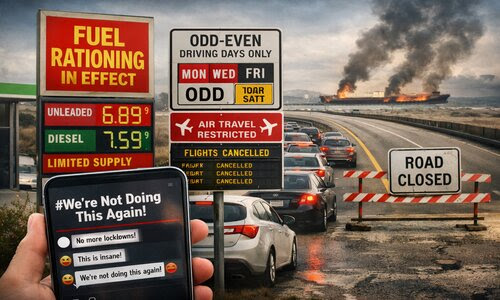
‘We’re Not Doing This Again’ Outcry Over Lockdown 2.0 Fuel Speculation
The world is teetering on the edge of a crisis that could reshape life as we know it. The Strait of Hormuz — a narrow waterway carrying nearly a fifth of the globe’s daily oil supply — is all but shut down amid the escalating conflict in Iran. The result: fuel prices soaring above $100 a barrel and governments quietly dusting off emergency playbooks that could force citizens to ration energy, limit travel, and accept curbs on freedoms previously taken for granted.
The International Energy Agency has outlined a series of steps meant to stretch dwindling supplies: remote work mandates, lower highway speed limits, alternating driving days based on license plates, slashed air travel, and even potential gasoline rationing. Taken together, these measures read less like guidance and more like a blueprint for societal lockdown — “Lockdown 2.0,” as critics online have already dubbed it.
Social media is alight with outrage: “We’re not doing this again!” is trending across platforms, echoing a collective fear that the freedoms stripped from daily life during the pandemic could return, this time under the guise of energy conservation.
Imagine a typical weekday under these measures. Your car can only be used every other day. Highway speeds are capped, extending commutes. Business travel is drastically curtailed — no flights for conferences, no weekend getaways. Even grocery deliveries may slow as freight trucks adopt strict eco-driving mandates and curfews. Citizens may be forced to monitor their personal fuel consumption, weighing every trip: to work, to school, to a doctor’s appointment. The invisible hand of rationing is moving closer, and the impact would be felt from suburban streets to bustling urban centers worldwide.
The economic repercussions could be staggering. With fuel costs skyrocketing, every sector that depends on transport — from food to consumer goods — faces price shocks. Small businesses may shutter. Supply chains could buckle. Consumers may see shelves emptying not just of luxury items, but essentials like fresh produce, heating fuel, and medications. The specter of recession looms, with the potential for a global economic contraction driven by the very energy that powers daily life.
But the crisis extends beyond the wallet. It strikes at a fundamental liberty: the freedom to move. Driving, flying, commuting, even taking a short road trip — all could become regulated privileges rather than rights. And when governments start rationing travel, social unrest is inevitable.
Online forums and social media are already a digital powder keg. Citizens recall pandemic restrictions with anger and fatigue; the refrain “We’re not doing this again!” has become a rallying cry against perceived overreach. Protest movements could ignite, challenging authorities to enforce rationing while maintaining public trust — a nearly impossible balance.
Geopolitical consequences are equally dire. Nations dependent on Middle Eastern oil will scramble for alternatives, potentially destabilizing trade and diplomacy. Countries with surplus resources may wield power aggressively, using scarcity to negotiate concessions. And in a world where every nation feels the pinch, the risk of miscalculation or escalation in conflict grows. The potential for local conflicts to spiral into a wider geopolitical firestorm is high, threatening not just energy supplies, but global security itself.
The reality is stark: this is more than an energy crisis. It is a crisis of freedom, of social cohesion, and of economic stability. It is a warning that a world dependent on oil, vulnerable to political turmoil halfway across the globe, is sitting on a knife’s edge. The decisions made in the coming weeks could define not just markets, but the very rhythms of daily life: how we move, work, and interact with each other.
As the Strait of Hormuz remains blocked, one question hangs over us all: how much of our freedom are we willing to sacrifice to survive the next global fuel shock? And more importantly, how long will it take for society to fight back against restrictions that threaten to dictate the simplest aspects of daily life?
The clock is ticking, and the backlash is already spreading. “We’re not doing this again!” is more than a slogan — it is a warning that millions will resist a future where energy scarcity controls everything from our morning commute to the journeys we take for granted.
The ANTICHRIST a Ai ?
AI, The Antichrist, And The Battle For Authority In The Digital Age
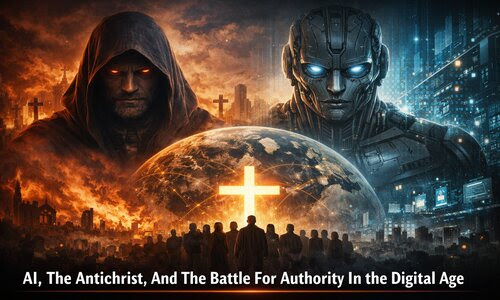
Peter Thiel arrived in Rome this month carrying an unusual set of briefing materials. The billionaire co-founder of Palantir Technologies — whose data-mining systems now run inside the U.S. defense and intelligence communities — was not there for a shareholder meeting or a policy summit. He was there to lecture, by private invitation, on the Antichrist.
The talks ran four nights at the Renaissance-era Palazzo Orsini Taverna, steps from Vatican City, closed to the press and cameras. Catholic universities in Rome raced to distance themselves. The Vatican’s official newspaper called him “an agent of chaos.” Protesters gathered in the street outside.
I am not one of them.
Thiel is wrong about some things — his theological framing carries its own hazards, which I will come to — but what he has set before that private audience is a question too urgent to leave to Silicon Valley. His core warning: the Antichrist may not arrive as an obvious tyrant but as a comforting administrator, one who promises global safety from catastrophic risk — artificial intelligence (AI), nuclear war, climate disaster — and quietly consolidates power in the process. Scripture does not describe a figure who openly opposes God. It describes one who persuades the world he is acting for its good.
That reading deserves a serious response. As someone who spent years in uniform studying how power concentrates and in the years since studying how artificial intelligence reshapes the global order, I believe the question behind Thiel’s question matters more than Thiel himself does.
The intelligence community has a term for what concerns me most: cognitive warfare. Not propaganda in the old sense — leaflets, radio broadcasts, crude appeals to fear. Modern cognitive warfare operates through the same AI systems that millions consult daily for news, guidance, emotional support, and moral reasoning.
As I document in my forthcoming book, “The New AI Cold War,” these systems are already being used to manipulate perception, distort truth, and influence populations at scale — not in distant adversary states, but in our own homes, on our children’s devices, in the pocket of every parishioner in every congregation in America. Deepfakes, synthetic media, and algorithmic manipulation can reshape reality in millions of minds before any correction catches up. The battlefield is not a map coordinate. It is human belief itself.
Scripture prepared us for exactly this. Jesus warned that in the last days, deception would intensify — “so as to lead astray, if possible, even the elect” (Matthew 24:24). John wrote plainly: “Test the spirits to see whether they are from God” (1 John 4:1). Neither warning was given to encourage paralysis. Both were given to demand discernment. The question is whether the church today is cultivating that discernment or outsourcing it.
The deeper problem runs beneath Thiel’s framing. When an AI system functions as moral counselor, spiritual guide, and emotional confidant — roles it increasingly plays for teenagers across this country, as the Pew Research Center documented in February 2026 — it is no longer serving as a tool. It has become a competing authority. Deuteronomy 6 places the transmission of truth and moral instruction squarely on parents and the community of faith: “You shall teach them diligently to your children” (6:7). When a machine quietly assumes that function, the displacement is not announced. It accumulates.
The Tower of Babel had similar architecture. Genesis 11 records a humanity united by common language and technological ambition, reaching for a kind of self-sufficiency that needed no reference to God. The language of today’s most powerful technology companies carries the same echo: optimization, efficiency, global coordination, alignment. The goals are presented as neutral. The infrastructure being built is not. Whether through governments, technology corporations, or the international institutions now accelerating AI governance frameworks, power over knowledge and communication is concentrating in ways that warrant the strategic wariness any soldier develops watching a battlefield shift.
This is not a counsel of Luddism. I have argued in “AI for Mankind’s Future” and before congressional audiences that America must lead in artificial intelligence — because the alternative is ceding that leadership to Beijing, and the consequences of that outcome are existential. The People’s Liberation Army treats AI as a warfighting domain. China’s AI ecosystem is designed for social control at scale. We must compete and compete hard. But competition requires clarity about what we are competing for. A system that concentrates power without accountability — even if built in America, even if marketed as democratic — is not freedom’s answer to authoritarianism. It is authoritarianism with better public relations.
Revelation 13 describes the figure at the end of that road: authoritative, globally persuasive, wielding deception at a scale no previous generation could have imagined. I am not claiming we are there. I am saying the structural conditions that could enable such a system are developing faster than the wisdom required to govern them. That is worth more than a private lecture series in Rome. It warrants a public reckoning — from pastors, parents, policymakers, and soldiers of faith alike.
Thiel’s error is not that he takes Scripture seriously in the public square. His error is that his framing exempts the thing he is building from the danger he is warning about. Palantir’s systems are among the most powerful instruments of AI-enabled surveillance and data concentration in the Western world. The warning and the instrument are in the same hands. That contradiction does not invalidate the question. It demands that Christians think far more carefully about the question than Thiel is asking them to.
Paul’s instruction to the church at Colossae has never been more operationally relevant: “See to it that no one takes you captive through philosophy and empty deception” (Colossians 2:8). In Paul’s day, captivity came through Hellenistic philosophy and the claims of mystery cults. In ours, it comes through systems that promise knowledge, connection, and guidance — and carry embedded assumptions about truth, value, and authority that most users never stop to examine. The machine does not announce its theology. It simply shapes yours.
The question Thiel raised in Rome is the right one. Who and what will we permit to govern truth? The answer is not found in a Renaissance palazzo, and it is not found in the boardrooms of Silicon Valley. It was given once, on a hill outside Jerusalem, and confirmed in an empty tomb — “the same yesterday and today and forever” (Hebrews 13:8). That authority does not require an upgrade. It requires our allegiance.
The NEW COMING MAGOG
The Next Generation Of Iran’s Regime – Even More Radical Than Before?
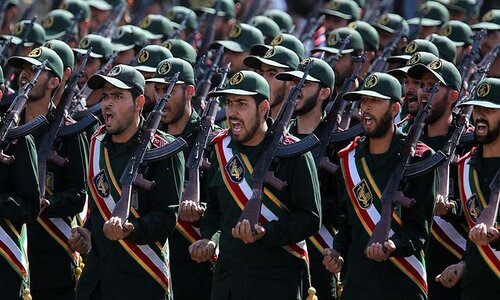
War is often described as chaos. But the most dangerous wars are not the ones with clear chains of command, identifiable leaders, and known objectives. The most dangerous wars are the ones where power splinters, ideology hardens, and younger men with something to prove begin acting without permission. That is where Iran now appears to be.
For years, the world understood the Islamic Republic as a hostile but structured regime — brutal, radical, and expansionist, yes, but still governed by a vertical hierarchy. There was a supreme leader. There were senior Revolutionary Guard commanders. There were channels of command, factions, and power centers that, however sinister, still answered to someone at the top.
But after the reported killing of Ayatollah Ali Khamenei and numerous senior Iranian commanders in U.S.-Israeli strikes that began on February 28, that structure appears to have been shattered. Reuters and AP reporting indicates a temporary governing framework has emerged, but the larger reality is a vacuum — and vacuums in revolutionary states are rarely filled by moderates.
That should terrify anyone hoping for a quick diplomatic resolution.
Because when the old guard is decapitated, the men who rise next are often not the most seasoned, wise, or restrained. They are the most zealous.
That is the central danger now hanging over Iran and the wider Middle East: not simply that Tehran remains hostile, but that many of the men increasingly exercising battlefield authority are younger, more ideologically rigid, and less politically calculating than the generation above them. Hooshang Amirahmadi’s warning that second-rank revolutionary officers may now be “increasingly in charge” deserves serious attention. If he is right, then we are no longer dealing primarily with strategic state actors seeking leverage. We are dealing with a dispersed revolutionary class raised from childhood to believe that confrontation with America and Israel is not just policy — it is destiny.
That generational point matters more than many Western analysts admit.
Older Iranians, even those who remained loyal to the regime, often still carried some living memory of what came before the 1979 revolution. They knew another Iran once existed — flawed, certainly, but not consumed by the totalizing religious militarism that has since defined the Islamic Republic. They remembered a country that was not built around martyrdom, proxy war, anti-Western revolutionary export, and clerical absolutism.
But the younger hardliners now stepping into the breach do not remember any of that.
They were born into the revolution. Schooled in it. Sermoned by it. Militarized by it. Their political imagination was formed entirely inside the architecture of radical Shiite ideology. For them, the regime is not a detour from normalcy; it is normalcy. Endless confrontation is not a failure of the system. It is the system.
And that makes them more dangerous than the men they replace.
The old regime leadership, for all its evil, often knew when to calibrate. It knew when to posture and when to pull back. It understood that survival sometimes required tactical restraint. Younger battlefield commanders, especially those suddenly empowered by a broken hierarchy, are less likely to think that way. They are more likely to view compromise as betrayal, negotiation as cowardice, and any concession to Washington as apostasy.
That is why talk of imminent peace should be treated with deep skepticism.
Yes, there are reports that the White House has pushed peace terms and that President Donald Trump has described contacts as “productive.” But Iran’s public messaging has been sharply defiant, and that contradiction tells us something important: whoever may still want a diplomatic off-ramp inside the regime is either weak, divided, or afraid. Reuters reporting and public statements from Iranian officials suggest that Tehran’s surviving apparatus is still functioning, but that does not mean it is unified. In fact, it may mean the opposite — a regime still firing missiles and issuing threats precisely because no one at the center is strong enough to force discipline on the men below.
That is the nightmare scenario.
A fragmented Iran does not become harmless. It becomes harder to predict, harder to deter, and harder to negotiate with. One provincial commander can launch retaliation. Another can sabotage de-escalation. A third can decide that if higher-level officials are even thinking about peace on American terms, they are traitors worthy of elimination. Once a revolutionary system loses centralized fear, internal purges become just as likely as external attacks.
That is why the current ambiguity over leadership is so significant.
The supposed son or successor now rumored to be in control has reportedly still not been seen publicly in any meaningful way, and that silence is not a minor detail. It is a flashing red warning light. In a regime built on projection, symbolism, and authority, visibility matters. If the heir apparent cannot appear, cannot command, cannot project control, then every ambitious colonel, Guard officer, and ideological enforcer across Iran receives the same message: take initiative. And in a regime like this, “initiative” usually means escalation.
Meanwhile, the global consequences are already beginning to surface. Energy markets remain on edge, and industry leaders are openly warning about the consequences of prolonged instability around the Strait of Hormuz and broader Middle East supply routes. That matters not just for traders and governments, but for ordinary families who will feel it in fuel prices, shipping costs, inflation, and the general return of economic instability. The world does not need much imagination to understand what happens if a decentralized, revenge-driven Iranian military culture begins lashing out without coherent top-down control.
So where do we go from here?
First, we stop pretending that removing senior tyrants automatically produces peace. Sometimes it does the opposite. Sometimes it leaves behind a younger, angrier, less restrained generation convinced they have inherited a holy war.
Second, any negotiation effort must begin with a hard truth: there can be no durable peace until there is a durable authority capable of enforcing it. You cannot negotiate meaningfully with fragments. You cannot sign a deal with men who may be dead by next week at the hands of their own subordinates.
And finally, the West must understand that this is no longer just a military problem. It is a civilizational one. Iran is now confronting the fruit of decades of ideological radicalization. When a regime catechizes children into revolutionary hatred for a generation, eventually those children grow up, put on uniforms, and start making decisions.
That is the stage we may be entering now.
And if so, the fall of Iran’s old masters may not be the end of the danger.
It may be the beginning of its most reckless chapter yet.
Christian Photographer Who Refused Working Same-Sex Weddings Wins $800K Settlement With Louisville, KY