
Bible Prophecy, Signs of the Times and Gog and Magog Updates with Articles in the News
a Doctrine of Demons causes a Jesus Walk to not take Place = Police Ban ‘Walk With Jesus’ March In East London Over Fears Of Muslim Backlash
Britain has always claimed to be a land of faith and freedom–but those words ring hollow in Whitechapel. A planned “Walk With Jesus” march has been banned, not because it is illegal or violent, but because authorities fear it might offend others. Peaceful Christians are now being told they cannot proclaim their faith in public without risking arrest. This is more than a local police decision; it is a warning about the direction of an entire nation.
The Metropolitan Police’s decision to halt the event, scheduled for January 31, centers on Whitechapel’s large Muslim population. Organizers promoted the procession as a Christian worship event during what they called “the month dedicated to the holy name of Jesus.” Yet, authorities deemed marching there “reckless,” citing intelligence suggesting a hostile reaction that could lead to disorder. The march can proceed elsewhere–but not in the neighborhood chosen by the faithful.
Deputy Assistant Commissioner James Harman emphasized that the decision rested solely on public safety, not politics or offense. Anyone defying the ban would face arrest. But even framed as a safety precaution, the message is clear: in certain neighborhoods, publicly walking with Jesus is too dangerous for Britain to allow.
The troubling reality is that this ban sets a dangerous precedent for Christian expression. Public worship is no longer protected simply because it is peaceful and lawful; it is now conditional on whether it might provoke others. The message is unmistakable: if your faith risks offending someone, you must stay silent, stay home, or march somewhere “safe.”
This is not neutrality–it is a surrender of fundamental rights. A nation that once proudly carried the name of Jesus through its streets, schools, and institutions now treats His name as a potential threat. When peaceful Christians are told they cannot publicly honor their Savior for fear of angering others, the very idea of religious freedom is eroded. Authorities are effectively placing the burden of tolerance on those who simply seek to live out their beliefs, while rewarding hostility with de facto control over public space.
In essence, Britain has transformed from a country that once celebrated its Christian heritage to one where worship must be carefully managed to avoid conflict. The right to assemble, to proclaim faith, and to walk openly with Jesus is no longer guaranteed; it has become negotiable, contingent on the reactions of others.
Whitechapel has long been home to one of Britain’s largest Muslim populations. That fact alone should not–and historically did not–preclude Christian expression. Britain is not a theocratic Muslim state. It is, or at least was, a nation shaped by Christianity, whose laws, liberties, and institutions were built upon biblical foundations. The freedom to assemble, worship, and publicly proclaim one’s faith was never meant to be conditional on whether it offends another religious group.
Police claim they are motivated purely by safety, but this logic raises a disturbing question: When did expressing Christian faith in public become a threat to society? If peaceful worship is now seen as dangerous, what does that mean for other forms of Christian practice–sermons, school nativity plays, or public prayers? Today it is a march; tomorrow, it could be a hymn, a cross, or a sermon that is suddenly too provocative.
The cultural implications are profound. Once a nation unafraid to celebrate its Christian roots, Britain now treats those roots as liabilities. Public expression of faith is no longer a matter of conviction but a matter of caution, measured by the likelihood of provoking others. And in this calculus, Christians are expected to self-censor to accommodate potential hostility.
This erosion of freedom extends far beyond Whitechapel. It touches schools, workplaces, civic events, and neighborhoods across the country. When one group’s potential reaction dictates whether another group may worship, liberty is not protected–it is suspended. And in that suspension, the very identity of the nation changes.
Britain’s Christian heritage is not merely a historical footnote. It is the soil from which its freedoms grew. To now treat public Christian worship as a destabilizing threat is to deny the nation’s own soul. The question is no longer whether Christianity is being sidelined in the UK. That debate is over. The question now is how far this retreat will go–and how many freedoms will quietly disappear in the process.
A nation that once sent missionaries to the ends of the earth now hesitates to let believers walk its own streets. That should grieve us. And it should wake us up.
Japan’s Economy Crash Is Our Canary In The Coal Mine

On Tuesday, the Dow Jones Industrial Average stock index crashed 870 points, the biggest drop since October.
The mainstream media predictably blamed President Donald Trump’s threat of tariffs over Greenland, but they were wrong.
Thanks to Bitcoin–which trades 24/7–we can actually go to the tape. It turns out Greenland barely made a dent. What caused the bloodbath was Japan.
Specifically, the drop was due to new Prime Minister Sanae Takaichi’s Monday press conference. She announced snap elections to bolster a raft of reforms, which would hike government spending and reduce tax revenue. This sent Japanese bonds crashing as bond investors worried Japan can’t handle its massive government debt.
The panic then bled into U.S. financial markets via the yen carry trade, where hedge funds and speculators have borrowed hundreds of trillions of yen at near-zero interest rates to park it in U.S. assets.
The trade worked fine when rates in Japan were kept artificially lower than in the United States and traders could employ plenty of leverage–like gambling with borrowed money.
But now Japanese bond yields are soaring with the 30-year yield setting new records and shorter-term securities like the 10- and two-year at the highest levels since the 1990s. The stratospheric rise in these yields is threatening to strengthen the yen with them–so, that free money spigot is reversing.
Unwinding the yen carry trade sent the hedge funds rushing for the exits, crashing stocks and bonds worldwide as they liquidated holdings to get out of their leveraged positions. Put simply, if they bought assets with borrowed money, the assets were sold to repay the loans before the interest on those loans could skyrocket.
Japan’s latest bond crisis is a near-repeat of the U.K. Gilt Crisis in 2022, when British Prime Minister Liz Truss introduced a package of tax cuts and spending hikes that sent bond yields soaring a point and a half in a single day–third world territory. And that sent the British pound crashing to a 37-year low against the dollar.
The wider issue is what the U.K.–and now Japan–have illustrated: Bond markets cannot digest fiscal deficits that have blown away peacetime records.
The fact that this is happening in two of the most advanced–and heretofore drama-free–economies on Earth is ominous. The bond vigilantes are reminding everyone that they have the final veto on all government finance.
Even worse, the fiscal deficit in Japan is less than half that of the U.S.–3% of the gross domestic product in Japan versus the 6.4% of GDP that Congress is spending us into the hole every year.
While the dollar’s reserve currency status and our lower aggregate national debt buy time, this suggests we’re living on borrowed time. And when the crisis hits here, it could be even harder than Japan.
How the Land of the Rising Sun got here is illustrative since Congress is following the same recipe.
Japan’s original sin dates to when its easy money bubble burst in 1990, and instead of letting weak companies and banks die off, it put them on permanent life support with stimulus and low interest rates.
This created a zombie economy of money-losing companies that hog up one-third of all bank lending and almost 10 million Japanese workers essentially paid to lose money. The result is that while American productivity grew by half since 1990, Japan’s actually dropped.
That in turn translated into real wages that are lower in Japan today than 1990, while also driving Japanese government debt to 230% of GDP–an eye-watering $70 trillion in U.S. GDP terms.
To finance all that debt, the Bank of Japan pushed interest rates down near zero for 30 years, which was necessary because otherwise the interest on that mountain of debt would eat Japan alive.
This created the free money machine of the century for foreigners in the yen carry trade, and it plunged Japan into 30 years of stagnation with no end in sight.
Beyond the economic costs, this has driven Japanese suicide rates to one of the highest rates on Earth, while Japanese fertility has plunged to just 1.2 children per couple. Shockingly, that means eight great-grandparents turn into just 1.7 souls. If this keeps up, Japan’s population will fall by half per generation, leaving a shell of a developed nation.
Japan is the poster child for a creeping worldwide government takeover that’s transforming vibrant economies into permanent crony bailout apparatuses: Where government handouts and tax-funded nongovernmental organizations feast while the dwindling taxpayers–who pay for it–all check out, figuratively and sometimes literally.
The canary in the coal mine is singing. Will we listen before it’s too late?
When the Church Becomes The Scapegoat For Transgender Tragedies

There is a familiar script playing out across America, and it almost always ends the same way. When a church refuses to abandon its biblical standards–especially around sex, gender, and public witness–it is accused not merely of being unkind, but of being cruel, dangerous, even deadly. Conviction is recast as hatred. Boundaries are reframed as violence. And when tragedy strikes, responsibility is quickly redirected away from broken families, cultural lies, and untreated mental illness–and placed squarely on the church.
The heartbreaking death of Joshua Anthony Link, a 24-year-old man from Belleville, Illinois, is now being used to advance that script.
According to reports, Link, who identified as transgender and went by the name “Nomad Thunder,” was employed as a custodian at St. John’s Lutheran Church in Granite City. Church leadership reportedly told Link he could not wear a French maid outfit and cat ears while working on church property. After an ultimatum and subsequent termination, Link took his own life roughly a week later. His parents now publicly blame the church and its pastor, Rev. Bill Hale, accusing them of a lack of empathy and concern for their child’s mental health.
This is undeniably tragic. Suicide is always devastating, and Christians should never speak about it lightly or flippantly. Compassion is not optional. Grief deserves tenderness. But compassion does not require dishonesty–and it certainly does not require the church to abandon truth or accept blame for refusing to affirm behavior that contradicts its faith.
The outfit at the center of this controversy matters, not because clothing alone determines morality, but because symbols matter–especially in sacred spaces. A French maid outfit with cat ears is not neutral attire. It is tied to a specific internet subculture rooted in anime, sexualized role-play, and gender nonconformity. This “cat maid” aesthetic is widely recognized online as part of a fetishized, performative identity–one that intentionally blurs boundaries between fantasy, sexuality, and public life.
A church has every right–and responsibility–to say that such expressions are inappropriate in its workplace, particularly when that workplace is a Christian ministry serving families, children, and congregants who expect a certain level of decorum and theological consistency. Saying “no” to that expression is not an attack on someone’s humanity. It is a boundary rooted in belief.
Yet instead of asking hard questions about why a young man was so fragile, so untethered, and so unsupported that losing a job became unbearable, the blame has been aimed outward. The parents speak movingly about empathy, but say little about accountability–either personal or parental. Loving your child does not mean affirming every identity they adopt or every demand they make. Real love tells the truth, even when it’s uncomfortable. Real love sets limits.
This is where the modern conversation often collapses. We are told that compassion and standards are mutually exclusive–that to love someone, you must fully validate their self-perception. But that is not love; it is abdication. The church is being asked not merely to show kindness, but to compromise its witness. And compromise always sends a message–especially to the next generation–that truth is negotiable and convictions are expendable under emotional pressure.
We are also told, repeatedly, that refusal to affirm transgender identities leads directly to suicide. This claim is used as a moral cudgel to silence dissent. But study after study has failed to prove that lack of affirmation causes suicide. What research does show–consistently–is that individuals who transition continue to experience disproportionately high rates of depression, anxiety, and suicidality long after hormones or surgeries. Transition does not resolve the underlying distress. It often compounds it.
That reality is rarely discussed because it disrupts the narrative. If the problem is not affirmation, then perhaps the problem is the lie itself–the lie that you can remake your identity at will, that the body is meaningless, and that any resistance to that belief is oppression.
Blaming the church may feel satisfying, but it avoids the deeper tragedy: a culture that tells vulnerable young people that their happiness depends on everyone else changing, and parents who mistake unconditional love for unconditional approval. The result is not freedom, but fragility.
Christians can–and must–have compassion. We can mourn loss, reject cruelty, and treat every person as made in the image of God. But we cannot compromise our values without losing the very thing that gives the church its purpose. If the church surrenders its standards whenever the world disapproves, it ceases to be salt and light and becomes just another institution echoing the culture’s confusion.
You can love your child and still say no. You can care deeply and still draw a line. And you can grieve a death without rewriting truth or assigning blame where it does not belong.
The church is not responsible for every tragedy that occurs outside its walls. But it is responsible for remaining faithful within them–even when that faithfulness is unpopular, misunderstood, or cruelly misrepresented.
KUSHNER AND THE PEACE PLAN : ‘No Plan B’ – Kushner lays out plan to rebuild Gaza, grant amnesty to Hamas

Board of Peace to offer amnesty and reintegration to terror groups in exchange for disarmament, plans $25 billion reconstruction and development of a “New Gaza.”
President Donald Trump’s son-in-law and adviser Jared Kushner ( The TruLight Nominee to the Jewish Messiah aka the Antichrist) laid out plans Thursday for the US-led Board of Peace to rebuild the Gaza Strip and develop it into a high-income regional economic hub, following the disarming of terror groups and demilitarization of the Gaza Strip.
The plan calls for the creation of a “new Gaza,” centered around the four-phase rehabilitation of the area’s main urban centers and a capital-intensive development of surrounding areas, establishing a new seaport, airport, rail line, industrial zones, and tourist centers.
The proposal comes with a projected cost of $25 billion and would take a total of nine years. It is expected to raise the gross domestic product of the Gaza Strip to more than $10 billion, raising the average annual household income to more than $13,000.
Kushner emphasized that the Trump administration and the Board of Peace are committed to rebuilding the Gaza Strip, sidestepping questions of whether Hamas’ ongoing refusals to disarm would hamper the reconstruction plans.
Gaza’s population down by 11% amid wartime emigration
“We do not have a Plan B,” Kushner said. “In the beginning, we were toying with the idea of saying: ‘Let’s build a free zone and then we have a Hamas zone.’
“Then we said: ‘Let’s just plan for catastrophic success.’ Hamas signed a deal to demilitarize. That is what we are going to enforce.”
“We have a plan, we signed an agreement, we are all committed to making that plan work,” he said.
Reconstruction would begin in southern Gaza, starting with the border city of Rafah, and move northward.
Kushner estimated that Rafah would be rebuilt in two to three years.
The Board of Peace program presented during Kushner’s speech also laid out a framework for the demilitarization of the Gaza Strip, offering “amnesty and reintegration” to terrorists in exchange for disarming.
“Disarmament rewarded with amnesty & reintegration, or safe passage,” a slideshow projected during Kushner’s address read in part.
Hamas and other terror groups will be required to hand over their arsenals in stages, beginning with heavy weapons, which will be decommissioned “immediately,” while “personal arms” are “registered and decommissioned by sector” as the technocratic committee set to govern Gaza “becomes capable of guaranteeing personal security.”
Notably, the plan does not rule out the integration of terrorist groups into the new Gaza police force.
New US-Israel plan would let Israel control 75% of Gaza
“All militant armed groups, internal security, and police organizations dismantled or integrated into NCAG following rigorous vetting.”
Israeli airlines ready to evacuate entire fleet from Ben Gurion Airport within hours if Iran launches missiles
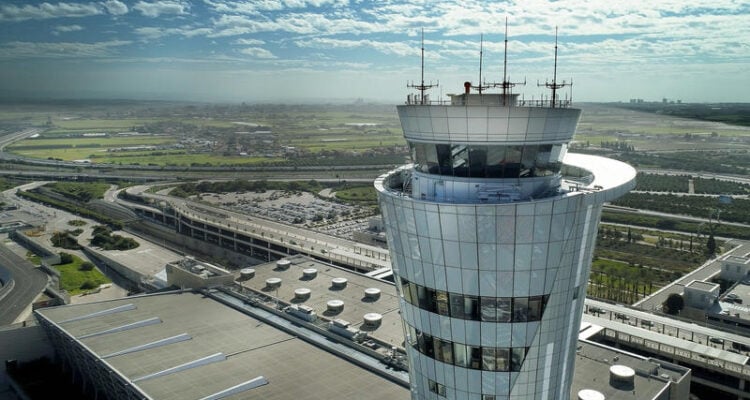
Transportation Minister Miri Regev says her ministry and the airlines are now calibrated for “any scenario, both in defense and attack.”
Israeli airlines have quietly dusted off their wartime playbook: if Iran launches missiles at Israel, the country’s carriers are prepared to empty Ben Gurion Airport of planes within hours and scatter them to safe hubs abroad, Transportation Minister Miri Regev has confirmed in a radio interview.
El Al, Arkia, Israir, Air Haifa and Challenge together operate nearly 85 passenger and cargo aircraft.
According to a senior airline official, operations are currently running as normal, but detailed evacuation plans are in place and rehearsed.
The carriers have already proven they can execute them “in the shortest possible time,” the official said, pointing to their experience during the Israel–Iran war in June.
Under those plans, aircraft can be redeployed on short notice to airports in Cyprus, Athens, Thailand, the United States, and other European destinations.
In June, when Iranian missiles targeted Israel, Israeli airlines flew their fleets out of the country with no passengers on board, while Ben-Gurion temporarily shut down and Israel was effectively cut off from international air travel until emergency routes and rescue flights were organized.
Houthi chief: Any Israeli presence in Somaliland a target
That crisis came on the heels of a ballistic missile strike by Iran-backed Houthi terrorists on the perimeter of Ben Gurion, which injured several people and forced a temporary suspension of flights, prompting major foreign airlines such as British Airways to halt service to Tel Aviv for months.
The incident underscored that Israel’s main airport is viewed as a prime strategic target in the wider Iran-led campaign.
Regev says her ministry and the airlines are now calibrated for “any scenario, both in defense and attack,” including rapidly shifting entire fleets to Larnaca, Athens, and farther afield to both shield the aircraft from missile fire and keep them available to bring Israelis home when the security situation permits.
“The most important thing to tell Israeli citizens is that we are prepared for any scenario,” she stressed.
For travelers, the message is twofold: flights are operating as usual for now, but the industry is primed for another rapid evacuation if Iran escalates again.
The goal this time is to avoid the paralysis and chaos of last summer’s airspace shutdown while still denying Tehran any chance to cripple Israel’s aviation lifeline or strand tens of thousands of Israelis without a way home.