Bible Prophecy, Signs of the Times and Gog and Magog Updates with Articles in the News
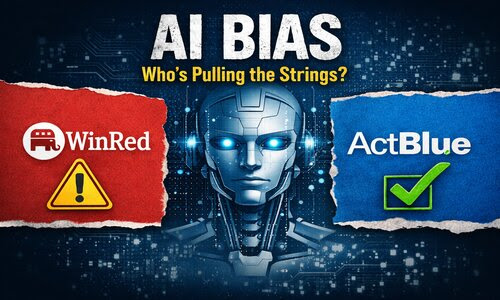
AI Bias In Action: When Machines Quietly Shape What We Trust
A troubling reminder surfaced this week that artificial intelligence is not the neutral referee many assume it to be–it is, in fact, a reflection of human decisions, human data, and human blind spots.
According to New York Post, a “technical error” led OpenAI’s ChatGPT to flag links to WinRed, the official Republican Party donation platform, as potentially unsafe, while links to ActBlue, the primary Democratic campaign fundraising platform, did not generate similar warnings.
The company has said this was not intentional. But whether accidental or not, the incident exposes something deeper–and more concerning–than a simple glitch. It reveals how fragile trust in AI can be, and how easily bias–subtle or overt–can creep into systems that millions rely on for information.
This is not just about politics. It is about power: who shapes the tools, who feeds them data, and who decides what is seen–or unseen.
1. Bias in Source Data
At the foundation of every AI system is data. Massive amounts of it. But data is never neutral–it reflects the world it was gathered from. If the majority of training data leans toward certain viewpoints, narratives, or cultural assumptions, the AI will naturally echo those patterns.
If one political perspective dominates news articles, academic research, or online discourse within the dataset, the AI may unknowingly prioritize or validate that perspective more often. Over time, this creates an uneven playing field–not because the AI “chooses” sides, but because it learned from an imbalanced source.
The WinRed vs. ActBlue incident raises an important question: what kinds of signals in the training data might influence how risk or trust is assessed?
2. Bias in Filters and Safety Systems
AI models are not just trained–they are constrained. Filters and safety layers are added to prevent harm, misinformation, or malicious use. But these filters are designed by humans, and humans carry assumptions.
What qualifies as “unsafe”? What gets flagged? What is allowed through?
In this case, one fundraising platform triggered warnings while another did not. Even if caused by a technical error, it highlights how filtering systems can produce uneven results. A slight difference in how rules are applied–or interpreted–can create the appearance of bias, even when the intention is neutrality.
3. Algorithmic Bias
Beyond data and filters lies the algorithm itself–the mathematical framework that determines how information is processed and prioritized.
Algorithms are built with objectives: maximize relevance, reduce harm, increase engagement, ensure accuracy. But how those goals are weighted matters.
If an algorithm is tuned to be overly cautious in certain contexts, it may flag content more aggressively in one area than another. If it is tuned differently elsewhere, the outcome changes. These are not random outcomes–they are the result of design decisions.
The public rarely sees these decisions, yet they shape what billions of people experience.
4. The Power of Omission: What’s Left Out
Perhaps the most overlooked form of bias is not what is shown–but what is missing.
AI doesn’t just present information; it selects it. It summarizes, ranks, and filters. In doing so, it inevitably leaves things out.
What if warnings are shown for one type of link but not another? What if certain perspectives are simply absent from the results? The user may never know what they weren’t shown.
This “silent bias” can be more powerful than overt bias, because it operates invisibly. People trust what they see, rarely questioning what has been excluded.
5. Who Decides the Data and Design?
At the center of all of this is a critical question: who decides?
Who selects the training data? Who defines the safety rules? Who tunes the algorithms?
These decisions are made by teams–often well-intentioned–but still limited by their own experiences, perspectives, and institutional cultures. Even without malicious intent, unconscious bias can influence outcomes.
The incident reported by the New York Post underscores why transparency matters. When something goes wrong, the explanation often points to a “technical issue.” But behind every technical system are human choices.
A Necessary Warning for the Future
Artificial intelligence is rapidly becoming a gatekeeper of information. It helps people decide what to read, what to believe, and even what to trust.
That power demands scrutiny.
The lesson here is not to reject AI–but to approach it with discernment. Users must remain aware that these systems are not infallible. They are tools, shaped by imperfect inputs and imperfect design.
Moments like this should not be dismissed as minor glitches. They should serve as wake-up calls.
Because if something as simple as a fundraising link can be unevenly flagged, what else might be quietly influenced beneath the surface?
And perhaps the most important question of all: if we do not question the systems guiding us, who will?
The Mouth of the Lion Speaks Islam ? A Nation Divided: Shocking Poll Reveals UK Muslim Support For Iran
As Western forces launched strikes against Iran, most expected tensions to rise in the Middle East. Few expected a different kind of shockwave–one rippling through the streets, communities, and polling data of Britain itself. Yet that is exactly what has emerged: not just disagreement, but a deep and widening divide over who the enemy is–and who deserves support.
New polling conducted between March 2nd and 13th–during the opening phase of the American-Israeli military operation against Iran–reveals something far more serious than policy disagreement. It suggests that a significant portion of Britain’s Muslim population did not simply question the West’s actions. They instinctively opposed them, even as those actions targeted one of the world’s most openly hostile regimes.
Around 39% of British Muslims expressed a favorable view of Iran, compared to just 8% of the general public. Even more striking, half said the U.S.-Israeli strikes were “definitely wrong,” a number nearly three times higher than the broader population.
This wasn’t measured in hindsight.
This wasn’t the result of years of reflection.
This was real-time sentiment–revealed in the heat of conflict.
And it points to something deeper than politics.
A Pattern That Can No Longer Be Ignored
If this were an isolated reaction to one war, it might be explained away. But the data tells a different story–one that has been building for years.
Previous surveys have shown:
– Nearly half of British Muslims expressing sympathy for Hamas, a recognized terrorist organization
– Large numbers unwilling to acknowledge atrocities committed on October 7
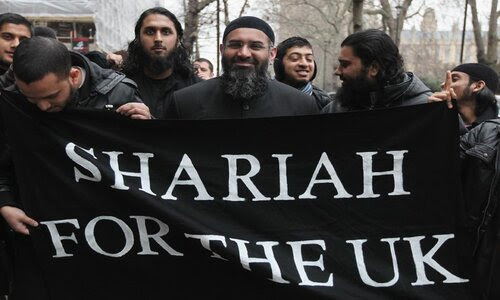
– Roughly one-third supporting the idea of Sharia law being implemented in the UK
– Elevated favorable views toward Russia and China, regimes that openly oppose Western values
Taken together, this is not a collection of random opinions.
It is a coherent pattern of alignment–one that consistently places significant segments of Britain’s Muslim population at odds with the moral, political, and strategic framework of the West.
The Timing Changes the Meaning
The Iran polling matters not just because of what it shows–but when it shows it.
These views hardened as the West acted against Iran.
That suggests something far more concerning than disagreement. It suggests a reflexive opposition–a worldview in which Western action is assumed to be wrong, and Western adversaries are viewed with suspicion’s opposite: sympathy.
Iran is not a neutral actor. It is a regime known for sponsoring terrorism, suppressing dissent, and threatening regional–and global–stability.
And yet, in the moment it was confronted, support for it surged among a large segment of the population inside a Western nation.
That is not just troubling.
It is destabilizing.
What Happens When Worldviews Collide?
Every nation depends on a shared understanding of basic truths:
Who are our allies?
What is justice?
What constitutes evil?
When those answers begin to diverge–especially along cultural or religious lines–the foundation of unity begins to crack.
Britain is now facing that reality.
1. Social Cohesion Is Fracturing
Two in five Britons already believe global conflicts like the Iran war are worsening internal tensions. That is not surprising. When communities respond to the same event with completely different moral interpretations, mistrust follows.
2. Politics Will Not Remain Untouched
Democracy amplifies beliefs.
If large voting blocs consistently reject Western alliances, oppose Israel, and sympathize with rival powers, political leaders will eventually respond. Policies will shift. Alliances may weaken. The ripple effects could extend far beyond Britain.
3. Security Risks Grow in the Shadows
Iran’s reach is not theoretical. Western intelligence agencies have repeatedly warned about influence operations, radicalization pathways, and direct threats linked to hostile regimes.
When ideological sympathy exists within a country, it creates vulnerabilities–sometimes subtle, sometimes severe.
4. The Collapse of Moral Clarity
Perhaps the most alarming trend is not geopolitical–it is moral.
When large numbers of people:
Deny or minimize acts of terror
Sympathize with extremist groups
Embrace alternative legal systems over democratic law
…it becomes increasingly difficult to maintain a shared sense of right and wrong.
Without that, a nation does not just disagree.
It drifts apart.
Not “All”–But More Than Enough
It must be said clearly: not all Muslims in Britain hold these views.
But that is no longer the critical question.
The question is whether enough do to reshape the culture, influence politics, and strain the fabric of society.
On that question, the data is becoming harder to ignore.
A nation does not unravel because every citizen changes.
It unravels when a critical mass moves in a different direction.
A Christian Response: Eyes Open, Hearts Steady
For Christians, this moment demands both courage and clarity.
We are called to love our neighbors–without exception. That includes Muslims. Every person bears the image of God.
But love does not mean silence in the face of dangerous ideas.
Christians must be willing to:
Speak truth about ideologies that justify violence or reject fundamental freedoms
Stand firmly against antisemitism and moral relativism
Defend the values of truth, justice, and human dignity
And yet, we must also resist the pull of fear or hatred.
Because this is not merely a political struggle.
It is a spiritual one.
The Question That Cannot Be Avoided
As Britain navigates rising tensions abroad, it now faces a quieter–but potentially more enduring–challenge at home:
What happens when a significant portion of a nation sees the world through a completely different moral and geopolitical lens–especially in moments of crisis?
That question is no longer theoretical.
It is unfolding in real time.
And how Britain–and the broader West–chooses to respond may determine not only its political future, but whether it can remain a unified society at all.
Trump praises US-Iran talks to end war, says Israel will be ‘very happy’
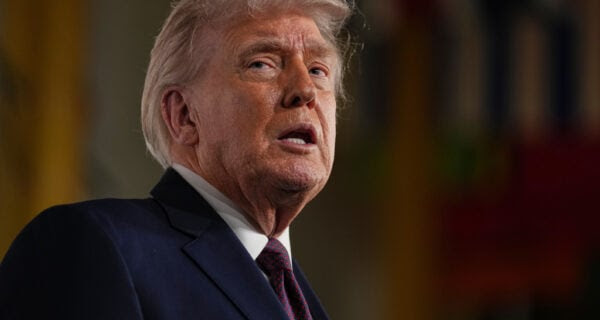
“There’s got to be a good deal, and it’s got to be no more wars, no more nuclear weapons. They’re not going to have nuclear weapons anymore,” Trump said.
The United States and Iran have been engaged in peace talks over the past two days, President Donald Trump revealed on Monday, after laying out a 48-hour ultimatum for Iran to end its closure of the Strait of Hormuz.
Late Sunday night, Trump wrote a cryptic message on his Truth Social account: “Peace through strength, to put it mildly!”
The next morning, the president posted that the US and Iran are in the midst of peace talks.
Without providing details on the nature of the talks or how far they have progressed, Trump touted the talks as “productive” and “detailed.”
“I am pleased to report that the United States of America, and the country of Iran, have had, over the last two days, very good and productive conversations regarding a complete and total resolution of our hostilities in the Middle East,” Trump wrote.
In order to foster goodwill during the peace talks, Trump continued, the US will hold off on striking Iranian energy infrastructure and power plants for five days, adding that the pause on such strikes would be directly linked to progress in the talks with Iran.
“Based on the tenor and tone of these in depth, detailed, and constructive conversations, which will continue throughout the week, I have instructed the Department of War to postpone any and all military strikes against Iranian power plants and energy infrastructure for a five-day period, subject to the success of the ongoing meetings and discussions.”
Trump told reporters that Iran had reached out to the United States seeking to “make a deal” and bring the conflict to a diplomatic resolution.
He noted that discussions covered 15 key points, including a firm condition that Iran would never be allowed to obtain nuclear weapons.
“There’s got to be a good deal, and it’s got to be no more wars, no more nuclear weapons,” he said. “They’re not going to have nuclear weapons anymore.”
Trump added that Israel would be “very happy” with such an agreement.
He did not disclose which Iranian officials were involved in the talks but said that negotiations were being led by his special envoy, Steve Witkoff, along with his son-in-law Jared Kushner.
President Trump has given mixed signals over the past few days regarding the future of the Mideast war.
On Friday, Trump told reporters at the White House that the US is not seeking a truce with Iran.
“I don’t want to do a ceasefire,” Trump said. “You know, you don’t do a ceasefire when you are literally obliterating the other side.”
Hours later, however, Trump wrote on his Truth Social account that the US is considering “winding down” its air campaign against Iran.
“We are getting very close to meeting our objectives as we consider winding down our great Military efforts in the Middle East with respect to the Terrorist Regime of Iran.”
Just a day later, the president issued a 48-hour ultimatum to Iran, warning that the US will “hit and obliterate their various POWER PLANTS, STARTING WITH THE BIGGEST ONE FIRST” if the Strait of Hormuz is not opened.