
Bible Prophecy, Signs of the Times and Gog and Magog Updates with Articles in the News
Is Europe Ready For The Antichrist? One In Five Already Want Someone Like Him
Europeans don’t want the Antichrist — at least, not by name. But a recent poll conducted by AboutPeople reveals a disturbing willingness among citizens to embrace strong, decisive leadership that could bypass democratic processes if it promises stability and results. One in five Europeans say they would prefer a dictatorship in certain circumstances, and a quarter admit they would not mind if a capable leader limited democratic rights and acted without accountability — provided he was effective.
This is the paradox behind the title: Europe may not be consciously seeking the Antichrist, yet what millions of Europeans desire — a unifying, powerful, and decisive leader who can represent the continent boldly and even stand firm against global powers like the United States — mirrors the qualities Scripture attributes to the end-time ruler. They long for unity where there is division, authority where there is gridlock, and decisive action where there is hesitation. And that desire, however well-intentioned, may be the very opening the Antichrist needs to rise.
Across Europe, citizens are frustrated by political stagnation, waning trust in parties and institutions, and the inefficiency of coalition-driven governance. From Brussels to Berlin, Paris to Warsaw, there is a palpable hunger for someone who doesn’t merely manage the status quo but leads decisively, unites fractured electorates, and delivers tangible results. People want a leader strong enough to speak with one voice for Europe in a world of shifting alliances — someone who can negotiate firmly, protect European interests, and even confront other global powers without hesitation.
A Hunger That Prophecy Warns About
This yearning is more than a political preference; it is a spiritual and cultural vulnerability. Scripture consistently portrays the Antichrist not as a tyrant who seizes power by brute force, but as a charismatic, capable figure who emerges when societies are frustrated, divided, and desperate for order. In Daniel, we read of a “little horn” that grows in power, subdues others, and unites multiple kingdoms. In Revelation, the Beast commands the allegiance of nations and wields authority so total that the world marvels at his might and follows willingly.
Christian interpreters for centuries have argued that the stage for this emergence will be a revived European-centered political union, reminiscent of the Roman Empire in its scope, coordination, and influence. The continent’s nations, linked economically, politically, and culturally, provide fertile ground for a leader who promises unity, stability, and global influence. The poll’s results indicate that millions of Europeans are psychologically and culturally primed to support exactly this type of figure — a leader who embodies the qualities of decisiveness, charisma, and unifying authority.
The Appeal of a Strong Leader
Why is this appeal so powerful? Because Europeans are tired of division. They are fatigued by fractured politics and institutional inefficiency. They want solutions that cut through red tape, not endless debate. They long for someone who can represent Europe cohesively, negotiate with power on the world stage, and protect the continent’s interests without compromise. In other words, they want a leader who acts boldly, leads decisively, and delivers results — all while appearing infallible.
The Antichrist, according to prophecy, will exploit precisely this human inclination. He will arrive during a period of disillusionment and desperation, presenting himself as the answer to societal paralysis. Those who long for a strong, unifying figure may follow him eagerly, mistaking temporary order for lasting righteousness.
Why the Poll Matters
The poll’s significance is not in showing that Europeans are openly seeking the Antichrist — they are not — but in revealing how ready a society can be for a leader who exhibits the very traits described in prophecy. A fifth of the population is already willing to trade democratic accountability for decisive governance. Add in those who admire competence and unity without yet questioning civil liberties, and it becomes clear that a critical mass of support could emerge rapidly under the right conditions.
A Warning Of What Is To Come
Scripture makes it clear that the Antichrist’s rise is facilitated not only by his cunning but by human desire: the yearning for order, unity, and effective leadership above all else. Europe today shows that yearning in stark numbers. Political dissatisfaction, institutional distrust, and a hunger for strength and unity are creating the conditions foretold in biblical prophecy.
Europe may not consciously seek the Antichrist, but in wanting a leader like him — someone strong, unifying, and decisive — citizens may unknowingly prepare the path for his emergence. The warning is clear: societies that prioritize results and stability over freedom and discernment risk opening the door to leaders whose ultimate intentions will bring moral, spiritual, and social catastrophe.
And that is the lesson these poll results impart: Europe may not be asking for the Antichrist, but in the currents of frustration and desire for strong leadership, the continent may already be ready for him to arrive.
Scenarios For War With Iran As Deadline Approaches
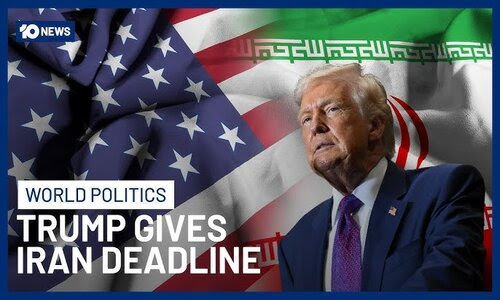
The Middle East has shifted toward the precipice of conflict, as evidenced by a historic U.S. military mobilization. This buildup comes as diplomatic efforts in Geneva disappointed U.S. policymakers, with Vice President JD Vance saying that the Iranians were “unwilling to acknowledge” President Donald Trump’s “red lines.”
On Thursday, Trump issued an ultimatum for a “meaningful” nuclear agreement. “I would think that would be enough time, 10, 15 days, pretty much maximum,” he said. Speaking at the inaugural meeting of the Board of Peace, he warned that if a deal is not reached, “bad things happen.”
White House Press Secretary Karoline Leavitt later emphasized that while “diplomacy was always the president’s first option,” the administration remains prepared to act if negotiations fail to produce a verifiable halt to enrichment.
IDF Maj. (res.) Alexander Grinberg, an expert on Iran at the Jerusalem Institute for Strategy and Security, told JNS, “The chances for a deal are very low. It is clear from the recent behavior that the Iranians are again trying to stretch out the negotiations and get more time.
“This time, no one believes the Iranians, and I think it’s very likely that we’re heading toward a military conflict,” he added.
The US buildup
Unlike the limited scope of the U.S.’s “Operation Midnight Hammer” in June 2025, current contingency planning is configured for a sustained campaign, with two American officials confirming to Reuters that the Pentagon is preparing for “sustained, weeks-long operations against Iran” if so ordered by Trump. To support this, the United States has assembled its largest concentration of air and naval strike power in the Middle East since the 2003 Iraq invasion.
The foundation of this buildup is two aircraft carrier strike groups, both of which Trump ordered to the region in recent weeks.
The USS Abraham Lincoln (CVN-72) arrived in the Arabian Sea on Jan. 26, leading a strike group that includes the guided-missile destroyers USS Frank E. Petersen Jr., USS Michael Murphy and USS Spruance.
This world’s largest aircraft carrier, the USS Gerald R. Ford (CVN-78), which redeployed from the Caribbean with its own complement of four destroyers equipped with Tomahawk cruise missiles and advanced air defense systems, entered the Mediterranean Sea through the Strait of Gibraltar on Friday and is headed eastward.
Maritime security is further bolstered by a surface patrol in the Strait of Hormuz, including the destroyers USS McFaul and USS Mitscher and the littoral combat ships USS Canberra, USS Tulsa and USS Santa Barbara, which are specifically suited for the minesweeping operations necessary to keep the waterway open in case of a sudden mining operation by the Iranians.
Airstrike capabilities have been similarly expanded across the theater, with CBS News and The War Zone reporting the movement of dozens of fourth- and fifth-generation fighter jets. This includes six F-22 Raptors that arrived at RAF Lakenheath in Suffolk, England, on Feb. 17, alongside E-3 AWACS and BACN communication aircraft, which analysts view as the strongest signals of preparation for a major conflict.
These are supported by F-15E Strike Eagles relocated from the U.K. to Muwaffaq Salti Air Base in Jordan and A-10C aircraft detected at regional bases by Chinese satellite imagery in mid-February. Whiteman Air Force Base in Missouri, from where the planes for “Operation Midnight Hammer” were launched, has also seen increased activity.
According to a recent report, the B-2 Spirit stealth bomber fleet is being maintained at “abnormally high readiness” to deliver the 30,000-pound GBU-57 Massive Ordnance Penetrators (MOPs). This bunker-buster is the only conventional weapon capable of penetrating the 80- to 100-meter granite shielding that Iran has used to protect several of its more sensitive sites.
Israel’s New Threat: The Turkish Noose Replacing The Iranian Crescent
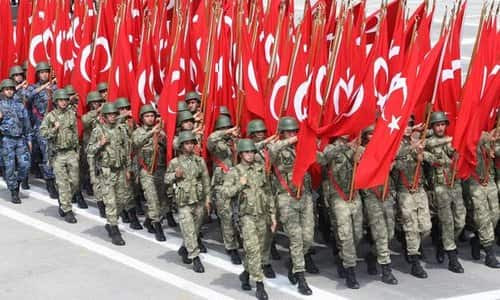
While much of the world’s attention remains fixed on Iran and its Shi’ite axis, another geopolitical realignment is taking shape — more quietly, more pragmatically, and potentially just as consequential for the US, Israel and the Middle East.
Turkish President Recep Tayyip Erdogan has launched an ambitious diplomatic offensive aimed at unifying the Sunni world under Ankara’s leadership. The objective is not merely reconciliation with former rivals. It is the construction of a Sunni diplomatic and strategic “wall,” or “noose,” around Israel, replacing the Iranian “Shi’ite crescent” with a new configuration of Sunni power.
In early February 2026, Erdogan embarked on a Middle East tour that signaled a turning point. On February 3, he visited Saudi Arabia. On February 4, Egypt. On February 7, Jordan’s King Abdullah II was received in Istanbul. These meetings were not symbolic. They marked the culmination of a “normalization” process that has been unfolding since 2022, as Turkey repaired relations that were damaged by its earlier ideological support for the Muslim Brotherhood and confrontations with Gulf monarchies.
The Turkish-Saudi reconciliation is particularly significant. Following years of tension after the 2018 murder of journalist Jamal Khashoggi in Istanbul, Ankara and Riyadh have now moved decisively toward strategic cooperation. Discussions with Saudi Crown Prince Mohammed bin Salman produced major agreements, including a $2 billion Saudi investment in renewable energy projects in Turkey, targeting 5,000 megawatts of solar capacity. Defense cooperation was expanded to include technology transfers for Turkish drones and air defense systems. Bilateral trade is expected to reach $50 billion.
Erdogan has emphasized “growing strategic trust” in confronting regional instability — from Syria to Gaza. Turkish and Saudi officials increasingly frame Israel as a destabilizing actor in these theaters. The emerging partnership is not merely economic; it reflects coordinated positioning against perceived external threats, with Israel explicitly cited.
Egypt represents an even more dramatic shift. After a decade of hostility — triggered by Turkey’s support for the Muslim Brotherhood following the 2013 ouster of Egyptian President Mohamed Morsi — Erdogan’s visit to Cairo marked the end of a long freeze. Turkey and Egypt have now signed a $350 million military framework agreement covering joint weapons production, intelligence sharing, and military exercises. Turkish air defense systems and munitions are slated for delivery, and bilateral trade is projected to reach $15 billion.
Strategically, Egypt’s participation transforms the coalition’s scope. As the guardian of the Suez Canal and a dominant actor in North Africa, Egypt provides logistical leverage capable of influencing maritime routes critical to Israel’s economy. Discussions between Erdogan and President Abdel Fattah el-Sisi reportedly included Gaza, Syria, and Africa–regions where both countries share concerns over the influence of Israel and the United Arab Emirates.
Jordan, long a security partner of Israel despite persistent political hostility at home, has also been drawn into closer alignment with Turkey. Joint statements have emphasized peace in Syria and Gaza and highlighted “common concerns” about regional stability. A future Erdogan visit to Amman is under discussion, underscoring Jordan’s integration into Ankara’s growing network.
On February 9, 2026, the foreign ministers of Turkey, Egypt, Indonesia, Jordan, Pakistan, Qatar, Saudi Arabia, and the United Arab Emirates issued a joint communiqué condemning what they called “Israeli expansionist policies in occupied territories” and calling for Islamic unity. Israeli media outlets such as Ynet interpreted the statement as evidence of a “coalition of interests against Israel,” with Turkey playing the unifying role.
Some analysts describe an emerging “Sunni axis,” or noose, influenced by Muslim Brotherhood ideology; backed by Turkish military power, financed by Qatar and Saudi Arabia, and designed, by expanding into Gaza, to encircle and finish off Israel. The isolated Turkish-Qatari alignment of 2017-2021 appears to have evolved into a broader strategy of economic and diplomatic influence, channeling of neo-Ottoman ambitions.
A few structural limits do remain. Saudi Arabia acts as the guardian of Sunni Islam’s holiest sites and is unlikely to surrender religious leadership to Ankara. Egypt retains unmatched demographic and military weight in the Arab world.
The UAE, under the impressive leadership of Sheikh Mohamed ben Zayed al Nahyan, pursues a technocratic, anti-political Islam agenda that diverges sharply from Erdogan’s ideological sympathies. Turkey’s continued affinity for the Muslim Brotherhood remains a source of friction. Coordination may be pragmatic, but ideological fusion is far from complete. Still, the coalition’s ultimate aim, apart from the UAE, unmistakably seems to be “containing” Israel.
Turkey-Israel relations oscillate between harsh rhetoric and pragmatic cooperation. Erdogan has publicly compared Israeli Prime Minister Benjamin Netanyahu to Hitler and accused Israel of Nazi-like policies. Economic ties, however, persist, and Eastern Mediterranean energy interests have occasionally aligned. Erdogan instrumentalizes the Palestinian cause to bolster his Islamic leadership credentials, even as Ankara avoids direct military confrontation with Israel.
The broader coalition presents more complex dynamics. Saudi Arabia had been in advanced discussions with Washington regarding conditional normalization with Israel. Those talks appear to have stalled or, most probably, collapsed. Recently, Saudi media have featured openly anti-Israel and antisemitic headlines not seen in years. The kingdom appears to be totally aligning itself with anti-Israel countries such as Qatar and Turkey, while “tensions with the UAE explode.”
Egypt, Israel’s chilly peace partner since 1979, has reportedly expanded military infrastructure in the Sinai Peninsula in ways that should, under the supposed peace treaty, raise serious questions. Jordan continues close coordination with Israel, even as domestic political hostility remains intense.
Would these states risk overt military alignment against Israel? Perhaps not this minute, but Erdogan’s strategy does not require immediate war. It requires gradual encirclement. Nowhere is this more evident than in Africa, especially along the Red Sea coast. From Libya to Sudan to Somalia, Turkish and Egyptian intelligence services are reportedly coordinating efforts to counter rival influences and restrict Israel’s strategic access.
In Libya, once divided between Turkish-backed Tripoli and Egyptian-supported Marshal Khalifa Haftar, Ankara and Cairo are now aligning to stabilize the country and limit UAE-supported militias perceived as close to Israel. In Sudan, near Egypt’s southwestern border, the Sudanese civil war continues. Turkey provides logistical and intelligence support, aligning with Saudi Arabia to potentially threaten Israeli access to the Red Sea.
In Somalia, Egypt has increased its military presence to approximately 10,000 troops after Israel’s December 2025 recognition of Somaliland. Turkey maintains its largest overseas military base in Mogadishu, training Somali forces and developing military infrastructure. A Saudi-Somali defense agreement strengthens this axis, positioning it near the Bab el-Mandeb Strait — a chokepoint vital to global trade and Israeli shipping. The stated objective is securing the Red Sea against “foreign military presence.” The unstated implication is the containment of Israel.
This evolving configuration represents a transformation of what was once considered the “moderate Sunni camp” — historically aligned with the United States and tolerant, if not friendly, toward Israel — into a broader Islamic coalition capable of exerting diplomatic, economic and military pressure. Israeli analysts increasingly describe it as the replacement of Iran’s Shiite axis with a Sunni bloc influenced by the Muslim Brotherhood.
The ultimate goal appears twofold: diplomatic isolation through forums such as the Organization of Islamic Cooperation, where Turkey advocates economic sanctions, and economic leverage via control of energy routes and maritime corridors. The coalition presents itself as promoting regional peace. Yet “peace” may translate into the vaporization of Israel, especially should a future Israeli government prove more pliable.
Against this backdrop, Israeli Prime Minister Benjamin Netanyahu has taken a firm stand. On January 19, 2026, addressing the Knesset, he declared unequivocally that there would be “no Turkish or Qatari soldiers in the Gaza Strip.” His veto came days after the White House announced the creation of a U.S.-supervised “Board of Peace” to oversee Gaza reconstruction, reportedly including Turkish and Qatari representatives such as Foreign Minister Hakan Fidan.
Netanyahu did not hesitate to confront President Donald Trump publicly on the issue. He instructed Foreign Minister Gideon Sa’ar to convey Israel’s objections directly to Secretary of State Marco Rubio. The disagreement underscored a red line: Israel would determine which international actors, if any, operate in Gaza.
The refusal is consistent with earlier Israeli objections to Turkish military involvement in post-war Gaza planning. Erdogan’s participation in “stabilization” efforts would significantly expand Turkish influence within the emerging Sunni crescent. Ankara’s well-documented support for Muslim Brotherhood networks — which are Hamas’s patrons, ideologically and financially – should raise obvious concerns.
Netanyahu’s insistence that Israel determine which international actors, if any, operate in Gaza, serves multiple strategic purposes. It prevents Turkish entrenchment in Gaza, maintains Israeli control over post-war arrangements, and signals to Washington that Israel views Turkish expansionism as a long-term threat transcending personal or political relationships.
Meanwhile, the UAE’s stance for normalization with Israel may clash with Turkey’s drive for dominance. Egypt, having briefly fallen to Muslim Brotherhood rule after the 2011 overthrow of President Hosni Mubarak, remains deeply wary of a Brotherhood resurgence. Riyadh’s ambitions for Sunni leadership compete with Ankara’s neo-Ottoman vision.
Whatever the obstacles, Erdogan’s direction seems clear: a militarily and economically anchored Sunni alignment to constrict Israel’s strategic space. While Iran’s crescent may be weakening under sanctions and internal strain, another structure is rising in its place. The new structure is not overtly militant. It does not advertise itself as an alliance against Israel. But through energy pacts, defense agreements, intelligence coordination, and multilateral communiqués, it seems clearly to want to reconfigure the regional balance of the Middle East.
The coming years will determine whether this Sunni wall strengthens into a unified front or weakens under competing ambitions. For Israel, complacency is not an option. The encirclement may no longer be Shiite, but Sunni — and diplomatic, at first, rather than immediately military. In geopolitics, the form of pressure matters less than its cumulative effect.
SOME NEWS MEDIA HEADLINES
US Evacuates Embassy;
Iran Proxies Prepare for War
What a joint U.S.–Israeli strike on Iran would look like
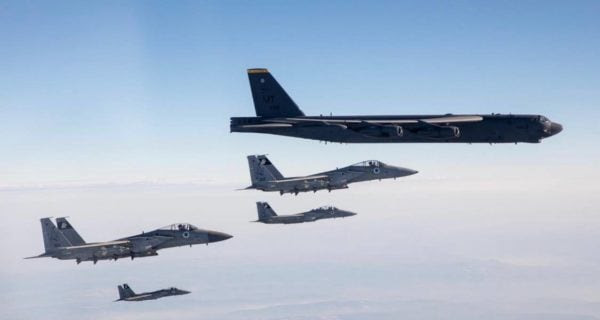
Any such operation would be accompanied by a broad defensive coalition, with European and regional partners contributing to missile‑interception efforts.
The collapse of the Geneva negotiations has sharply increased assessments that a joint U.S.–Israeli air attack on Iran is no longer a distant contingency but a realistic scenario under active consideration.
With diplomacy stalled and Tehran continuing to expand its missile capabilities and regional operations, both Washington and Jerusalem now view coordinated military action as a credible option should Iran escalate further.
Analysts note that the failure in Geneva removed the last meaningful diplomatic buffer, raising the likelihood that long‑prepared joint strike plans could be activated.
While neither Washington nor Jerusalem has announced such an operation, both militaries have spent years preparing coordinated plans, and recent escalations have increased the probability that these contingencies could shift from planning rooms to execution.
A combined operation would begin with a massive effort to neutralize Iran’s air‑defense network. Establishing air superiority is considered essential before deeper strikes can begin.
The United States, with its stealth aircraft and long‑range bombers, would likely spearhead the dismantling of radar arrays, surface‑to‑air missile batteries, and command‑and‑control hubs across the country.
Israel would simultaneously target long‑range ballistic‑missile infrastructure capable of reaching its cities within minutes. The objective is to carve out a secure aerial corridor for repeated waves of bombers and strike aircraft.
Once air defenses are degraded, the operation would shift to Iran’s missile forces.
Israel is expected to focus on long‑range systems such as the Shahab and Sejjil families, while the United States would concentrate on medium‑ and short‑range missiles that threaten American bases in the Persian Gulf and regional partners.
A joint strike would also target the Islamic Revolutionary Guard Corps naval fleet to prevent any attempt to close the Strait of Hormuz.
American bunker‑buster munitions could be used against Iran’s underground “missile cities,” which house launch systems deep beneath reinforced layers of earth and concrete.
While nuclear sites at Natanz and Fordow remain strategically important, analysts suggest they are not the immediate priority in the opening phase.
Some assessments extend beyond military objectives, arguing that weakening Iran’s leadership structure could destabilize the regime’s ability to respond.
A leadership vacuum, they argue, would hinder the government’s capacity to suppress domestic unrest once its military infrastructure is damaged.
Any such operation would be accompanied by a broad defensive coalition, with European and regional partners contributing to missile‑interception efforts.
A critical factor shaping Israeli planning is Iran’s structural vulnerabilities.
Despite possessing an estimated 1,500 to 2,000 ballistic missiles, Iran reportedly operates fewer than 100 active launchers, creating a bottleneck in its ability to fire large salvos.
Many missiles rely on liquid fuel, leaving them exposed during lengthy fueling procedures that are vulnerable to pre‑emptive strikes.
In anticipation of a potential American‑Israeli operation, Iran has begun concentrating its remaining air‑defense systems around Tehran and other essential facilities, attempting to shield its most valuable assets from the opening wave of attacks.
Pope Leo Snubs Trump’s Board of Peace, Citing UN Concerns — But Vatican’s Anti-Israel Record Speaks for Itself
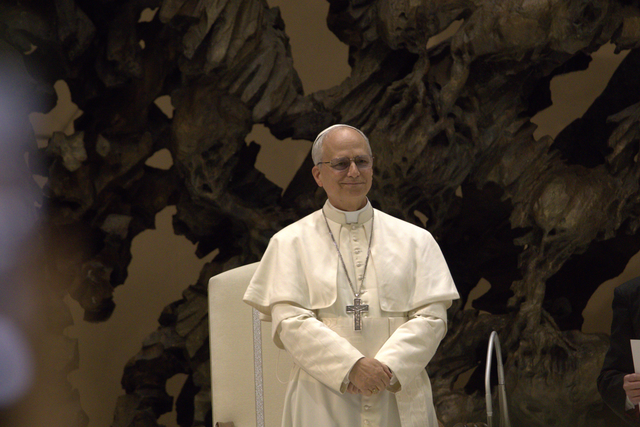
The Vatican has a long memory when it comes to blocking American-led peace initiatives — and a short one when it comes to recognizing Jewish rights in the Land of Israel. When Cardinal Pietro Parolin, the Vatican’s Secretary of State, announced Tuesday that Pope Leo would not be joining U.S. President Donald Trump’s newly formed Board of Peace, he framed the decision in procedural language about the United Nations. But for anyone who has watched the Holy See’s decades-long pattern of hostility toward Israeli sovereignty, the refusal carries a familiar echo.
Parolin made the announcement on the sidelines of a bilateral meeting with the Italian government in Rome, at the Palazzo Borromeo — the seat of the Italian Embassy to the Holy See — on the anniversary of the signing of the Lateran Pacts. “The Holy See will not participate in the Board of Peace because of its particular nature, which is evidently not that of other States,” Parolin told journalists. He elaborated that the Vatican’s core objection was jurisdictional: “One concern is that at the international level it should above all be the UN that manages these crisis situations. This is one of the points on which we have insisted.”
White House press secretary Karoline Leavitt called the decision “deeply unfortunate.”
The Board of Peace, chaired by Trump, was initially conceived to oversee Gaza’s demilitarization and reconstruction following the Hamas terrorist organization’s October 7 massacre. Its mandate has since expanded. Trump has said its work will “go far beyond Gaza.” The board’s charter names Trump as permanent chairman with no term limit, and permanent membership costs $1 billion. The executive board includes U.S. Special Envoy Steve Witkoff, former British Prime Minister Tony Blair, and World Bank President Ajay Banga. To date, board members have pledged $5 billion toward Gaza humanitarian and reconstruction efforts. More than 20 countries are expected to attend Thursday’s inaugural meeting, and key Arab states — including Saudi Arabia, Turkey, and Jordan — have signed on. Major European powers — France, Germany, Britain, and Spain — declined, as did New Zealand. The EU is sending its Mediterranean commissioner, Dubravka Šuica, to Washington as an observer without formally joining.
The Vatican’s absence is not surprising given Pope Leo’s track record. Since taking the helm of the Catholic Church last May, Leo has clashed publicly with Trump on immigration, foreign policy, and climate change. But the tension between the Holy See and pro-Israel American leadership runs far deeper than any single pope’s political instincts.
The Vatican only established full diplomatic relations with the State of Israel in 1993 — 45 years after Israel’s founding — and only after the Oslo Accords gave the Church political cover to do so without appearing to recognize Zionist legitimacy outright. For decades prior, the official position of the Holy See was that a Jewish state in the Land of Israel contradicted Catholic theological doctrine, specifically the teaching that Jewish exile was divine punishment and theological proof that the Church had replaced Israel as God’s covenant people — a doctrine known as supersessionism, or replacement theology.
The Vatican has consistently supported Palestinian statehood and the internationalization of Jerusalem. In 2015, the Holy See formally recognized “the State of Palestine” in a bilateral treaty — a move that Israel’s Foreign Ministry said was “unhelpful.” The Vatican has been a vocal opponent of Israeli sovereignty over Jerusalem, supporting a special international status for the city rather than recognizing it as Israel’s capital. These positions align far more naturally with the UN General Assembly’s perpetual anti-Israel majority than with any framework built around Israeli security and Jewish rights to the land.
The Vatican’s preference for the United Nations as the arbiter of Middle East peace is not a neutral procedural position. The UN is the body that birthed the “Zionism is racism” resolution in 1975 — a resolution so obscene it was eventually repealed — and whose agencies continue to fund, employ, and in some cases shield Hamas terrorists. UNRWA, the UN agency that has operated in Gaza for decades, had staff members who participated in the October 7 massacre. Deferring to that institution while rejecting Trump’s initiative is not a principled stand for international order. It is a political choice — one that consistently disadvantages Israel and rewards its enemies.
Pope Leo can cite procedural concerns about the Board of Peace’s structure all he wants. The Vatican’s record in the Middle East makes the real calculation clear. When an American president builds a framework that sidelines the UN — the primary institutional vehicle through which pressure on Israel has been applied for 75 years — and instead assembles a coalition that includes Arab states willing to work toward a non-Hamas Gaza, the Vatican walks away. That is not a commitment to peace. That is a commitment to a very specific, and very familiar, outcome.