Bible Prophecy, Signs of the Times and Gog and Magog Updates with Articles in the News
Not Just Oil – Fertilizer Shock Could Be Coming And Raise Global Food Prices
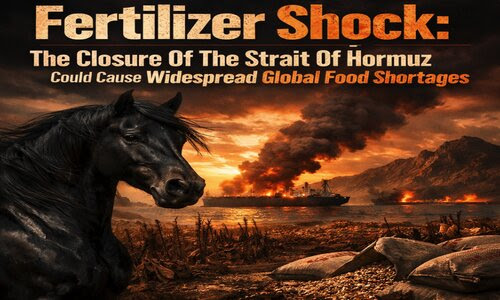
If commercial traffic through the Strait of Hormuz remains paralyzed for months, we will witness a global food crisis on a scale that many experts would have once considered to be unthinkable. Over the past couple of weeks, there has been much written about how the closure of the Strait of Hormuz has caused the price of oil to rise, has caused the price of natural gas to soar to insane levels and has caused the average price of diesel in the United States to jump above five dollars a gallon. But I think that the bigger story is what the closure of the Strait of Hormuz could mean for global food supplies.
Normally, approximately one-third of all globally-traded nitrogen fertilizer and approximately one-half of all globally-traded sulfur passes through the Strait of Hormuz…
Another world crisis sparked by the war in Iran may also be in the offing. That’s because the region’s oil and gas production has made it one of the world’s leading exporters of nitrogen fertilizers, which are indispensable to the global food system. To produce the chemicals used to grow much of the planet’s crops, natural gas is broken down to extract hydrogen, which is combined with nitrogen to make ammonia, and then mixed with carbon dioxide to make urea. All told, nearly a third of the global trade for nitrogen fertilizer passes through the Strait of Hormuz, while almost half of the world’s sulfur, essential in producing phosphate fertilizers, also travels through the corridor.
Reading that should chill you to the core.
But that is just part of the story.
Fertilizer producers in other countries will also be forced to shut down if they are not able to get the liquified natural gas that normally comes to them through the Strait of Hormuz…
Already, fertiliser plants in India and Pakistan are facing production declines given the disruption to natural gas supplies from the Middle East. Gulf countries targeted in the war supply nearly all of Pakistan’s LNG imports, 72% of Bangladesh’s and 53% of India’s.
Even if deescalation occurs, the conflict has likely locked in a food price hike in the coming months. The longer the war continues, the greater the shock to food security as energy and fertiliser prices remain elevated.
What we are facing is truly a global problem.
A farmer in Virginia named John Boyd recently admitted to NBC News that local dealers are telling him that “we can’t get the fertilizer” that he needs…
John Boyd Jr., a fourth-generation farmer in Virginia who grows soybeans, corn and wheat, said his fertilizer supplier recently warned him that shipments may not arrive as expected.
“The dealers are telling me we can’t get the fertilizer,” Boyd told NBC News in an interview this week. “Due to the war and the bombing through that area, the fertilizer isn’t moving.”
Fertilizer is essential to food production, he said, and it must be applied before crops are planted.
“If I don’t apply fertilizer, that means I won’t have the yields to make my crop,” Boyd explained.
If one U.S. farmer can’t grow enough, that isn’t a big deal.
But if hundreds of thousands of U.S. farmers can’t grow enough, that will be a full-blown national crisis.
Stacy Simunek, the president of the Oklahoma Farm Bureau, is warning that we really are facing a worst-case scenario…
The war in Iran has led to the closure of the Strait of Hormuz, a critical shipping route not only for oil and gas, but also for fertilizers needed to produce the world’s food.
“We cannot grow without it. There is absolutely no way you get around it,” said Stacy Simunek, president, Oklahoma Farm Bureau.
If farmers do not grow our food, we do not eat.
The U.S. is actually in better shape than much of the rest of the world, because we produce much of the fertilizer that we use.
But as Simunek has very aptly observed, if this crisis in the Middle East results in a major global fertilizer shortage, there is no way that we are going to be able to feed the entire world…
“Who’s going to feed us? Where are we going to get the food to eat? Where are we going to feed the world? This is critical,” said Simunek.
Already, hundreds of millions of people around the world go to bed hungry every night.
So a very large disruption to global food production would push us very deep into nightmare territory.
Today, approximately half of the population of the world eats food that is grown using nitrogen fertilizer…
About 4 billion people on the planet eat food grown with synthetic nitrogen fertilizers. Roughly half of the global population, in other words, is alive because of these chemicals converted into nutrients for plants, said Lorenzo Rosa, who researches sustainable energy, water, and food systems at the Carnegie Institution for Science at Stanford University.
Spring planting season in the northern hemisphere is rapidly approaching.
The fertilizer that would normally be traveling through the Strait of Hormuz now would get into the hands of farmers around the middle of April.
But that isn’t going to happen, and that means that a lot of farmers around the world are simply not going to have the fertilizer that they need in 2026.
China produces more fertilizer than anyone else, and there was hope that they could help ease the potential global supply shock that we are facing, but instead they have chosen to implement very strict restrictions on fertilizer exports…
China is tightening controls on fertilizer exports as disruptions linked to the conflict in Iran ripple through global crop-nutrient markets and push prices higher. Authorities have asked exporters to halt outbound shipments of nitrogen-potassium fertilizer blends while reiterating existing restrictions on urea exports, according to people familiar with the matter. The steps appear aimed at protecting domestic supply and stabilizing prices as farmers prepare for the spring planting season, a period when demand typically peaks in the country’s vast agricultural sector.
People familiar with the situation said the latest directives have effectively paused overseas shipments of most fertilizer types, including compound varieties that had still been moving abroad after China loosened some urea limits last year. One key exception is ammonium sulfate, which accounted for about half of the country’s fertilizer shipments last year and remains unaffected for now.
The Chinese want to make sure that they have enough fertilizer for themselves.
A global scramble for what is available has begun, and nobody can blame the Chinese for putting themselves first.
But what is the rest of the world supposed to do?
White House National Economic Council Director Kevin Hassett is telling us that the Trump administration is “all over the fertilizer problem”…
The Trump administration is seeking alternative fertilizer supplies for U.S. farmers as the war in Iran disrupts a key global trade route just weeks before the spring planting season.
“We’ve been all over the fertilizer problem,” White House National Economic Council Director Kevin Hassett said on CNBC Tuesday. “I’m not saying that we can eliminate what disruption there is so far, but we can minimize it for sure.”
Hopefully he is right.
But words alone can’t magically get fertilizer into the hands of the farmers that need it.
What we really need is for traffic through the Strait of Hormuz to return to normal.
Unfortunately, the Iranians are telling us that traffic through the Strait of Hormuz “cannot be the same as before and return to its previous conditions”…
In a televised interview Tuesday, Iranian parliamentary speaker Mohammad Baqer Qalibaf said the Strait of Hormuz remained under threat because of the American and Israeli presence in the Gulf region.
“The Strait of Hormuz cannot be the same as before and return to its previous conditions,” Qalibaf said, adding that “there is no longer any security.” He also cautioned that US bombs and jets could not destroy Iran’s weapons facilities.
Since the Iranians are not willing to allow commercial traffic to flow through the Strait, it will be up to the United States and Israel to reopen it, because everyone else has decided that they do not want to be involved. This is something that President Trump just posted about on his Truth Social account…
The United States has been informed by most of our NATO “Allies” that they don’t want to get involved with our Military Operation against the Terrorist Regime of Iran, in the Middle East, this, despite the fact that almost every Country strongly agreed with what we are doing, and that Iran cannot, in any way, shape, or form, be allowed to have a Nuclear Weapon. I am not surprised by their action, however, because I always considered NATO, where we spend Hundreds of Billions of Dollars per year protecting these same Countries, to be a one way street — We will protect them, but they will do nothing for us, in particular, in a time of need. Fortunately, we have decimated Iran’s Military — Their Navy is gone, their Air Force is gone, their Anti-Aircraft and Radar is gone and perhaps, most importantly, their Leaders, at virtually every level, are gone, never to threaten us, our Middle Eastern Allies, or the World, again! Because of the fact that we have had such Military Success, we no longer “need,” or desire, the NATO Countries’ assistance — WE NEVER DID! Likewise, Japan, Australia, or South Korea. In fact, speaking as President of the United States of America, by far the Most Powerful Country Anywhere in the World, WE DO NOT NEED THE HELP OF ANYONE! Thank you for your attention to this matter. President DONALD J. TRUMP
The Europeans are being hurt by the closure of the Strait of Hormuz, but they have announced that they are simply not willing “to put their people in harm’s way”…
“Nobody is ready to put their people in harm’s way in the Strait of Hormuz,” EU foreign policy chief Kaja Kallas told the Reuters news agency on Tuesday. “We have to find diplomatic ways to keep this open so that we don’t have a food crisis, fertilizers crisis, energy crisis as well.”
I see three ways that the Strait of Hormuz could potentially be reopened soon.
The first option would be for the U.S. and Israel to give the Iranians everything that they are demanding and the war would end. But that is certainly not going to happen.
The second option would be for the U.S. and Israel to put boots on the ground and secure the Iranian side of the Strait of Hormuz. But that is not going to happen any time soon.
The third option would be for the U.S. and Israel to completely destroy the Iranian regime using nuclear weapons, but that would be absolutely unthinkable. The use of nuclear weapons is completely off the table, and I don’t know anyone that would argue with that.
So it appears that the Strait of Hormuz will be closed for an extended period of time.
In the western world, that will mean that food prices will likely be going up quite substantially.
But in impoverished nations all over the globe, the consequences will be much more serious.
We are potentially facing widespread global food shortages, and most of us don’t even want to think about what that could look like.
Faith In The Fire: Iran’s Underground Church Continues To Grow
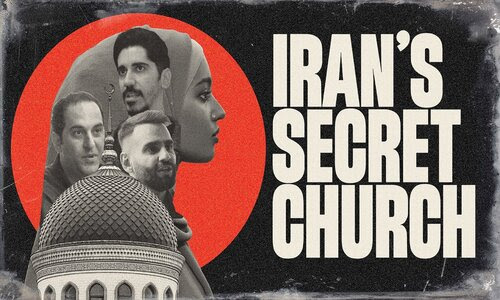
In a land where declaring faith in Christ can cost you everything, something extraordinary is happening. Beneath the watchful eye of an Islamist regime, behind closed doors and whispered prayers, Christianity in Iran is not dying–it is growing. And perhaps most striking of all, recent wars and rising instability in the region are not silencing believers. They are emboldening them.
For decades, Iran has been defined by its strict Islamic governance since the Iranian Revolution. The regime has long insisted that nearly the entire population is Muslim. Official statistics claim 99.5% adherence. But independent research tells a very different story. A landmark survey conducted by the Group for Analyzing and Measuring Attitudes in Iran (GAMAAN) revealed that only about one-third of Iranians identify as Shi’ite Muslim, while large portions of the population describe themselves as secular, atheist, or spiritually unaffiliated.
Even more surprising: a growing number are turning to Christianity.
The GAMAAN survey estimated that at least 1.5% of Iran’s population identifies as Christian–potentially over a million people. Other organizations that track underground church movements suggest the number could be significantly higher, with some estimates reaching into the millions. This is a remarkable transformation for a country where, just decades ago, only a few hundred Muslim-background believers were known to exist.
But this is not growth born of comfort. It is growth forged in pressure.
Converting from Islam to Christianity in Iran is considered apostasy–a crime that can carry severe consequences, including imprisonment, torture, and even death. House churches are routinely raided. Believers are monitored, interrogated, and often cut off from their families and livelihoods. And yet, despite these risks, the underground church continues to expand.
Why?
Part of the answer lies in disillusionment. Years of political unrest, economic hardship, and strict religious enforcement have led many Iranians to question the system they were raised in. For some, Christianity offers not just a theological alternative, but a personal encounter with hope, grace, and freedom–concepts they feel are absent in their current reality.
But another, more recent factor is accelerating this shift: war.
Over the past year, escalating tensions and regional conflicts have shaken the Middle East with the current climax resulting in the current war with Israel and the United States. In times of war, people ask deeper questions. They wrestle with mortality, meaning, and truth. And according to multiple reports from ministries working with Iranian believers, many are finding answers in the message of Christ.
Even more compelling is how existing Christians are responding.
Rather than retreating in fear, many are becoming more bold.
Leaders connected to Iran’s house church networks report that persecution and instability have had a paradoxical effect: they are strengthening the resolve of believers. Faith is no longer casual–it is costly. And because it costs something, it means everything.
Stories continue to emerge of small gatherings in homes, where Scripture is shared quietly but passionately. Of digital evangelism spreading through encrypted apps. Of believers risking arrest to disciple others. In some cases, entire families are coming to faith together, even knowing the dangers they face.
This is not the picture of a dying church. It is the picture of a living one.
Historically, this pattern should not surprise us. The early church described in the New Testament grew not in times of ease, but under the shadow of the Roman persecutions of Christians. What was meant to crush the movement only refined and expanded it.
Iran may be witnessing a modern echo of that same phenomenon.
And yet, this story remains largely hidden from the global stage. Headlines focus on the current conflict and rarely do they capture the quiet spiritual transformation taking place within the country’s borders.
But perhaps that is fitting.
Because this is not a movement built on power, platforms, or public recognition. It is built on conviction. On whispered prayers. On lives changed in secret places.
And now, in the midst of war, it is becoming even more visible–if you know where to look.
For the global Church, the implications are profound. Iranian believers are demonstrating a kind of faith that many in the West have never had to exercise–a faith that risks everything, yet advances anyway. A faith that does not shrink in the face of danger, but rises with greater clarity and courage.
The question, then, is not just what is happening in Iran.
It is what this moment reveals to the rest of us.
Because while comfort can dull conviction, pressure has a way of purifying it.
And in Iran today, amid war, persecution, and uncertainty, a quiet revival is unfolding–one that reminds the world that the Gospel does not retreat in darkness.
It shines brighter.
IDF Severing Connection Between Iran And Hezbollah
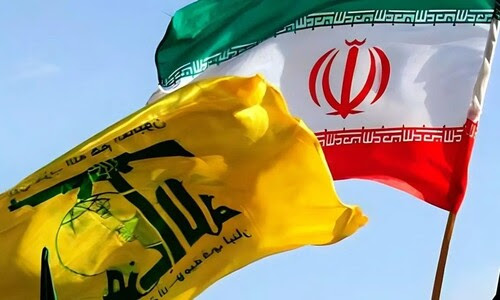
The Israel Defense Forces is destroying the operational linkage between Iran and Hezbollah, military sources stated, while stressing that the main effort in the war remains focused on further severely degrading the Islamic Republic’s offensive and defensive capabilities.
As part of this effort, Israel is actively working to sever the connection between Hezbollah and its Iranian sponsors by targeting the Quds Force, the expeditionary arm of the Islamic Revolutionary Guard Corps (IRGC), which coordinates between Tehran and Hezbollah in Lebanon, arming, activating and funding it.
“We put out a warning for them that any Quds Iranian official who is conducting or promoting or directing attacks against Israel from Lebanon, we will find them and carry out strikes against them,” said IDF International Spokesperson Lt. Col. Nadav Shoshani.
Speaking during a briefing to journalists on the 13th day of “Operation Roaring Lion” and the 12th day since Hezbollah joined the conflict, he revealed that most Iranian Quds Force leaders in Lebanon had now either left the country or been eliminated.
On Thursday, the IAF said that, with the guidance of Military Intelligence, it struck and eliminated a commander of the Imam Hussein Division, a force used by the Quds Force to strengthen the Iranian axis and launch attacks on Israeli forces and civilians. It named the commander as Ali Muslim Tabaja.
“The division is composed of thousands of terrorists across the Middle East and it serves as a force-employment method, providing Hezbollah with significant capabilities,” said the military.
“During Operations Roaring Lion [June 2025] and Northern Arrows [September to November 2024], the division took an active part in the fighting, carrying out multiple terrorist attack plans from Lebanese territory in coordination with the Hezbollah terrorist organization. This included the launch of unmanned aerial vehicles (UAVs) and missile fire toward communities in northern Israel.”
Tabaja, it said, was a key figure within the division “for the Hezbollah terrorist organization. He joined the Hezbollah terrorist organization and, over the years, held a series of military roles both within Hezbollah and within the division, including serving as the deputy commander of the division.”
The previous commander of the division was eliminated in 2024. The strike also eliminated several additional terror operatives, including the division’s deputy commander and its drone officer.
The IDF confirmed that on Tuesday, it eliminated a commander in the IRGC’s missile unit within Hezbollah in Beirut, responsible for key coordination efforts between Hezbollah and Iran.
Combined Hezbollah-Iranian attack
In his briefing to reporters, Shoshani described Wednesday night’s combined Hezbollah-Iranian attack against Israel. “Last night, Hezbollah timed a simultaneous attack with Iran, firing rockets and drones at towns and communities across Israel,” Shoshani said.
He noted that the barrage included approximately 200 rockets and 20 UAVs, combined with ballistic missiles fired from Iran.
“These attacks aren’t Hezbollah protecting the people of Lebanon. It’s Hezbollah protecting a terrorist regime that is 2,000 kilometers away, based on a shared conviction that Israel must cease to exist,” Shoshani stated.
Shoshani added that Israeli intelligence had indications of the impending attack, allowing the military to prepare aerial defense systems and the home front. This preparation enabled the IDF to precisely strike more than 50 percent of the launchers used in the first wave, in some cases eliminating the terrorists as they fired.
“Our actions also prevented this attack from being much larger. They fired from 8 p.m. yesterday to this morning, approximately a third of what we estimate that they were planning on firing towards Israel,” Shoshani noted.
The rapid response resulted in minimal casualties in the north of Israel, with only two or three direct hits and a few civilians lightly injured.
Since joining the war, Hezbollah has launched over a thousand UAVs, missiles, and rockets at Israel, according to IDF data. Shoshani highlighted that while Hezbollah’s capabilities have been diminished in recent years, it remains a dangerous terror force requiring decisive action.
“We’ve seen hundreds of [elite] Radwan forces attempt to move south again,” Shoshani warned, referring to Hezbollah’s commando unit. “We’ve seen Hezbollah try to expand its fire towards us. We’ve seen Hezbollah try and send terrorists down towards the border area. And that is why it’s essential that our troops are in the border area for defensive measures, holding the defense lines, preventing any type of attack towards Israeli civilians.”
The IDF has responded with intense airstrikes against Hezbollah targets in the Dahiyeh suburb of south Beirut and throughout southern Lebanon.
It said that since March 2, Israeli forces have eliminated more than 100 Hezbollah terrorists and 60 Radwan force command and control centers.
Turning to the primary arena in Iran, Shoshani provided staggering statistics regarding the scale of the ongoing aerial campaign. Over 4,200 sorties have been flown across Iran so far, with Israeli and American aircraft conducting non-stop strikes for 13 days.
Nuclear compound struck
Also on Thursday, the IAF struck the Iranian nuclear program’s Taleghan compound near Isfahan, which was used to advance nuclear weapons production.
“In recent years, the compound was utilized to develop advanced explosives and to conduct sensitive experiments as part of the AMAD project, the covert nuclear weapon development program in the 2000s,” the military said. The site had been struck in October 2024 but has since been reconstituted.
Despite the significant damage inflicted on the Iranian nuclear program in past strikes, “the Iranian regime has continued efforts to advance and develop capabilities required for the development of a nuclear weapon,” the military said. “The strike is a part of the series of operations carried out throughout ‘Operation Rising Lion’ aimed at further damaging the Iranian terrorist regime’s nuclear aspirations.”
According to Shoshani, some 80% of the Iranian regime’s defense systems have been neutralized. “Two-thirds of their ballistic missile launchers [totaling hundreds of launchers] have been neutralized as well,” he stated.
He added that hundreds of unmanned aerial vehicles have been intercepted, and over 550 real-time targets have been struck inside Iran, demonstrating the Israeli Air Force’s ability to generate actionable intelligence and utilize aerial supremacy.
Additionally, over 400 regime targets, including headquarters and command centers, have been destroyed, resulting in the elimination of more than 1,900 Iranian regime soldiers and commanders.
“A lot of our operations have shifted in recent days towards production sites, making sure that our achievements are not just taking out capabilities right now, but preventing them from restoring those capabilities at a fast pace when all of this is done,” Shoshani said.
Meanwhile, Iran has continued to target the Israeli home front using cluster munitions, which Shoshani noted is widely considered a war crime as they break apart mid-flight to hit civilian population centers. These munitions recently killed two civilians in the central Israeli city of Yahud.
“Our objectives have not changed,” Shoshani stressed. “The most urgent and important one is to guarantee the security of the people of Israel, to stand at the borders, [and] to act against threats that are emerging against our civilians and to remove them. That’s what we’re doing against this Iranian regime. That’s what we’re doing against this terror group, Hezbollah.”
Eight times more targets struck
According to military data, 12 days into “Operation Roaring Lion,” eight times more targets have been struck in Iran compared to the 12 days of “Operation Rising Lion” in June 2025.
There have also been significantly fewer launches from Iran in this war, with relatively smaller volleys rather than the barrages of dozens seen in the previous operation.
Furthermore, the current Israeli strikes are reaching more distant targets and previously untargeted areas, such as the coastal strip and southern Iran, with an increased focus on striking regime targets.