Bible Prophecy, Signs of the Times and Gog and Magog Updates with Articles in the News
Prepared, Vigilant, Unafraid: The Lesson From America’s Latest Terror Attacks
When evil strikes close to home, the question every society must answer is simple but profound: will we stand, or will we surrender to fear?
In the shadow of rising tensions overseas–particularly the escalating conflict involving Iran–Americans are once again confronting a harsh reality: war abroad often fuels violence at home. The nation has witnessed a disturbing series of incidents tied to extremism and domestic terror fears.
A bar shooting in Austin by an Islamic terrorist. Two teenage ISIS sympathizers in New York attempting to detonate homemade bombs during a protest. And now two chilling attacks within hours of each other: a truck ramming and shooting at a Michigan synagogue and a terrorist-style attack at a Virginia university.
These events are sobering reminders that the threats facing America are not just thousands of miles away on distant battlefields. Sometimes they appear in our own cities, campuses, and houses of worship.
But amid the darkness, there were also powerful examples of courage–and important lessons about preparation, vigilance, and the right to defend innocent life.
The Synagogue Attack That Could Have Been Far Worse
At Temple Israel in West Bloomfield, Michigan–one of the largest Reform synagogues in the United States–a man drove a truck through the building’s entrance and opened fire with a rifle. The attack happened while children were present in the synagogue’s early childhood center, sending shockwaves through the community.
The attacker barreled through the entrance and down a hallway, striking a security officer in the process. Soon after, the vehicle burst into flames amid the chaos. But what could have become a horrific mass casualty event was stopped by something critically important: prepared security.
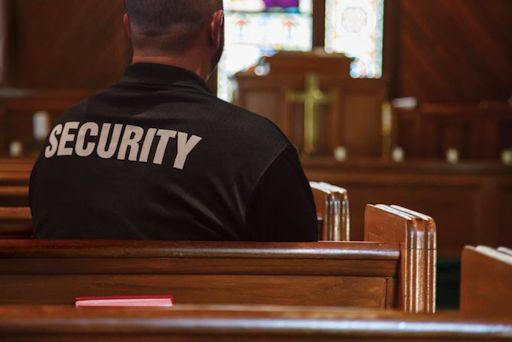
Temple Israel had invested in professional security measures, including armed personnel trained specifically for threats like this. When the attacker began firing, those security personnel engaged and stopped him before he could reach classrooms or crowded areas of the building.
All 140 children in the synagogue’s preschool were safely evacuated. The injured security officer is expected to recover.
That outcome did not happen by accident.
In recent years, many synagogues and churches have taken the painful but necessary step of increasing security. Some have hired trained guards. Others have implemented volunteer security teams. In many cases, these groups work with local law enforcement and federal agencies to rehearse emergency scenarios–including active shooter and terrorist-style attacks.
Reports indicate Temple Israel’s security had recently trained for such scenarios alongside law enforcement, including exercises coordinated with federal authorities. When the moment of crisis arrived, they were ready.
Preparation saved lives.
Heroes Without Weapons
Just hours earlier and hundreds of miles away, another act of terror unfolded at Old Dominion University in Virginia.
A gunman entered a classroom where Reserve Officers’ Training Corps (ROTC) members were gathered. According to investigators, the attacker shouted extremist slogans before opening fire, killing an ROTC instructor and injuring others.
But again, the story did not end with the attacker.
The ROTC students–future military officers–refused to simply wait to be victims.
Despite the fact that they were not armed, several cadets rushed the shooter. During the struggle, they managed to subdue him and ultimately stop the attack by ‘rendering him no longer alive’ according to reports. Investigators say their actions almost certainly prevented additional deaths.
Their bravery came at great cost. One instructor, Lt. Col. Brandon Shah, was killed in the attack. But the actions of the students prevented the gunman from continuing his assault across the campus.
Their instinct to act–rather than freeze–saved lives.
The Principle of Self-Defense
There is an uncomfortable truth that modern society sometimes tries to avoid: evil exists, and sometimes it must be confronted.
In recent years, many institutions have emphasized the “Run, Hide, Fight” principle in active-shooter situations. That guidance is wise. In many circumstances, escaping or hiding is absolutely the safest option.
But the final word in that phrase–fight–exists for a reason.
There may come a moment when escape is impossible. When hiding will not work. When innocent lives depend on someone stepping forward and resisting the attacker.
That moment arrived in Michigan when security personnel defended a synagogue full of children.
It arrived in Virginia when unarmed ROTC students tackled a gunman.
Both incidents remind us that self-defense is not simply a political talking point. It is a fundamental human principle.
Vigilance Without Fear
The rise of domestic terror threats is deeply troubling. Intelligence officials have long warned that international conflicts can inspire attacks within the United States. When global tensions escalate, extremist actors sometimes see an opportunity–or justification–to strike.
But the answer to that danger is not fear.
It is vigilance.
Communities can take practical steps:
Houses of worship can develop security teams and emergency plans.
Schools and campuses can train staff and students in crisis response.
Citizens can stay aware of their surroundings and report suspicious activity.
Preparedness does not mean paranoia. It means responsibility.
Temple Israel’s security team understood that reality. So did the ROTC students who refused to stand by while lives were threatened.
Courage in a Dangerous Age
We live in a world where the threat of violence cannot always be eliminated. But the response to that violence still defines who we are.
Prepared communities. Courageous individuals. Citizens who remain alert but refuse to surrender to fear.
Those qualities are not signs of a fearful society.
They are the marks of a resilient one.
The attacks of the past week are tragic reminders of the dangers we face. Yet they also highlight something equally important: when evil strikes, ordinary people are still capable of extraordinary courage.
And in moments like these, courage–not terror–is what ultimately prevails.
One In Twenty Deaths: Canada’s Assisted Suicide Program Reaches Stunning Levels

As Canada approaches the 10th anniversary of legalizing assisted suicide, the country is rapidly nearing a grim milestone: 100,000 deaths through the practice.
Based on current trends, the government’s “Medical Assistance in Dying” (MAiD) program has become one of the leading contributors to deaths nationwide. Since legalization in 2016, the number of Canadians who have died through assisted suicide has risen dramatically year after year, placing Canada on track to become the first modern nation to surpass 100,000 euthanasia deaths in less than a decade.
The scale of the program is staggering. In 2024 alone, 16,499 Canadians died through MAiD–about 5.1 percent of all deaths in the country, meaning roughly one out of every twenty deaths in Canada now occurs through assisted suicide.
At the current pace–about 45 assisted deaths every day–Canada is expected to pass the 100,000 mark around the June anniversary of the law’s passage.
The number has gained renewed attention following warnings from Kelsi Sheren, a Canadian anti-MAiD activist and military veteran, who argued that the system has drifted far from what Canadians were originally promised.
“MAiD was sold as a narrow option for the terminally ill, a rare mercy,” Sheren wrote in a recent op-ed. “That fiction collapsed long ago. Today, assisted death is a routine outcome for people struggling with disability, isolation, poverty, and mental health challenges–and when the world looked at what we’re doing, it didn’t nod approvingly. It recoiled.”
From “Last Resort” To Expanding System
Assisted dying was legalized by Parliament with the passing of Bill C-14 on June 17, 2016. The law allows adults to seek MAiD if they suffer from a “grievous and irremediable medical condition,” are in an irreversible decline, and experience suffering they deem intolerable.
Originally framed as a compassionate option for those facing imminent death, the law has gradually expanded through court rulings and legislative changes.
In 2021, Canada broadened eligibility through Bill C-7, creating a second category for people whose natural death is not reasonably foreseeable. Since that change, the number of non-terminal cases has steadily increased each year.
Under current law, mental illness alone is not yet an eligible condition. However, legislation passed in 2024 delays but still anticipates that mental illness could qualify for euthanasia beginning March 17, 2027, if certain training and safeguards are implemented.
Critics warn that such expansions could further normalize assisted death in situations far removed from terminal illness.
Cases Raising Alarm
Concerns intensified following the case of Kiano Vafaeian, a 26-year-old Canadian suffering from Type 1 diabetes, vision problems, and seasonal depression, who ended his life through the MAiD program in December 2025.
His family says they were shocked that doctors approved the request.
“We never thought there would be a chance that any doctor would approve a 22- or 23-year-old at that time for MAiD because of diabetes or blindness,” his mother said.
Cases like Vafaeian’s have fueled growing debate over whether vulnerable individuals–including those facing disability, chronic illness, or emotional distress–are being steered toward death rather than receiving greater medical or social support.
Government reports have acknowledged that factors such as loneliness, isolation, and loss of independence are frequently cited among those requesting assisted death.
For critics, this raises troubling questions about whether the system is addressing suffering–or simply eliminating the sufferer.
Canada Far Ahead Of The World
Canada’s numbers dwarf those of other nations with legalized euthanasia.
Switzerland, which has permitted assisted suicide for roughly two decades, has recorded fewer than 9,000 deaths from the practice. Belgium has experienced roughly 33,000 deaths across more than 20 years.
Even in the United States–where assisted suicide is legal in several states–the total number of deaths across more than two decades is estimated at just over 5,000.
Only the Netherlands has a higher share of deaths by euthanasia, with roughly 5.8 percent of all deaths, compared with Canada’s 5.1 percent. Yet Canada’s rapid rise in absolute numbers has stunned many observers.
Some analysts now say Canada has become the fastest adopter of euthanasia in the world, reaching levels that took other countries far longer to achieve.
A Profound Ethical Turning Point
Supporters of MAiD argue the program offers compassionate relief for those enduring unbearable suffering and preserves personal autonomy at the end of life.
But opponents–including disability advocates, religious leaders, and medical ethicists–warn that Canada may be crossing a dangerous threshold where assisted suicide becomes normalized within healthcare itself.
What began as a narrow exception for extreme end-of-life suffering is increasingly viewed by critics as a broader social solution to pain, disability, and despair.
As Canada approaches its 100,000th assisted death, the country is confronting a sobering question:
Is this the fulfillment of compassionate medicine–or the quiet redefinition of how a society values life itself?
Trump’s ‘Board of Peace’ Needs To Ask A Few Hard Questions About Gaza

As US President Donald J. Trump and members of his “Board of Peace” pledged billions of dollars for “relief and reconstruction” in the Gaza Strip, two recent public opinion polls show that most Palestinians are still concerned about widespread corruption in Palestinian society.
This concern should sound alarm bells for the Trump Administration and donor countries if they are about to invest billions of dollars in the Gaza Strip. The Palestinians are loudly warning international donors that Palestinian leaders are not trustworthy in handling money.
According to polls conducted by the Coalition for Integrity and Accountability — a Palestinian civil society organization that seeks to combat corruption and promote integrity, transparency and accountability in Palestinian society — 57% of the Palestinians in the Gaza Strip expect the level of corruption to remain or increase in the aftermath of the war that Hamas launched on October 7, 2023.
The polls found that 90% of the Palestinians consider so-called anti-corruption efforts (by the Palestinian Authority and Hamas) insufficient. They attributed this failure primarily to weak transparency in state institutions, weak political will to hold corrupt individuals accountable, the weak deterrent effect of applied penalties, and the absence of officials serving as role models in upholding integrity and safeguarding public resources. Sixty-one percent of the Palestinians, in addition, said they believed that the level of corruption increased in 2025, and expected it to rise in 2026.
The results of the latest surveys do not come as a surprise. Other polls conducted by the Palestinian Center for Policy and Survey Research have consistently shown that more than 80% of the Palestinians in the West Bank and Gaza Strip believe that there is corruption in institutions of the Palestinian Authority (PA).
This disclosure is important: the Palestinian Authority is expected to play a significant role in the future management of the Gaza Strip. Recently, Nickolay Mladenov, High Representative for the “Board of Peace,” announced the establishment of a “Liaison Office” by the PA for communication and coordination regarding the board’s activities in the Gaza Strip. The newly established National Committee for the Administration of Gaza, which is supposed to be an independent body of apolitical technocrats, is dominated by officials affiliated with the PA and its ruling Fatah faction.
Under PA President Mahmoud Abbas, many Palestinians believe corruption has deepened rather than receded. Common practices include wasta (nepotism/favoritism), misuse of public funds, and the enrichment of a political elite while the general population faces economic hardship. Widespread disenchantment with the PA’s corruption was a primary factor in Hamas’s victory in the Palestinian Legislative Council election of 2006 (the last election held), as the terror group campaigned on a platform of “clean governance” and “reform.”
For the past 33 years, the international community has failed to track the flow and use of aid money donated to the Palestinians, enabling high-level corruption. Tens of billions of dollars in international aid given to the Palestinian Authority and the Hamas regime in the Gaza Strip have been lost to corruption, siphoned off by terror groups or mismanaged by the PA leadership.
Since October 2023 alone, Hamas has reportedly generated an estimated $500 million by seizing humanitarian aid trucks and selling supplies to Gaza residents at inflated prices.
Corruption, mismanagement and diversion of aid have repeatedly undermined reconstruction efforts in the Gaza Strip and played a major role in preventing aid from reaching ordinary Palestinians. Cement and construction materials intended for civilian housing have repeatedly ended up being used for Hamas’s terror tunnels and military infrastructure. Resources that donors believed were helping build homes and schools were instead strengthening Hamas and other terror groups. Much of the donor money has been swallowed by corruption, political patronage, and the militarization of Palestinian society.
The Gaza Strip has become the only place in the world where a terror group can repeatedly wage war — funded by the international community — while that same international community pays to rebuild the battlefield afterward, possibly for the next war.
The people of the Gaza Strip urgently need humanitarian assistance, housing, infrastructure, and economic opportunity. However, pouring money into the territory without strict safeguards will not help those residents.
For decades, the Gaza Strip has been one of the most heavily funded territories in the world in terms of international aid per capita. Yet despite the enormous financial injections, the Gaza Strip remains impoverished, unstable, and dominated by Hamas and other terrorist groups. International aid has empowered a governing system that prioritizes rockets over reconstruction. While donors thought they were funding hospitals and schools, Hamas was appropriating enormous resources and investing them in weapons, military infrastructure, and preparation for the next confrontation with Israel.
If the “Board of Peace” truly wants to help the Palestinians, it must abandon the illusion that money alone will solve the problem. Any serious reconstruction effort must begin with extremely uncompromising conditions: tracking and full transparency over how funds are spent, strict monitoring of construction materials, and a clear demand that Hamas and all other terror groups lay down their weapons and permanently exit the scene. The assumption that writing big checks will somehow produce different results has collapsed in the face of reality.