
The Leopard with the 7 Heads are Preparing for War
Europe Is Preparing for War – And They’re No Longer Hiding It
Europe is doing something it hasn’t done in generations: preparing openly, urgently, and systematically for a major war on the continent. Not a limited skirmish. Not a border dispute. A large-scale, society-shaking conflict reminiscent of the wars our grandparents and great-grandparents endured.
That warning didn’t come from some fringe alarmist. It came directly from the head of NATO, who recently cautioned that the alliance must adopt a “wartime mindset” and be ready for a conflict comparable to the world wars of the 20th century. When the top official responsible for Europe’s collective defense uses that kind of language, it’s not a slip of the tongue. It’s a signal.
And across Europe, governments are acting as though they agree.
The Largest Military Buildup Since the Cold War
Europe is experiencing the most aggressive military expansion in more than 30 years. Policymakers aren’t simply adding a few extra battalions or refreshing aging equipment — they are rebuilding the continent’s defense posture from the ground up, reversing decades of demobilization and budget cuts.
Consider just a few of the dramatic shifts underway:
France is expanding its army and restoring military service nearly 30 years after ending conscription. While voluntary for now, the move reflects a growing consensus that France needs a significantly larger reserve of trained personnel. Why? If a peace deal with Russia were anywhere on the horizon, such an expansion would be unnecessary.
Germany is transforming its military at a pace unseen in its modern history. It plans to dramatically increase the size of the Bundeswehr and pour unprecedented sums into new weapons systems, advanced defense technologies, and logistical capacity. Next year’s defense procurement budget is projected to reach record-breaking levels.
Other nations are following suit:
Denmark extended conscription to women and lengthened the required service time.
Estonia, Latvia, and Lithuania maintain universal or lottery-based conscription, preparing new waves of soldiers annually.
Croatia has reinstated a draft it abandoned nearly two decades ago.
Poland is developing plans to conduct mass-scale military training for adult males, hoping to double the size of its army.
Norway has begun reopening Cold War-era bomb shelters and expanding its “total defense” system, preparing civilians and infrastructure for the possibility of large-scale conflict with Russia.
Sweden is upgrading its vast network of 64,000 wartime shelters and revitalizing national civil-defense planning, signaling that it too is bracing for the kind of crisis Europe hoped it would never face again.
These moves aren’t sporadic. They’re coordinated. Sudden. Simultaneous.
When half a continent shifts into military-industrial gear, it’s not coincidence. It’s preparation.
Hospitals Preparing for Tens of Thousands of Casualties
Perhaps even more unsettling is what’s happening outside the barracks.
In France, hospitals have been instructed to prepare for a massive armed conflict by early 2026. Planning documents outline scenarios where 10,000 to 50,000 wounded soldiers could require treatment within a few months. Hospitals are being told to expand trauma care capacity, ready supply chains, and coordinate with regional emergency centers in anticipation of wartime conditions.
This isn’t routine civil-defense planning. It’s not a COVID-style contingency.
This is explicit preparation for large-scale military casualties.
Germany is undertaking similar efforts, quietly updating civil-defense frameworks and hospital networks to handle mass injuries in the event of war on European soil.
If peace with Russia were imminent, such preparations would be unnecessary — even absurd.
But if war is on the horizon, they make perfect sense.
A Wartime Mindset Returns to Europe
The NATO chief’s warning that Europe must prepare for conflicts on the scale of the world wars was not a metaphor. Those wars were total conflicts involving entire societies — not just armies. Factories, hospitals, railways, politics, and culture were drawn into the struggle.
When he said Europe must return to a “wartime mindset,” he meant preparing for exactly that kind of comprehensive challenge:
Fully mobilized economies
Expansive militaries
Hardened infrastructure
Civilian readiness
Rapid wartime production
National survival as a strategic objective
Across the continent, leaders are speaking more bluntly about Russia’s intentions. Many now believe Moscow is preparing for a long confrontation with the West — not just a limited conflict in Ukraine, but a broader strategic challenge that could eventually reach NATO territory.
European officials are no longer asking whether Russia might become a threat. They’re acting as if that moment is inevitable unless the continent vastly strengthens its defenses.
Why Now? Why All at Once?
Europe cut defense budgets for 30 years, assuming permanent peace. That era is over. The combined factors driving the buildup include:
Russia proving it is willing to launch large-scale invasions.
Uncertainty about long-term U.S. commitment to European defense.
A munitions and manpower gap that could leave Europe dangerously exposed.
A realization that the post-Cold War order is collapsing.
Europe has awakened to the reality that if conflict comes, it may not be small, containable, or short-lived. It may require mobilizing entire societies — not just professional armies.
The Unspoken Conclusion
European leaders publicly say they want peace. But in private planning, emergency memos, military expansions, and sweeping defense budgets, they are preparing for something else entirely.
Because the truth is simple:
If peace with Russia is around the corner, none of this makes sense.
If war with Russia is coming, everything suddenly does.
Europe is no longer behaving like a region drifting toward conflict.
It is behaving like a region bracing for it.
And when NATO leaders warn us to prepare for a war reminiscent of the world wars, we would be wise to take them at their word.
SIGNS OF THE TIMES
Satan works Better in Cold Places – Due to His fear of Fire
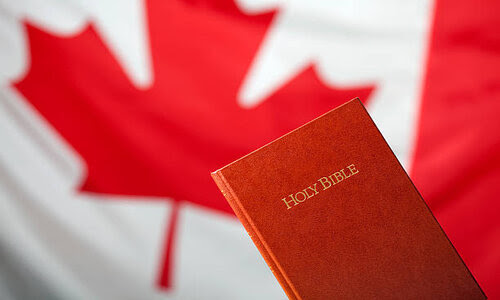
Bill C-9: Canada’s New Speech Crackdown And The Rising Threat To The Gospel
There are laws that defend a nation, and then there are laws that redefine it. Canada is now debating the latter. Long before most people noticed, a quiet shift began–one that trades spiritual openness for state-approved speech and treats biblical conviction as a threat rather than a contribution. Bill C-9 is the clearest sign yet that the ground beneath Western Christianity is moving, and it’s moving fast.
At first glance, it looks like a bill meant to keep people safe. But the moment you read past the title, the real story emerges: the Canadian government is preparing to criminalize the very space where the Gospel enters public life–speech itself. And once a society decides that Scripture may be harmful, the question is no longer whether freedom erodes, but how quickly the erosion spreads to the nations watching closely.
What Bill C-9 Really Does
For decades, Canadian law recognized that religious speech occupies a unique place in a free society. Even if a sermon or Bible-based viewpoint offended modern ears, it was protected as long as it was expressed in good faith. This safeguard stood as a quiet affirmation that Scripture could be taught, proclaimed, and discussed openly–even when it clashed with cultural norms.
Bill C-9 strikes that protection out of the criminal code.
Under the new framework, the difference between preaching Scripture and committing a speech-crime becomes dangerously subjective. A pastor teaching biblical sexuality… a believer sharing the exclusivity of Christ… a youth leader quoting Romans or Corinthians… any of these could be interpreted–by activists, prosecutors, or courts–as promoting “hate” if someone decides they feel harmed by biblical truth.
This is not speculation. This is the inevitable outcome of a law that empowers the state to police inner convictions rather than harmful actions.
Bill C-9 shifts the question from “Did you harm someone?”
to “Did your belief offend them?”
And once that shift occurs, Christianity instantly becomes a legal risk.
Why Christians Should Care
Some Americans may shrug and say, “That’s Canada–they’re different.” But cultural trends do not respect borders. Legal precedents, ideological pressures, and policy experiments in one Western democracy quickly become models for another.
If Canada normalizes the idea that biblical teaching can be criminally prosecutable when it conflicts with cultural orthodoxy, you can be certain activists in the U.S. will demand the same.
There is a spiritual law as old as the early church:
Whatever restricts the Gospel somewhere will eventually attempt to restrict it everywhere.
This isn’t about one bill.
It’s about momentum.
It’s about the global rise of a worldview that believes Christianity is not simply wrong–but dangerous.
The Chilling Effect Is the Point
Bill C-9 does not need to imprison pastors to change the country. All it must do is create fear.
Fear that quoting Scripture could bring the police.
Fear that hosting a public evangelistic outreach could violate new boundaries.
Fear that apologetics, biblical ethics, or even personal testimony could be interpreted as hateful.
A fearful church becomes a silent church.
And a silent church becomes an ineffective one.
The early apostles didn’t face lions because they physically harmed others–they faced lions because they refused to stop speaking. Bill C-9 strikes not at harmful acts, but at the proclamation of truth. It is designed to reshape the public square by making Christian conviction socially suspect and legally risky.
It is a soft persecution–but persecution nonetheless.
New Report Exposes Netflix’s LGBT Agenda Targeting Children

A new report showcases hard numbers that expose just how deep the entertainment company’s agenda runs.
Largest Bible App Reveals A 27% Increase In The Daily Use Of God’s Word

YouVersion’s 2025 report reveals a record number of engagement levels with the Word of God, with an increase in daily Bible use in Africa, Central Asia and North America.
GOG AND MAGOG UPDATE
Magog / Iran accelerates ballistic missile production, Israel warns
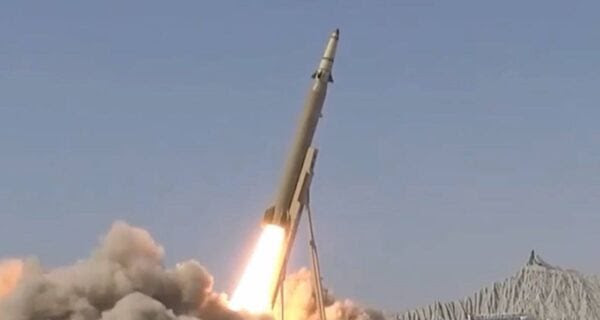
Iran is rapidly rebuilding its missile arsenal following the 12-day war with Israel in June, raising alarm bells among Israeli officials as Tehran aims to restore its weakened military capabilities and extend its influence across the Middle East.
During a closed meeting of the Knesset Foreign Affairs and Defense Committee this week, a senior Israeli military official told lawmakers that Iran has resumed large-scale production of ballistic missiles, roughly six months after the June conflict, Israeli media reported.
Israeli intelligence assessments have confirmed that Tehran resumed massive production of long-range missiles, with factories operating “around the clock” to rebuild capabilities destroyed in Israeli and US strikes.
With Israel having destroyed key missile-production equipment, including planetary mixers, the Iranian regime is relying on older manufacturing methods to restart its missile program, according to the Israeli news outlet Ynet.
Israeli officials now reportedly fear that the damage inflicted on Iran’s ballistic missile program during the June war was less extensive than initially thought.
Earlier this year, Israel, with support from the United States, carried out large-scale military strikes against the Islamist regime in Iran, targeting critical nuclear enrichment sites—including the heavily fortified Fordow facility—after multiple rounds of negotiations over Iran’s nuclear program failed to yield results.
In the aftermath of the strikes, intelligence and media assessments of the damage to Iran’s nuclear and defense capabilities have been inconsistent and often contradictory, with some reports indicating only a short-term setback and others pointing to potentially years of disruption.
Many experts believe the nuclear program has been set back by multiple years. However, Iran’s missile arsenal may have suffered less damage.
Earlier this week, Israel Defense Forces military intelligence chief Maj. Gen. Shlomi Binder told US Ambassador to the UN Mike Waltz that Iran still possesses roughly 2,000 heavy ballistic missiles—about the same number it had before the war, the Al-Monitor news outlet reported.
Since the end of the war, Iran has repeatedly threatened to respond to any future Israeli attack, as the regime has attempted to rebuild its decimated air defenses and expand its military capabilities.
Last week, Tehran conducted a major naval exercise in the Persian Gulf, carried out by the Islamic Revolutionary Guard Corps and featuring ballistic missiles, cruise missiles, and drones, as part of an effort to deter foreign threats.
Iranian state media reported that missiles struck mock targets in the Gulf of Oman with “high accuracy” and drones hit simulated enemy bases, while three air defense systems were deployed during the exercise under electronic warfare conditions.