Demons Play the Roll of the Dead Speaking to the Living via Mediums and then the demons laugh themselves silly at the Stupid Humans! Now Ai are used by Demons to Chat as “The Dead Relative”
Talking To The Dead Through AI? The Hidden Danger Of Griefbots!
There is something hauntingly understandable about why griefbots are exploding in popularity. When someone we love dies, the silence they leave behind isn’t just emotional–it’s physical, spiritual, and disorienting. Into that silence, a new technology now whispers: “You can talk to them again.”
Griefbots–AI systems trained on a loved one’s texts, emails, posts, and voice recordings–promise a digital resurrection. Companies are offering tools that recreate the personality, tone, and conversational style of the deceased. The idea is simple: upload their digital footprint, and an AI version of them can “talk” with you, answer questions, and imitate their presence.
It sounds comforting. It feels compassionate. It looks like healing.
But something inside us senses a line is being crossed. Because this technology is not merely about memory–it’s about imitation. And when grief meets imitation, the heart becomes vulnerable to illusions that keep us spiritually paralyzed.
Griefbots: The New Temptation in a Grieving World
People are using griefbots to message deceased spouses, receive “advice” from a parent who has passed on, or preserve the voice of a friend lost too soon. The appeal is obvious: one more moment, one more conversation, one more piece of the person we aren’t ready to lose.
But the danger is equally obvious–and ancient.
Because humanity has been here before.
The Witch of Endor: A Warning Written 3,000 Years Ago
In 1 Samuel 28, King Saul faced fear, loss, and silence. The Prophet Samuel–his spiritual anchor–was dead. Saul desperately wanted guidance. But instead of turning to God, he turned to a forbidden shortcut: a medium at Endor.
He wanted to talk to the dead.
He wanted clarity without surrender.
He wanted comfort without obedience.
The result? Disaster.
God judged Saul for seeking answers through imitation rather than seeking the Lord Himself. Scripture gives no romantic gloss to his decision–it was a tragedy born out of spiritual desperation.
And while griefbots are not witchcraft, the impulse behind them is unnervingly similar:
Trying to reach beyond the grave for guidance God never authorized.
Seeking comfort in imitation rather than in Him.
Turning to a counterfeit voice instead of the living God who heals.
Saul’s story reminds us that seeking the dead–directly or digitally–never leads to peace. It leads to confusion, deception, and spiritual stagnation. What Saul wanted was understandable. But how he sought it destroyed him.
AI Can Imitate a Voice–but It Cannot Offer Presence
This is the central truth our culture must face:
A griefbot can replicate speech–but it cannot replicate a soul.
It cannot love you.
It cannot grieve with you.
It cannot pray for you.
It cannot meet you in your pain.
It can only recycle patterns, mimic tones, and echo memories.
This is not comfort–it’s emotional anesthesia.
It numbs, but does not heal.
And in some cases, it keeps a heart trapped in unresolved grief, unable to accept loss, unable to move toward God, unable to be restored.
The Biblical Way of Grieving Is Not Escape–It’s Encounter
Scripture never tells us to run from sorrow or re-create the dead. Instead, it tells us God meets us in our grief:
“The Lord is close to the brokenhearted.”
Jesus wept at Lazarus’s tomb.
Paul acknowledged “sorrow upon sorrow.”
The psalms are filled with raw lament.
Grief is not a glitch to be patched by technology.
Grief is a sacred journey God walks with us.
The Christian hope is not in digital resurrection but in real resurrection–the kind only Christ gives. He alone holds the keys of life and death. He alone promises that every tear will be wiped away. He alone calls us forward into hope.
The Real Danger of Griefbots
The danger is not that they “talk like” the dead.
The danger is that they tempt us to avoid the God who heals.
Like Saul at Endor, we can find ourselves turning to voices that imitate–but cannot save. Voices that speak–but do not love. Voices that pretend to comfort–but ultimately deceive.
Griefbots offer echoes. Christ offers eternity.
In a world desperate to escape sorrow, Christians must remind the culture that healing isn’t found in a machine that mimics the past–but in a Savior who redeems the future.
THE HOLY SPIRIT IS THE COMFORTER , DO NOT REPLACE HIM AS THE ONLY COMFORTER. This is Grieving the Spirit a Unforgiving Sin !
SIGNS OF THE TIMES
Locked Out Of His Own Hand: The Microchip Mishap & The Prophetic Future
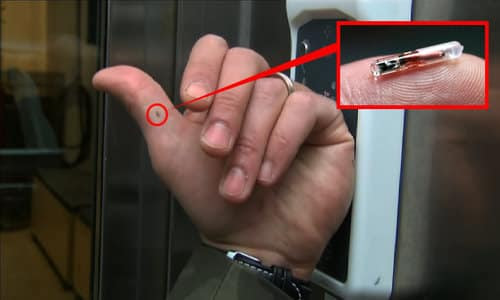
Every now and then, a story comes along that sounds more like satire than news. Such was the case this month when Zi Teng Wang–a Missouri magician and molecular biologist–confessed online that he had lost the password to the microchip implanted in his own hand. Yes, you read that correctly. A chip… in his hand… that he can no longer control.
At first glance, it’s an amusing cyberpunk mishap. Wang, who goes by Zi the Mentalist, originally embedded an RFID chip between his thumb and index finger years ago as part of a magic routine. The idea was clever: an audience member could tap a phone to his hand and activate a trick. But the execution was less than magical. Phones differ in where their RFID readers are located, many people disable the feature, and tapping someone’s hand repeatedly kills the mystery pretty quickly.
So Wang repurposed the chip, linking it to a Bitcoin address and later to an Imgur meme. But when the image link went down and he tried to rewrite the chip, he discovered something chilling:
he had forgotten the password to the device inside his own body.
His tech friends told him the only way to unlock it now would be to strap an RFID reader to his hand for days–or weeks–and brute-force every possible password combination. In the meantime, the device is locked permanently inside him, functional but inaccessible. An inconvenience, yes. But also a strange parable for our times.
Because what seems like comic relief is actually a flashing red reminder of just how far technology has crept beneath our skin–literally.
From a Joke to a Warning
Zi Wang’s plight would be little more than a funny headline if it weren’t part of a much larger story unfolding around the world. In Sweden, thousands of citizens have already had microchips implanted in their hands to access transit, open office doors, store personal identification data, and even buy snacks from vending machines. European tech companies have hosted “implant parties,” where volunteers line up to receive NFC chips the way people once lined up for the newest iPhone.
In the United States, several companies have experimented with optional employee implants for building access and digital payments. Even more significant is the rapid growth of biometric ID systems–facial scans, palm-vein signatures, retina recognition–that are being tied to banking, travel, and online access.
And of course, layered on top of all of this are the major shifts toward:
Central bank digital currencies (CBDCs)
Digital wallets required for government services
Biometric tattoos developed by major research groups
Implantable health sensors from Silicon Valley startups
Neural implants like Elon Musk’s Neuralink
Individually, these technologies seem impressive–sometimes even helpful. But together? They form a powerful ecosystem that is merging faster than most people realize.
And that’s where Bible prophecy readers feel their ears perk up.
The Quiet March Toward a Single, Universal “Mark”
For Christians who take Revelation seriously, none of this sounds far-fetched. Scripture describes a future where a global power demands not only identification and economic compliance, but loyalty–enforced through a mark on the right hand or on the forehead. A mark intertwined with commerce, control, and allegiance.
For decades, that seemed futuristic. Today, it sounds uncomfortably close.
The idea of a chip in the hand is no longer science fiction. European payment systems already allow it. Biometric tattoos–ink embedded with nanoscale circuitry–can store health data or authenticate identity. Digital currencies can be tracked, restricted, or programmed to expire. Governments are actively discussing digital IDs tied directly to financial systems.
The question is no longer “Could this ever happen?”
It has quietly become “How long until these systems merge into one?”
Once every part of life–identity, access, purchases, travel, healthcare–requires a digital credential, the infrastructure for a Revelation-style system is already in place. All it would take is a crisis, a charismatic leader, and a promise of safety and order.
Where This May Be Heading
Zi Wang’s locked-hand fiasco is humorous, but it exposes something serious: once technology crosses the boundary into the body, the rules change. Ownership changes. Access changes. Control changes.
Imagine a future where:
Your digital currency wallet is tied to a chip in your hand.
Your travel permissions are embedded in a biometric ID tattoo.
Your medical data is stored in a subdermal sensor.
Your loyalty to the governing system–political, ideological, or religious–is verified through your digital signature.
At that point, losing access to your internal tech isn’t just funny.
It’s catastrophic.
People would be unable to buy or sell–not because they forgot a password, but because the system locked them out.
Exactly as Revelation forewarns. Except this time it will be for more than technical reasons.
A Glimpse of What’s Coming
The world is not there yet. But the convergence is happening. Sweden has normalized chips. The EU is rolling out digital identity frameworks. The U.S. is piloting biometric payment systems. Silicon Valley is embedding tech under the skin while banks explore wallet-based digital currencies.
And in Missouri, a magician stares at an X-ray of the chip in his own hand and jokes that he has become “a useless cyborg.”
For prophecy watchers, it’s hard not to hear the whisper behind the humor:
The technology now exists. The infrastructure is being built. The world is being conditioned. The future described in Revelation is no longer impossible–it is increasingly plausible.
We’re not laughing anymore.
GOG AND MAGOG UPDATE
The Laser Age Of Warfare Has Arrived: Israel’s Silent Revolution In Defense
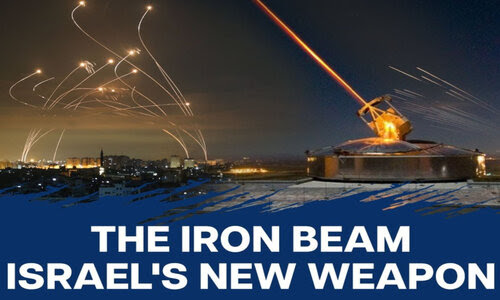
For decades, laser weapons lived in the realm of science fiction–more at home in Star Wars than on the modern battlefield. But that boundary quietly shattered one night on Israel’s northern border, when soldiers of the Dragon Battalion watched a Hezbollah drone twist violently in midair and fall from the sky with no explosion, no smoke trail, and no sound.
A laser shot it down.
Not a prototype. Not a test. A real interception in real combat conditions.
And it happened almost silently.
That moment marked the first operational use of high-energy laser weapons in world history–and it has triggered what Israeli defense officials are calling a revolution in warfare.
The First Laser Shootdown–and What It Means
The dramatic downing of that UAV was only the beginning. In the year since, Israel has confirmed nearly 40 successful laser interceptions, quietly rewriting the rules of air defense.
No missiles.
No massive interceptor batteries.
Just light–focused, stabilized, and fired with the precision of a surgeon’s scalpel.
Israel now fields multiple mobile laser units, including prototypes known as Iron Beam M (“Lahav Barzel”) and Lite Beam. These are not science experiments. They are already destroying incoming threats at a fraction of the cost of traditional interceptors.
How much cheaper?
An Iron Dome missile costs around $50,000.
A laser shot costs about 50 cents.
In warfare, that kind of economic shift isn’t just an upgrade–it’s a paradigm break.
How Israel’s Laser Weapons Work
While the physics are advanced, the concept is surprisingly simple:
Detection:
The system uses the same radar and command-and-control network as Iron Dome. It watches the sky, identifies a threat, and decides–instantly–whether to use a missile or a laser.
Target Lock:
Once it chooses laser interception, the system sends targeting data to a high-precision laser “director”–a rotating turret capable of tracking fast-moving objects.
Adaptive Optics:
This is the magic. Air distorts light (think of heat shimmer above a road). Israeli engineers developed real-time correction algorithms–adaptive optics–that adjust the beam mid-flight so it stays perfectly focused on the target.
Beam Combining:
Instead of one giant laser, the system merges multiple fiber-optic lasers into a single powerful beam. This “combined beam” hits 100 kilowatts of output–strong enough to melt metal in seconds.
Interception:
The laser holds its beam on the target until a wing, motor, or structural component fails. The drone loses stability and drops.
What’s astonishing is that all of this happens with almost no noise, no smoke, and no visible trace.
Operators only see the effect–the sudden breakup of a distant threat.
Why This Changes Everything
1. Cost–The Great Equalizer Breaker
Missile defense has always been expensive. Adversaries can launch cheap drones or rockets; defenders must respond with costly interceptors.
Lasers flip that equation.
Suddenly, launching swarms of drones becomes a losing strategy.
2. Unlimited “Ammo”
As long as a laser battery has power, it can keep firing. No trucks full of missiles. No resupply delays.
Electricity becomes the new ammunition.
3. Speed of Light Response
There is no travel time. No trajectory. No interception arc.
The beam fires and hits instantly–making it ideal for fast, low-flying drones, mortar shells, or rockets at short range.
4. Precision Without Detonation
Because lasers destroy structural components without explosive force, collateral damage drops dramatically.
5. Open Door to Future Systems
Israel’s engineers say this is just the beginning. Within years we may see:
Airborne laser platforms on drones and jets
Laser satellites intercepting ballistic missiles from orbit
Ground lasers disabling aircraft, armored vehicles, or launch sites
A decade ago, these ideas sounded like fantasy.
Now, after northern Israel’s silent shootdowns, they feel much closer.
The Dawn of a New Military Era
Israel’s laser systems–soon to be deployed widely under the name “Or Eitan” (Iron Beam)–are the world’s first operational high-energy laser defense battalions. They’ve already proven themselves under fire, outperforming expectations and fundamentally shifting the economics of war.
This doesn’t make traditional missile defense obsolete–Iron Dome and David’s Sling will remain essential for long-range threats and bad weather.
But it does signal something profound:
Warfare is entering the laser age.
A future where interception is cheap, silent, and nearly instantaneous.
A future where swarming drones become irrelevant.
A future where nations will need entirely new strategies–not just new weapons.
And like many revolutions, it didn’t begin with a noise, but with silence. A beam of light. A falling drone. And a battlefield changed forever.