A Third Red Heifer Is Born: Rabbis Race to Examine the Herd Israel Has Waited 2,000 Years to Raise
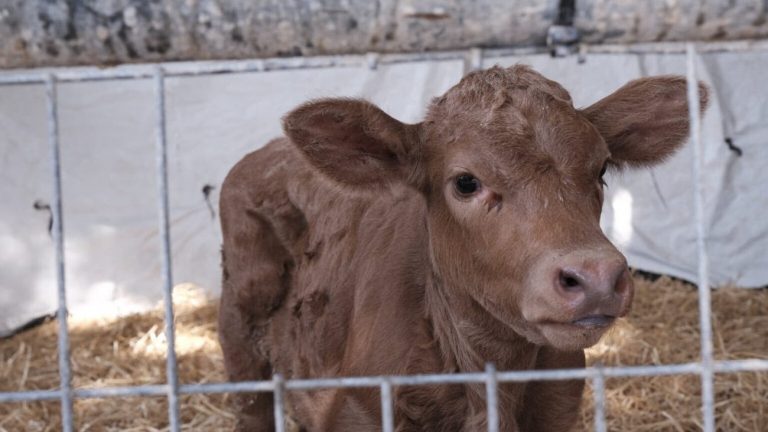
A calf was born in a dairy barn in the Jordan Valley last week, and on Rosh Chodesh Elul, a delegation of rabbis stood over her, running their hands through her coat. She was the third heifer of her kind to be born in Israel this season, joining two others already under watch in the Galilee and the Golan Heights. Together, the three calves represent the most concrete progress yet toward a goal Jewish tradition has pursued since the destruction of the Second Temple: raising a red heifer whose ashes can restore ritual purity to the Jewish people.
The examinations were carried out by the Beit Midrash, the rabbinic study hall, of the National Institute for Red Heifer Research, a body that unites religious Zionist, Litvish, and Hasidic rabbis around a single national mission. Members of the Institute traveled to all three farms in a single sweep, checking the calves from tail to head for the disqualifying flaws that have derailed nearly every red heifer candidate in living memory.
The requirements come directly from the Hebrew Bible. “This is the ritual law that Hashem has commanded: Instruct the Israelites to bring you a red cow without blemish, in which there is no defect and on which no yoke has been laid” (Numbers 19:2). Since the Second Temple’s destruction nearly two thousand years ago, the ashes of such a cow have been unavailable, leaving every Jew in a state of ritual impurity from contact with the dead, a status the Bible calls tumat met. Without those ashes, the purification described in the Torah cannot take place, and full Temple service cannot resume. That is why a light hair on a newborn calf is not a minor veterinary detail. It is the difference between a heifer that can eventually serve the nation and one that cannot.
The first stop was Beit Rimon in the Galilee, where the heifer given the name Temimah, meaning “unblemished” or “whole,” was examined three months after her birth. Temimah’s case has been the most closely watched of the three, because a farmhand attached an identification tag to her ear shortly after birth, before anyone recognized what she might become. The tag raised concern that it may have caused a disqualifying blemish.
The examination was conducted in the presence of the local rabbi, Rabbi Yechiel Tzur, with the Institute’s team checking Temimah from tail to head, a process the Institute has said requires exceptional expertise in the relevant halachic laws. The verdict was encouraging. The team reported that she is indeed temimah, unblemished, both in the redness of her hair and in the physical integrity of her body. The hole in her ear is healing well and appears to be moving toward classification as a temporary blemish, which, according to the ruling of the Institute’s Beit Midrash, does not disqualify her.
The second stop was the Golan Heights herd of Shai Givon, the artificial insemination specialist whose work for the company Piryon has now produced two red heifer candidates from his own barns. This calf, born just before Tisha B’Av, has no ear tag. Aware of what a single puncture had already cost Temimah’s case, the Institute chose not to tag her.
Her complications are internal rather than visible. She was born a twin to a male calf, and cattle are one of the few species in which twin fetuses in the womb can share a connected blood supply between their placentas. When that happens, the male twin’s hormones can cross into the female twin and permanently affect her reproductive organs, leaving her what veterinarians call a freemartin and Jewish law would recognize as an aylonit, a female incapable of ever conceiving. The examination at Yehudiya also turned up several lighter-colored hairs on her coat, a detail that drew Rabbi Aharon Eisental into the discussion alongside the Beit Midrash’s own scholars. Rabbi Azaria Ariel, head of the Institute’s Beit Midrash, offered a measured assessment: “In any event, it is reasonable to assume that these hairs will darken in the future, enabling us to approve their color according to all halachic opinions.” On the question of her uterus, Rabbi Azaria said his latest research has left him confident that the calf can still be rendered a potential red heifer, a question the Sages of the Talmud never had occasion to confront, since freemartinism was not a concept available to them.
Givon has described the pace of these births as more than coincidence. Following the birth of the calf in his herd, he said he has fielded questions from across the Jewish spectrum, from Hasidim and Litvaks to secular and religious Jews alike, and called it a sign that the Jewish people are “more attuned than ever to the Temple and to restoring purity to Israel.”
Kushner (AKA The Christian Zionist Jewish Messiah) meets Hamas leaders in Egypt on Peace Plan
The move comes amid intensive efforts by the White House and Trump’s Peace Council to push both Hamas and Israel toward the next critical phase of the American peace plan.
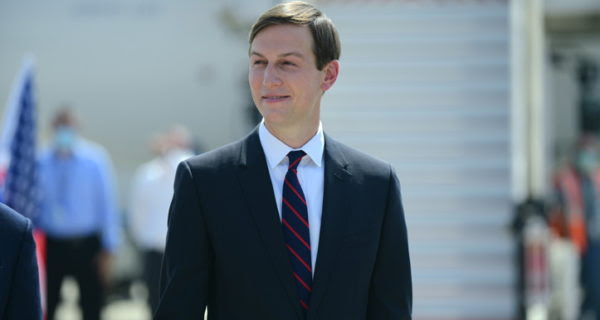
Jared Kushner, special envoy to U.S. President Donald Trump, held an unusual meeting Sunday in Egypt with senior Hamas officials, according to a report by Barak Ravid on Israel’s Channel 12 News, citing sources involved in the process.
During the session, Kushner applied significant pressure on the terror group’s representatives, demanding they begin immediately implementing their commitment to disarm under the ceasefire agreement reached last October.
Kushner was joined by other senior international figures, including Nikolai Mladenov, director-general of the Peace Council, and former British Prime Minister Tony Blair.
The three are working together as part of the American effort to advance a new political and security arrangement in the region, forming part of President Trump’s broader Middle East peace initiative.
The meeting represents a highly unusual development—the first direct encounter between Kushner and Hamas leadership since the ceasefire agreement that ended the Gaza war was signed last October.
The move comes amid intensive efforts by the White House and Trump’s Peace Council to push both Hamas and Israel toward the next critical phase of the American peace plan.
Trump unveiled the plan last month, a detailed 20-point framework for reshaping Gaza’s future.
According to the proposal, Hamas has agreed to complete disarmament and to transfer all civil and security authority in Gaza to a new technocratic Palestinian government.
The plan also includes provisions for possible Israeli withdrawal from parts of the territory, presenting complex challenges for Jerusalem’s political leadership.
Israel’s political establishment and Prime Minister Benjamin Netanyahu’s government have expressed considerable skepticism about both the feasibility of the U.S. plan and Hamas’ willingness to fulfill its commitments.
Netanyahu, facing heavy political pressure from both coalition partners and political opponents, has publicly voiced reservations about details of the disengagement framework.
This comes despite earlier phone conversations with Kushner in which the prime minister reportedly promised to give the initiative a chance and even committed to restraining military operations in Gaza to allow the process to be tested.
The issue carries particular sensitivity given Israel’s approaching elections, where Netanyahu is trailing in polls and his relationship with Trump has entered a complicated phase.
Kushner, Mladenov, and Blair are expected to arrive in Israel for meetings with Prime Minister Netanyahu.
Washington officials emphasize that the goal is to reach full understanding and coordination with Israel regarding implementation of the coming phases in the months ahead.
Senior American sources indicated that the U.S. is not rushing the process and considers it important to ensure each step is executed carefully and precisely, expressing confidence that the current plan is superior to any alternative currently available on the ground.
Kushner recently published a detailed statement on the Abraham Accords in which he hinted at the possibility of another political breakthrough in the region.