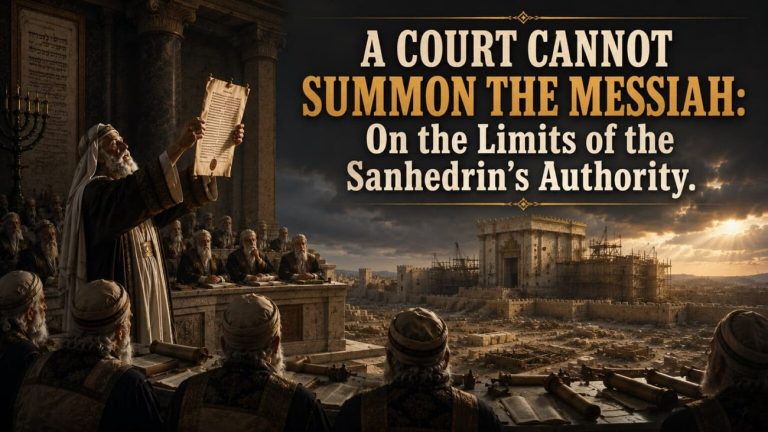
Israel Court wants to Summons the Heavens , for the Speedy Arrival of the MESSIAH!!!
A court cannot summon the Messiah: On the limits of the Sanhedrin’s authority
A reconstituted Sanhedrin has issued a ruling asking Heaven to reveal the Mashiach and rebuild the Temple. But the classical sources draw a sharp line the court has crossed.
What the Sources Actually Assign to the Court
The classical sources are not vague on this point. Mishnah Sanhedrin 1:5 lists the matters that belong exclusively to the Great Sanhedrin of seventy-one judges. The court judges an entire tribe that has sinned. It judges a false prophet. It judges a High Priest in a capital case. It authorizes an optional war. It expands the boundaries of Jerusalem or the Temple courtyards. It appoints lesser courts for the tribes. It declares a city an ir hanidachat (idolatrous city). It intercalates the year and thereby fixes the calendar.
These are concrete judicial and national functions. They concern law, judgment, and the ordered life of the people under the Torah. Nowhere in that list, nor in the Rambam’s codification of it, does the court receive authority to issue a psak (binding ruling) that obligates Heaven to bring the Mashiach or to rebuild the Temple.
The “It Is Not in Heaven” Argument, and Its Real Scope
The ruling rests its claim on a different foundation: the principle that a court below binds the court above, drawn primarily from the story of the Oven of Achnai in Bava Metzia 59b. There, Rabbi Eliezer and the majority of the Sages dispute a point of ritual law. Miracles occur. A heavenly voice declares that the halakhah follows Rabbi Eliezer. Rabbi Yehoshua rises and declares Lo bashamayim hi, “It is not in Heaven” (Deuteronomy 30:12). The Gemara explains that once the Torah was given at Sinai, the determination of halakhah belongs to the majority of the human court, and Heaven does not override it. Elijah later reports that God laughed and said Nitzchuni banai, “My children have defeated Me.”
The principle is true and foundational. It protects the integrity of the received Torah against any claim that miracles or heavenly voices can rewrite the law. But its scope is precise. The story concerns the adjudication of halakhah. It does not authorize a court to decree redemptive events and then treat Heaven as obligated to perform them. When the Sanhedrin transfers this language to the revelation of the Mashiach and the building of the Beit HaMikdash, it carries the principle outside the domain in which the Sages established it.
The Supporting Passages Prove Less than Claimed
Two other passages are sometimes cited for a broader reading. In Rosh Hashanah 25a, Rabban Gamliel fixes the calendar against Rabbi Yehoshua’s calculation and requires public submission to the court’s declaration. The episode shows that the court’s determination of the sacred times binds the people. It does not show that the court can compel Heaven to alter the course of history.
In Taanit 23a, Honi HaMe’agel draws a circle during a drought and refuses to move until rain falls, and God responds. From this and similar accounts, the Sages formulate the maxim tzaddik gozer veHaKadosh Baruch Hu mekayem, “a righteous person decrees and the Holy One fulfills,” linking it to the verse “You will decree a matter, and it will be established for you” (Iyov 22:28). These narratives illustrate the efficacy of a righteous person’s plea. They do not create a judicial procedure by which a beit din (rabbinical court) can bind Heaven to eschatological outcomes.
The Torah’s Own Pattern: God Acts, Man Obeys
Even the strongest form of the maxim must be read against the Torah’s own pattern. Moses was the most faithful servant in the house of God, yet when the sea split, the text is unambiguous: “Moses stretched out his hand over the sea, and the Lord drove the sea back with a strong east wind all night and made the sea dry land” (Shemot 14:21). The agency remains with God. Moses obeys; he does not decree the miracle and thereby compel it. This reservation of divine initiative runs throughout the Exodus narrative. Righteousness and prophetic stature never transfer to any human being the power to force God’s hand.
The Rambam’s framework in Hilchot Melachim confirms the same order. The King Mashiach arises, restores the Davidic monarchy, rebuilds the Temple, and gathers the dispersed. A candidate is presumed to be the Mashiach when he studies Torah, strengthens Israel in observance, and fights the wars of God; he is confirmed only when he succeeds in building the Temple and gathering the exiles. The entire process unfolds inside the ordinary course of nature: “One should not entertain the notion that in the Messianic age any facet of the world’s nature will change or there will be innovations in the work of creation. Rather, the world will continue according to its pattern.” Prophecy returns after the kingdom is established, not as an independent outcome summoned by court decree. The Rambam assigns no role to a psak that obliges Heaven to begin the process.
A Ruling with No One to Obey It
A further difficulty follows from the nature of halakhah itself. A binding court ruling addresses human beings, who are commanded to follow the determination of the law. A person may hold a private disagreement, but he may not publicly teach others to reject or disobey the court’s decision. That limitation is precisely what preserves the practical authority of the beit din.
The present ruling points in the opposite direction. It asks Heaven to act. No parallel mechanism of enforcement exists; one cannot speak of Heaven obeying under threat of consequence. The ordinary force of a psak therefore has nothing to attach to. The ruling cannot function as a practical halakhic decision governing human conduct. It remains a petition dressed in the language of judicial authority.
The difficulty was felt even inside the session. Two judges initially dissented, judging that accelerating the process could intensify suffering, and joined only after the phrase berachamim (“with mercy”) was inserted. The concession shows that the court recognized the potential for harsh consequences, but it did not change the structure of the request. The resolutions still present the revelation of the Mashiach, the clearing of obstacles, and the return of prophecy as outcomes the court can decree, and Heaven is expected to implement.
The Order the Torah Maintains
The Torah already provides the appointed channels. The people are commanded to pursue the mitzvot that prepare the ground. The daily Amidah (standing prayer) already contains the petitions for the ingathering of the exiles, the rebuilding of Jerusalem and the Temple, the restoration of the Davidic kingdom, and the return of the service. Human initiative and prayer are the prior requirements. The consistent pattern is that Israel acts and Heaven then assists. A court that reverses that order, treating a formal ruling as the instrument that forces the outcome, steps outside its assigned role.
What would have fallen inside the court’s proper authority is a ruling directed at the people themselves. In the days of the Temple, when drought struck, the ma’amadot (standing delegations of Israelites) fasted in rotation, each group representing its portion of the nation so that, by proxy, all Israel shared in the affliction and the plea. A court today could call the nation to coordinated teshuva (repentance); to fasting and prayer in that same representative spirit; to concrete acts of preparation for the Temple service; to the removal of internal corruption through established legal and communal means; and to the strengthening of Torah observance as the measurable groundwork the Rambam requires. Such a psak would bind those actually subject to the court’s authority. It would encourage the willing and challenge the complacent. And it would keep the order the Torah maintains: the people act, and Heaven responds.
The principle lo bashamayim hi stands. A miracle or a heavenly voice does not define halakhah or change the Torah; that truth is secure. But it does not follow that a human court can decree the arrival of the Mashiach and bind Heaven to perform it. The Sanhedrin’s ruling makes exactly that additional claim. The classical sources do not sustain it.
Israel at War ! Photos

The Rise of the REAL MAGOG – Turkey’s Ottoman Revival: A Warning For Christians & Jews
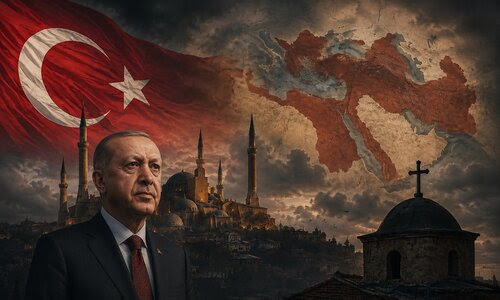
Maj. Gen. (res.) Gershon Hacohen has issued a stark warning about Turkish President Recep Tayyip Erdogan’s ambitions to revive the Ottoman Empire’s regional dominance, including a claim on Jerusalem itself.
In an in-depth strategic analysis with the TOV Hebrew media network, Hacohen laid out a pattern of Turkish behavior, cross-border military expansion, sweeping maritime claims, and highly symbolic religious reversals, that he says amounts to a systematic project to project Turkish power far beyond its borders, reviving a 400-year Ottoman legacy (1516-1917) that once ruled almost the entire Middle East and stretched deep into Christian Europe.
That history is exactly why the project should alarm Christians as much as it alarms Israel. Wherever Ottoman rule once expanded, Christian populations that had lived in those lands for centuries went into steep, often catastrophic decline, a pattern already repeating itself today in the very countries Erdogan invokes.
Hacohen points to Turkey’s “Blue Homeland” doctrine, a maritime strategy claiming vast stretches of the Mediterranean and its economic resources as Turkish territory, backed by an increasingly assertive Turkish navy. The doctrine’s clearest expression on land is Turkey’s continued military occupation of northern Cyprus. Erdogan has been direct about the scope of his ambition.
“Turkey is larger than Turkey,” he has said, adding, “The borders of our hearts are elsewhere,” a reference to former Ottoman territory including Mosul and Kirkuk in modern Iraq. Turkey now operates military bases directly inside former Ottoman domains in Syria, Libya, and Somalia, a footprint Arab News has also documented, marking a sharp break from the deliberately isolationist foreign policy the Turkish republic’s founders established a century ago.
“The Harbinger of the Liberation of Jerusalem”
Nowhere has Erdogan tied this ambition to religion more explicitly than in his government’s decision to convert Istanbul’s Hagia Sophia, for nearly a thousand years the largest cathedral in Christendom and the spiritual center of Eastern Christianity, back into a mosque in July 2020. Erdogan invoked the legacy of Ottoman Sultan Mehmed II directly in announcing the move, framing it as a restoration of the sultan’s 1453 conquest rather than a religious or cultural decision made by his own government.
But Erdogan did not stop at restoring history. In his own address announcing the conversion, he declared, “The resurrection of Hagia Sophia is the harbinger of the liberation of Masjid al-Aqsa in Jerusalem.” He was explicit that Hagia Sophia was only the first step, and that Jerusalem was the intended destination.
Erdogan has repeatedly and directly challenged the legitimacy of Israeli sovereignty over its own capital, using the same Ottoman-era religious framing. He told the Turkish Parliament flatly, “Jerusalem is our city, a city from us,” invoking the Ottoman Empire’s tearful retreat from the city during World War I and pointing to surviving Ottoman architecture, including Jerusalem’s Old City walls, as evidence of an enduring Turkish claim.
In a public dispute with Israeli Prime Minister Benjamin Netanyahu over ancient relics, Erdogan said, “Turkey will not give even a single pebble belonging to Jerusalem to Israel,” describing the city as a sacred trust belonging to all humanity rather than to the Jewish state whose eternal capital it has been for three thousand years. After the United States recognized Jerusalem as Israel’s capital in 2017, Erdogan convened an extraordinary summit of the Organization of Islamic Cooperation and declared the American decision “against ethics, history, and consciousness, and completely null and void.”
A Bid to Lead the Entire Muslim World
Erdogan’s Jerusalem rhetoric is not an isolated obsession. It is one piece of a broader campaign to position himself as the leader of the global Muslim ummah, a role the Ottoman sultans themselves once claimed through the historic Caliphate, abolished by Mustafa Kemal Ataturk in 1924. Analysts have noted that Erdogan calculated the Hagia Sophia decision would resonate with Muslim audiences “from Los Angeles to Jakarta, from Pakistan to South Africa,” reinforcing his image as defender of the faith even as it damaged Turkey’s relations with the West.
Erdogan has absorbed thousands of Muslim Brotherhood activists fleeing Egypt and granted them refuge in Turkey, sought to expand Turkish influence in Sudan, and worked to position himself as a rival to Saudi Arabia’s custodianship of Islam’s two holiest cities, Mecca and Medina, all while presenting himself internationally as the foremost defender of the Palestinian cause and of Al-Aqsa specifically.
The contradictions in that self-image are glaring. Erdogan condemns Israeli control of Judea and Samaria while his own forces occupy northern Cyprus, parts of Syria, and have deployed into Libya. He casts himself as champion of Muslims worldwide while conducting military campaigns against the Kurds, who are themselves overwhelmingly Muslim. He postures as the Muslim world’s conscience on human rights while imprisoning journalists by the hundreds at home.
A NATO Ally With a Russian Missile System and the Second-Largest Army in the Alliance
Turkey’s neo-Ottoman ambitions sit uneasily alongside its formal status as a NATO member, and its own recent conduct inside the alliance has done as much as anything to raise doubts about where its real loyalties lie. Turkey fields the second-largest standing military in NATO after the United States, a force Erdogan has increasingly used to pursue independent regional objectives rather than alliance priorities, from Cyprus to Syria to Libya.
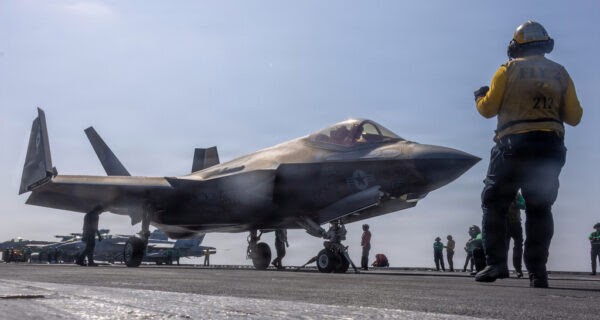
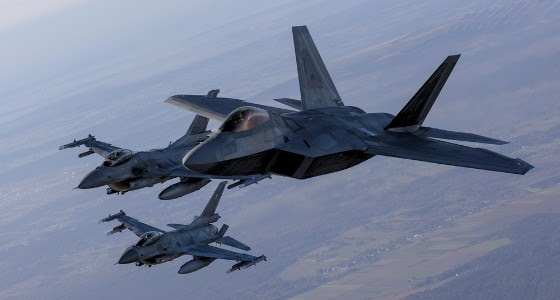
In 2019, Turkey took delivery of Russia’s S-400 air defense system after years of explicit American objections that operating a Russian system built to detect stealth aircraft alongside the F-35, the West’s most sensitive stealth fighter, would hand Moscow a live intelligence window into NATO’s own technology. Within days, Washington expelled Turkey from the multinational F-35 program and halted delivery of jets toward which Ankara had already paid roughly $1.4 billion.
In December 2020, Washington also imposed CAATSA sanctions on Turkey’s defense procurement agency, making Turkey the first NATO ally sanctioned under the law. Erdogan, for his part, threatened to shut down two critical NATO installations on Turkish soil, Incirlik air base and the Kurecik radar station, “if necessary,” prompting the US defense secretary at the time to publicly question Turkey’s commitment to the alliance itself.
That standoff has resurfaced this year. President Donald Trump signaled openness to selling F-35 jets to Turkey during a NATO summit meeting with Erdogan in July, saying, “We’re going to be taking the sanctions off. We don’t want to sanction friends.” But the State Department subsequently clarified that Ankara still does not meet the legal requirements to rejoin the F-35 program so long as its S-400 systems remain on Turkish soil, regardless of the warmer tone between the two presidents. Turkey has reportedly never activated the S-400 despite paying for it, and Turkish officials say they now believe a resolution is closer than at any point in the six-year dispute.
Whether or not that resolution materializes, the episode illustrates the same underlying pattern Hacohen describes: a Turkey formally inside the Western alliance system while acting, in practice, according to its own independent and often contrary strategic logic.
What Actually Happened Everywhere the Ottomans Ruled
A quick review of the Ottoman role in history should raise alarm among Christians about Erdogan’s revivalist project, even more so since it isn’t hypothetical. History already ran this experiment once, across the exact territories Erdogan invokes, and the results were the near-total disappearance of Christian communities that had existed since the apostolic era. Anatolia itself, the heartland of the modern Turkish republic, was overwhelmingly Christian for a thousand years before the Ottoman conquest, home to some of Christianity’s oldest churches, the very churches addressed in the New Testament’s Book of Revelation.
Centuries of Ottoman rule, followed by the Turkish republic’s own campaigns of violence and forced assimilation, reduced that population to a rounding error. Christians made up an estimated 20 to 25% of the population of Anatolia in 1914. By 1927, following the Armenian genocide of 1.5 million Christians during World War I and the expulsion of Greek Orthodox communities in a population exchange, that figure had collapsed to roughly 2%. Today, in a country of over 80 million people, Christians make up an estimated 0.2 to 0.5% of the population, among the lowest of any country in the world with a historic Christian community.
Has Christianity Flourished or Withered Under Erdogan? The Record Is Clear
Christian communities in Turkey had hoped Erdogan’s Justice and Development Party would improve their circumstances when it first took power in 2002. Those hopes have been disappointed. The US State Department’s most recent religious freedom report on Turkey found that Turkish authorities “continue to undermine religious freedom by deliberately attempting to stifle the spread of Christianity,” and documented the systematic mistreatment underlying the community’s collapse from 20% of the population a century ago to roughly 0.2% today.
Church buildings in Turkey face height restrictions that mosques do not, historic Armenian, Greek Orthodox and Assyrian churches are still officially treated as “foreign” institutions subject to constant government monitoring, and foreign pastors and missionaries have been deported and barred from re-entry for the “offense” of publicly evangelizing. Converts from Islam face harassment, family rejection, and threats of violence, and are frequently compelled to hide their faith entirely.
A single new Syriac Orthodox church opened in 2023, the first since the founding of the Turkish Republic a century earlier, a rare exception that only underscores how sweeping the underlying suppression has been. Whatever else can be said about Erdogan’s Turkey, Christianity has not flourished there. It has continued a century-long decline toward extinction, with the government’s own policies repeatedly cited as a driving factor.
The Same Story, Repeating Across the Region Today
The pattern Erdogan’s Ottoman nostalgia recalls is not confined to Turkey’s own history. It is playing out in real time across the modern nations that once sat inside Ottoman and broader Islamic imperial control. Lebanon, once a Christian-majority country and still home to the largest proportion of Christians anywhere in the Arab Middle East, has seen its Christian population fall from a clear majority in the early 20th century to roughly 38% today, driven by lower birth rates, sustained emigration during Lebanon’s civil war years, and the community’s steadily diminishing influence over national affairs.
Syria’s Christian population, roughly 10% of the country and numbering 1.5 to 2 million before its civil war began in 2011, has collapsed to somewhere between 300,000 and 600,000 today, gutted by war, ISIS’s campaign of massacre and enslavement against religious minorities, and mass emigration that shows no sign of reversing.
Egypt still holds the largest Christian population in the Middle East, some 9 to 10 million Copts, but that community, once the majority faith of Egypt for centuries after the birth of Christianity, has been reduced over 1,400 years of Islamic rule to roughly a tenth of the population, and continues to face sectarian violence, discriminatory church-building laws, and periodic mass-casualty attacks by Islamist terrorists.
Taken individually, each of these declines has its own immediate causes: war in Syria, economic pressure in Lebanon, terrorism in Egypt. Taken together, across every territory that has ever fallen under the kind of Ottoman or broader Islamic imperial control Erdogan now says he wants to revive, they describe a single, unbroken historical pattern: Christian-majority or substantially Christian societies entering that system, and emerging from it centuries later as small, embattled minorities, or vanishing altogether.
Hacohen’s warning is about geopolitics and Israeli security. But the history he is describing is, just as much, a warning about what happens to Christian communities every time this particular project has been tried before.
When The Heavens Speak: Why God Uses The Sky To Get Humanity’s Attention
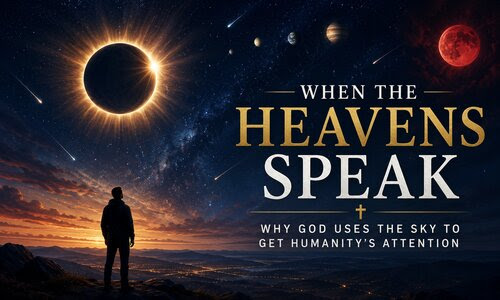
On August 12, the skies will provide humanity with a remarkable display.
Before sunrise, six planets–Mercury, Mars, Jupiter, Uranus, Saturn, and Neptune–will appear spread across the morning sky. Later that day, a total solar eclipse will cross portions of Russia, Greenland, Iceland, Spain, and Portugal, while a partial eclipse will be visible across a much larger section of the Northern Hemisphere. After darkness falls, the Perseid meteor shower will reach its peak, potentially filling the night with streaks of light produced by debris from Comet Swift-Tuttle.
Astronomers will explain the movements, distances, orbits, and physical causes behind each event–and rightly so. But Scripture tells us there is a larger truth that scientific measurements alone cannot reveal.
The heavens are not meaningless.
They were designed by God, arranged according to His wisdom, and created to accomplish His purposes. They declare His glory, mark His appointed times, reveal His power, and, according to prophecy, will one day become instruments of unimaginable judgment.
The Heavens Were Created To Speak
“The heavens declare the glory of God; and the firmament sheweth his handywork,” Psalm 19:1 proclaims.
Long before humanity built telescopes or calculated planetary orbits, the night sky was already preaching. Every star, planet, comet, and galaxy testified that creation did not produce itself.
Psalm 8 describes David looking at the moon and stars and wondering why the Creator of such vastness would care about mankind. Romans 1 teaches that God’s invisible attributes are revealed through the things He has made. Isaiah tells us to look upward and consider the One who created the stars and calls them all by name.
The heavens reveal both God’s greatness and humanity’s smallness.
Modern man looks upward and sees objects to study. Scripture encourages us to see evidence of the One who placed them there.
Signs, Seasons And Appointed Times
Genesis 1:14 says God placed lights in the heavens “for signs, and for seasons, and for days, and years.”
The sun and moon established the rhythms by which humanity measures time. Israel’s calendar was tied to lunar cycles. Biblical feasts occurred at divinely appointed times. Passover, Pentecost, the Feast of Trumpets, the Day of Atonement, and the Feast of Tabernacles were not randomly scheduled celebrations. They belonged to a calendar established by God.
The heavens therefore function as more than decoration. They are part of a cosmic clock.
The same God who arranged Israel’s appointed feasts also directed the timing of Christ’s first coming. Jesus died during Passover, rose as the firstfruits of those who sleep, and sent the Holy Spirit at Pentecost.
Biblical history does not unfold randomly. It moves according to God’s schedule.
That is why the future return of Christ will not be late or early. It will occur at the time appointed by the Father.
God Has Used The Heavens Before
Throughout Scripture, God repeatedly used celestial events during decisive moments.
In Joshua’s day, the sun stood still while Israel fought its enemies. During the reign of Hezekiah, the shadow moved backward as confirmation that God would fulfill His promise. A star announced the birth of Christ and guided the wise men toward Bethlehem.
Then, during the crucifixion, darkness covered the land.
The physical creation reacted as its Creator was rejected and placed upon a cross. The sun that had illuminated the world since creation withheld its light while the Light of the World bore humanity’s sin.
These accounts establish an important pattern: when God intervenes dramatically in human history, the heavens may become part of the message.
That pattern will appear again.