
Bible Prophecy, Signs of the Times and Gog and Magog Updates with Articles in the News
Reminder For Christians Of Life Under Islam
While much of the world debates comfort, identity, and politics, there are believers today who are risking everything simply to say the name of Jesus out loud. Not metaphorically. Not socially. Literally. In parts of the Islamic world, choosing Christ can mean losing your freedom, your family, or even your life—and yet, these stories rarely break through the noise of global media.
The silence is not because the persecution isn’t real. It’s because it is inconvenient, complex, and often ignored. But for Christians willing to look, the truth is unavoidable: the cost of faith is still being paid in full.
The case of Egyptian convert Said Mansour Rezk Abdelrazek is a sobering and urgent reminder. Arrested in 2024, Abdelrazek now stands trial in Cairo not for violence, but for his decision to leave Islam and follow Christ—and for attempting to have that truth reflected on his identity papers. Though apostasy is not formally illegal in Egypt, the system surrounding religious identity effectively criminalizes conversion.
Prosecutors have brought sweeping charges against him, including terrorism-related offenses, undermining national unity, and contempt for Islam. Reports indicate that during his detention, he has suffered physical and psychological abuse, even being hung in a “crucifixion” position and deprived of basic necessities. His trial, now delayed until June, continues within a judicial system widely criticized for its lack of transparency and due process.
This is not merely a legal case—it is a window into the spiritual cost of discipleship in parts of the world where belief itself becomes a crime. Abdelrazek’s story forces an uncomfortable question: what does it truly mean to follow Christ when the consequences are this severe? For many Western Christians, faith is expressed freely, even casually. For others, like Abdelrazek, it becomes a line that, once crossed, cannot be undone without great suffering.
A quieter, but equally revealing situation is unfolding in Algeria. Over the past several years, nearly all Protestant churches have been systematically shut down. What remains of the Christian community has been pushed out of public life and into the shadows—into homes, remote fields, and hidden gatherings. Laws requiring government authorization for non-Muslim worship are enforced in such a way that approval is almost never granted. Christianity, while not outright banned, is effectively squeezed out of visibility.
Yet the Church persists. Believers gather in “house churches” or even outdoors under olive trees, determined to maintain fellowship despite increasing pressure. Their existence exposes a deeper reality: in Algeria, Christianity is tolerated only as long as it remains invisible and controlled. Converts, in particular, face suspicion and social consequences, often treated as threats to the cultural and religious order. And still, the Church grows—quietly, resiliently, and largely unnoticed by the outside world.
Another recent case out of Egypt further underscores how even defending the Christian faith publicly can come at a steep cost. Christian YouTuber Aughustinos Samaan has been sentenced to five years of hard labor after being convicted of “contempt of religion” and “misuse of social media.”
His offense was not inciting violence, but producing online content that defended Christianity and responded to anti-Christian messaging circulating in the country. With a YouTube channel reaching around 100,000 subscribers, Samaan had built a platform focused on Christian apologetics and comparative religion–engaging ideas, asking questions, and offering a defense of his beliefs.
His punishment reveals how narrow the space for Christian expression can become under such systems. When even intellectual or theological responses are treated as criminal acts, it sends a chilling message far beyond one individual case. It tells believers that silence is safer than speech, that conviction must remain private, and that truth–if it contradicts dominant religious narratives–can carry legal consequences. Samaan’s sentencing is not just about one man; it reflects a broader reality where even peaceful, reasoned advocacy for Christianity can be met with severe repression.
These are not isolated cases. In Iran, authorities have intensified crackdowns on Christian converts over the past year, particularly those involved in house churches. Raids, arrests, and prison sentences have become familiar patterns. Converts are often charged with acting against national security, a broad accusation used to suppress religious expression. Bibles are confiscated, gatherings disrupted, and leaders detained. Christianity is allowed only when it does not spread—especially not among Muslims.
In Pakistan, the danger takes a different but equally severe form. Blasphemy laws continue to cast a long shadow over Christian communities. In 2025 alone, several cases emerged of Christians being accused—sometimes on little more than personal disputes—of insulting Islam or the Prophet Muhammad. These accusations can ignite mob violence almost instantly. Homes are burned, neighborhoods attacked, and families forced into hiding. Even when courts eventually dismiss the charges, the fear and destruction remain. For many, life never returns to normal.
Together, these examples reveal a consistent and troubling pattern: in multiple Muslim-majority nations, following Christ—especially as a convert—can trigger legal punishment, social isolation, or violence. And yet, these realities remain largely underreported. The modern media ecosystem often gravitates toward narratives that are politically convenient or culturally familiar. Stories like these, which require nuance and challenge prevailing assumptions, are too often left in the margins.
But for Christians, they should not be ignored.
Scripture reminds us that we are one body. When one part suffers, all suffer. The persecuted Church is not a distant issue—it is a present and pressing reality. The faith that is practiced freely in one part of the world is being tested under fire in another. And while the global spotlight may not shine on these believers, their endurance speaks volumes.
The question is not whether persecution exists. It does. The question is whether we are willing to see it—and what we will do once we do.
Because the silence of the world does not diminish the significance of their suffering. If anything, it amplifies the responsibility of the Church to remember, to pray, and to stand in solidarity. The cost of following Christ has not changed. In some places, it has simply become more visible.
And for those with eyes to see, it is impossible to ignore.
Anti-Normalization Laws – Another Reason Peace Remains Out Of Reach
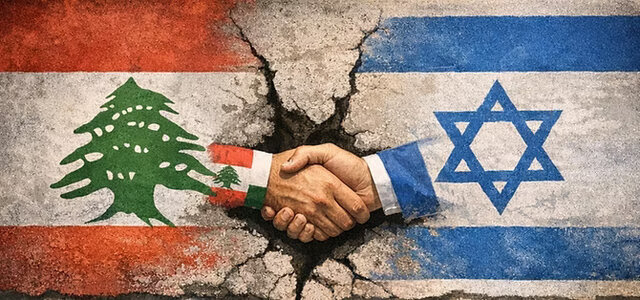
US President Donald J. Trump recently said that he has never heard of a Lebanese law banning contact with Israel. “I never heard of that, but… I’m pretty sure that’ll be ended very quickly,” Trump told reporters. “I know Lebanon doesn’t want that… That’s crazy.”
Trump is right. These laws are “crazy.” They are also poisonous.
So long as Arabs and Muslims are taught by law, religion and social pressure that contact with Israelis is forbidden, the prospects for peace and coexistence will remain out of reach.
There can be no real stability in the Middle East while anti-normalization laws and campaigns persist. Such laws and campaigns only empower extremists and terrorists who seek Israel’s and the region’s destruction.
Trump is reportedly seeking to invite Lebanese President Joseph Aoun and Israeli Prime Minister Benjamin Netanyahu to a meeting in the White House as part of an effort to achieve peace and stability between Lebanon and Israel. If Aoun, however, were to accept Trump’s invitation to meet Netanyahu at the White House, he would effectively be violating Lebanon’s own anti-normalization law, which prohibits all economic, professional, cultural, or social relations between Lebanese nationals and Israeli citizens and entities.
Lebanon’s anti-normalization law, rooted in the 1955 Boycott Law and reinforced by the penal code, prohibits virtually all contact with Israel, which is classified as an “enemy state.”
The law goes even further. It bars any person or legal entity, directly or indirectly, from engaging in any transaction — commercial, financial, or otherwise — with individuals or organizations linked to Israel.
The penalties are severe. Violators can face prison terms ranging from three to ten years with hard labor, in addition to fines, professional bans, and the confiscation of goods.
What may sound “crazy” in Washington is, in fact, standard practice in several Arab and Islamic countries. Lebanon is not the exception; it is the rule.
Legislation to prevent countries from establishing normal relations with Israel has existed in the region for decades. Countries such as Syria and Iraq have long maintained sweeping prohibitions on contact with Israelis, with penalties that have included life imprisonment and even death.
On May 26, 2022, Iraq’s parliament passed the “Criminalizing Normalization and Establishment of Relations with the Zionist Entity” law, which unanimously prohibits any diplomatic, political, economic, or cultural ties with Israel. Violations, including supporting “Zionist ideas” via social media, can incur life imprisonment or the death penalty.
Since then, Iraqi authorities have filed legal complaints against several political activists and bloggers, accusing them of supporting Israel. “One of the primary figures named in the complaints is Ghaith al-Tamimi, an Iraqi political activist living abroad. Al-Tamimi is known for his strong criticism of Iran and its affiliated factions within Iraq,” according to The New Arab media outlet.
“Al-Tamimi has been accused of using his social media platforms to make statements that were interpreted as supportive of Israeli actions in Gaza and Lebanon. This has sparked outrage within Iraq, where any perceived support for Israeli operations is considered a violation of the country’s laws.”
In another case, the Karkh Criminal Court in Baghdad sentenced a man to life imprisonment for promoting the “Zionist entity” (Israel) on social media. According to the Supreme Judicial Council, the defendant, whose identity has not been released, published photos and videos on Facebook supporting normalization with Israel. Authorities also found Hebrew-language books and newspapers in his home.
In Kuwait, similar laws – backed by parliamentary legislation and Islamic religious rulings – criminalize normalization with Israel and treat it as an act of treason. A few years ago, the Criminal Court in Kuwait issued a three-year prison sentence with hard labor against renowned media personality Fajr al-Saeed, who had publicly called for normalization with Israel.
Even Egypt, which signed a peace treaty with Israel more than four decades ago, has a law that authorizes the revocation of Egyptian citizenship if a national is “qualified as Zionist.” The Egyptian government has used this law, passed in 1975, to revoke the citizenship of Egyptians who marry Israeli nationals.
These laws are frequently reinforced not only by governments, but also by influential religious institutions such as Cairo’s Al-Azhar Al-Sharif, the premier institution of Sunni Islam, which has issued rulings banning all forms of non-governmental contact with Israelis and framing normalization as religiously forbidden.
Another prominent Islamic body, the International Union of Muslim Scholars (IUMS), has issued a fatwa (Islamic ruling) forbidding normalization with Israel. The ruling came in response to the normalization agreement signed between Israel and the United Arab Emirates more than five years ago. According to IUMS, normalization agreements are “not reconciliations or truces… rather, they are a concession of the holiest and most blessed of lands and a recognition of the legitimacy of the occupying enemy [Israel].”
The purpose of these laws and religious rulings is clear: to deter, punish, and stigmatize any form of coexistence with Israel. By criminalizing people-to-people engagement, Arab and Muslim leaders and institutions send a powerful message to their populations: peace with Israel is not merely undesirable, but a crime. This message is reinforced through media campaigns, professional blacklisting, and public accusations of “treason” against those who dare to engage with Israelis.
If Trump is serious about presenting himself as a peacemaker, his surprise at Lebanon’s law should be only the beginning. The real challenge lies in confronting a deeply entrenched system of boycotts, legal restrictions, and incitement against Israel across the Arab and Islamic worlds.
Where peace is illegal, peace is impossible.
The US maintains close ties with several Arab and Islamic countries where laws and campaigns banning normalization with Israel remain in force. Washington has diplomatic, economic, and political leverage with many of the countries that enforce these laws. The question is whether it is willing to use it.
Christian Foster Parents Continue To Battle Discrimination Over Gender Ideology

A federal court in Washington rejected a motion to dismiss a lawsuit filed by a Christian couple who say they were denied an unrestricted foster license by the state because they wouldn’t adhere to LGBT ideology.
In an opinion published Wednesday, Judge David G. Estudillo of the U.S. District Court for the Western District of Washington denied a motion by the state to dismiss a lawsuit filed by Jennifer and Shane DeGross over the Washington Department of Children, Youth and Families’ refusal to grant them a full foster care license.
“In essence, the Department has forced the DeGrosses to choose between forefeiting their freedom of speech to obtain an unrestricted license, or upholding their beliefs surrounding [Sexual Orientation, Gender Identity, and Expression], and receiving a less-favorable license subject to certain requirements,” Estudillo, a Biden appointee, stated.
The DeGrosses served as foster parents in Washington from 2013 to 2022. But when they sought to renew their license in 2022, they became aware of the state’s requirement that foster parents provide children “with resources that supports and affirms their needs regarding” sexual orientation, gender identity and expression and agree to use trans-identified children’s “pronouns and chosen name, and respect the child’s right to privacy concerning their gender identity.”
The DeGrosses informed the licensing agency that they could not agree to this provision because of their deeply held religious beliefs about sexuality and gender. They say they lost their license as a result.
They filed a complaint in 2024, alleging violations of their rights to freedom of religion under the First Amendment to the U.S. Constitution and the Equal Protection Clause of the Fourteenth Amendment.
In early 2025, the DeGrosses submitted a foster care application with a waiver clarifying their intention to “support a child’s right to privacy concerning their SOGIE” and “avoid the use of pronouns which are contrary to the child’s biological sex.” They also agreed to undergo training “so long as they were not required to change their sincerely held religious beliefs.”
The state approved the waiver request, limiting the DeGrosses to caring for children ages 2 to 5 and allowing them to care for older children only on a short-term basis. After the waiver was issued, the DeGrosses submitted a revised complaint alleging that the process for obtaining a waiver was “burdensome” and that their foster care license “arbitrarily limits them to caring for only some child[ren] in only some ways.”
Characterizing their treatment as “worse than similarly situated foster parents with analogous conscience-based objections to supporting a child’s religious or cultural identities and practices,” the DeGrosses accused state officials of violating their free speech, free exercise and free association rights under the First Amendment, as well as the Equal Protection Clause of the 14th Amendment.
In response, defendants filed a motion to dismiss the complaint for failure to state a claim.
While Estudillo concluded that the DeGrosses’ claims related to free speech and free exercise survived the motion to dismiss, it dismissed the couple’s Equal Protection claims and their claim against Washington Secretary of Children, Youth and Families Ross Hunter in his personal capacity.
The court’s conclusion that the free speech and free exercise claims have merit will allow the couple to file an amended complaint by May 13, enabling the lawsuit to continue.
“The DeGrosses have carried their burden to show that the Department’s enforcement of Policy § 1520 plausibly constitutes impermissible viewpoint discrimination,” the judge wrote.
The nonprofit legal organization Alliance Defending Freedom (ADF), which represents the DeGrosses, is optimistic that the policy will ultimately be found unconstitutional.
“When children are sleeping on cots in child-welfare offices for lack of loving homes, states like Washington should be doing everything they can to bring in more qualified foster parents,” said ADF Senior Counsel Johannes Widmalm-Delphonse in a statement reacting to the ruling. “But Washington state is putting its own ideological agenda ahead of children’s needs, even though a federal court already enjoined a similarly unconstitutional policy in 2021.”
Widmalm-Delphonse notes that a 2021 ruling by the U.S. District Court for the Eastern District of Washington prohibited the state from “requiring a foster family home license applicant or a family home study applicant to express agreement with any policy regarding LGBTQ+ issues that conflicts with the applicant’s sincerely held religious views.”
Widmalm-Delphonse urged Washington to “take the hint and end its unconstitutional and discriminatory policy.”