Bible Prophecy, Signs of the Times and Gog and Magog Updates with Articles in the News
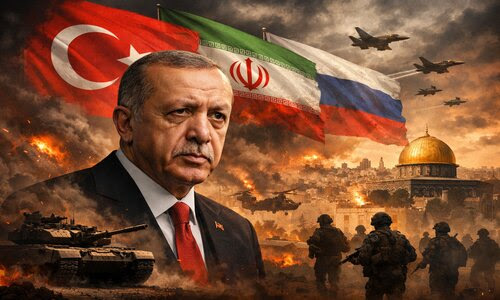
Turkey Threatens To Invade Israel – A Prophetic Strorm Is Brewing
The words were not whispered. They were not vague. They were not misunderstood. In a moment that sent shockwaves through geopolitical circles, Recep Tayyip Erdoğan stood before an international audience in Istanbul and issued one of the most direct threats yet against Israel: “There is nothing to prevent us from doing it.”
That “it,” as he made unmistakably clear, was military intervention–an invasion.
For years, rhetoric between Turkey and Israel has fluctuated between tense and hostile. But this was different. This was not merely criticism. This was not diplomatic posturing. This was a sitting leader of a NATO member openly invoking military action against a U.S.-backed ally–and doing so while referencing past Turkish military interventions as precedent.
A Threat That Crosses a Line
Speaking at the International Asia-Political Parties Conference, Erdoğan drew direct comparisons between Israel and previous theaters where Turkey projected power. He pointed to operations in Libya and the Nagorno-Karabakh, declaring: “We will do the same to them.”
That statement alone would have been enough to spark alarm. But Erdoğan went further–launching a personal and inflammatory attack against Benjamin Netanyahu, accusing him of being “blinded by blood and hatred” and running what he described as a “blood-stained genocide network.”
Turkey’s Foreign Ministry escalated even more, labeling Netanyahu “the Hitler of our time”–a comparison that all but ensures diplomatic relations will remain deeply fractured, if not beyond repair.
The rhetoric was matched with legal escalation. A Turkish court has reportedly issued indictments against Netanyahu and dozens of Israeli officials tied to the interception of a Gaza-bound flotilla–seeking extreme cumulative prison sentences. Symbolic or not, it underscores a broader shift: Turkey is no longer content with verbal opposition–it is building a narrative framework for confrontation.
Israel, for its part, did not stay silent. Netanyahu fired back, accusing Erdoğan of enabling Iran’s terror network while brutalizing his own Kurdish population. Other Israeli leaders went further still, describing Erdoğan as a power-hungry authoritarian clinging to imperial fantasies.
The result? Not just tension–but open hostility, with both sides speaking as if conflict is no longer unthinkable.
The Reality: More Talk Than Action–For Now
Let’s be clear. A Turkish invasion of Israel is highly unlikely in the near term. The geopolitical, military, and strategic consequences would be catastrophic. Israel is widely understood to be a nuclear-armed state with overwhelming military capabilities and deep backing from the United States.
For Turkey–a NATO member–to initiate such a conflict would not just be risky. It would be existential.
But dismissing Erdoğan’s words as mere bluster would be a mistake.
Because rhetoric like this does not emerge in a vacuum. It reflects mindset. It signals direction. And increasingly, it reveals ambition.
Turkey’s Quiet Expansion Across the Region
While the headlines focus on fiery speeches, the more consequential story has been unfolding quietly over the past several years: Turkey’s steady and strategic expansion of influence across the Middle East and beyond.
In Syria, Ankara has entrenched itself militarly and politically, backing opposition factions and maintaining a significant troop presence in the north. In Libya, Turkish intervention reshaped the balance of power, giving Ankara long-term influence in a country that sits at the crossroads of Africa, Europe, and the Mediterranean.
Beyond those flashpoints, Turkey has extended its reach into Somalia, Qatar, and northern Iraq–building military bases, forging economic ties, and positioning itself as a dominant Sunni power broker in a region long shaped by Iran’s Shia axis.
This is not accidental. It is doctrine.
Often referred to as a neo-Ottoman strategy, Turkey’s approach blends military force, political alliances, economic investment, and ideological messaging. Unlike Iran’s reliance on proxy militias, Turkey is building state-level partnerships and embedding itself into the infrastructure of multiple regions.
And now, as Iran’s influence has been weakened in recent conflicts, a vacuum is forming.
Turkey appears more than ready to fill it.
A Dangerous Alignment Taking Shape
Here is where the situation becomes even more concerning.
Despite competing interests, Turkey has increasingly found itself aligned–at least tactically–with powers like Iran and Russia in key regional theaters. In Libya, Turkish influence has grown significantly, placing it in a strategic position along the Mediterranean with access to routes and leverage that extend toward Israel’s sphere of interest.
This is not a formal alliance in the traditional sense–but it is a convergence of interests. And in geopolitics, that can be just as powerful.
The idea of Turkey, Iran, and Russia operating in overlapping spheres–while Turkey simultaneously expands into places like Libya–should not be ignored. It represents a shifting balance of power that could redefine the region in the years ahead.
Words Today–War Tomorrow?
Right now, Erdoğan’s threats are just that–words. Dangerous, inflammatory, and destabilizing words–but still words.
Yet history has shown that rhetoric often precedes reality.
Leaders rarely wake up one day and act completely out of character. They move in the direction they have been signaling all along.
And what Erdoğan is signaling is unmistakable: a vision of Turkey as a dominant regional power, unafraid to confront Israel, willing to challenge the West, and increasingly comfortable projecting force far beyond its borders.
For many observers, this is where geopolitics ends. But for others–particularly those familiar with biblical prophecy–it may be where another layer of meaning begins.
In Ezekiel 38, an ancient prophecy describes a future coalition of nations that will come against Israel in the latter days. Among the names listed is “Magog,” along with allies such as Persia–widely understood to represent modern-day Iran–and other regions that many scholars have long associated with areas that include parts of modern Turkey. The passage outlines not just hostility, but a coordinated invasion from the north–an event that has intrigued theologians and geopolitical analysts alike for generations.
For decades, such alignments seemed distant, even unlikely. But today, the landscape is shifting. Turkey is expanding. Iran may be signfigantly weakened but still posses a large army and has already shown how fast they can rebuild. Russia is increasingly active in the region depsite being dragged down in Ukraine. Libya–now heavily influenced by Ankara–adds another layer to a growing web of strategic positioning.
The current geopolitical situations would suggest the Ezekiel 38 scenario is years away but the stage is slowly taking shape.
For now, the world may dismiss Erdoğan’s statements as political theater. And perhaps, in the immediate sense, that’s all they are.
But theater has a way of becoming reality when the script has been rehearsed long enough.
Because when a leader says there is “nothing to prevent” an invasion, the real question is no longer if it happens tomorrow.
It’s whether the mindset behind those words is aligning–step by step–with something far bigger than politics alone.
Trump’s Nebuchadnezzar Moment: A Warning About Pride In The Midst Of Power
For many Christian supporters of Donald Trump, the past several years have created a complex emotional and spiritual tension. On one hand, there is deep appreciation for his policies, judicial appointments, and political strength on the world stage.
On the other, there is growing discomfort with the increasingly blurred line between political admiration and spiritual exaltation–especially when imagery and rhetoric begin to drift into territory that belongs only to Christ.
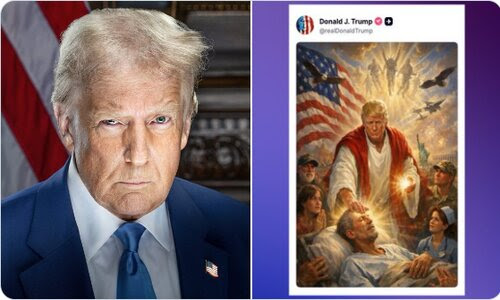
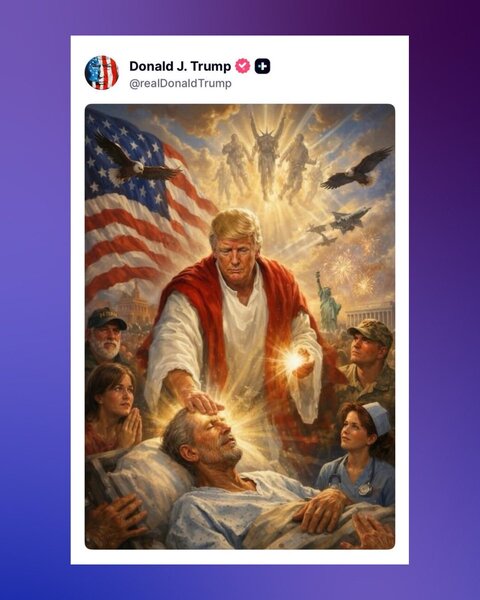
That tension has once again surfaced in the wake of recent online controversy involving an AI-generated image circulated on Trump’s Truth Social account, in which he appears to be depicted in a Christ-like role. While the exact intent behind the post has not been clearly explained by Trump or his official representatives, the imagery itself has sparked concern and confusion, even among his most loyal Christian supporters.
For many believers, the question is simple: Why would this be posted at all?
A troubling comparison during Easter
Adding to the unease was a recent Easter-season message involving Trump’s spiritual adviser, Paula White, who drew a comparison between the persecution of Jesus and the treatment Trump has received in the political and legal arenas. While the intention may have been to highlight perceived injustice and public hostility, the analogy has raised serious theological concerns among Christians.
The suffering of Christ, according to the New Testament, is unique and redemptive. Jesus’ persecution was not merely political–it was salvific, purposeful, and tied to the atonement for sin. To draw a direct parallel between that and the experience of any modern political figure risks collapsing a sacred distinction that Christianity has always held as central: Christ alone is without sin, Christ alone is the Savior, and Christ alone bears the cross for humanity.
For many believers, this kind of comparison–however well-intended–crosses a line from political encouragement into spiritual confusion.
The image that raised more questions than answers
Now, with the circulation of an AI-generated image depicting Trump in place of Jesus, concerns have deepened. The post was made by Trumps Truth Social account but without an official explanation, supporters and critics alike are left to interpret the symbolism on their own. Some may dismiss it as satire, artistic experimentation, or a staff-generated post that escaped careful review. That is certainly possible.
But symbolism matters–especially in an era where images travel faster than explanations.
For Christians, imagery of Christ is not neutral. It carries theological weight. When a political figure is visually placed into that role, even indirectly or unintentionally, it can be perceived as elevating a human leader into a space reserved only for the divine. And even if the intent was not self-exaltation, perception becomes reality in the public square.
Nebuchadnezzar: a sobering biblical parallel
It is in moments like these that many Christians instinctively reach for biblical parallels–not to condemn, but to interpret.
One figure often mentioned in discussions about power, pride, and political greatness is King Nebuchadnezzar of Babylon. Nebuchadnezzar was not a weak or irrelevant ruler; he was arguably the most powerful man of his era. He acknowledged the God of Israel at times, even witnessing divine revelation. Yet he also struggled deeply with pride.
Standing on the roof of his royal palace, he declared:
“Is not this great Babylon, which I have built by my mighty power as a royal residence and for the glory of my majesty?”
But Scripture records what followed:
“While the words were still in his mouth, a voice fell from heaven: ‘O King Nebuchadnezzar… the kingdom has departed from you… you shall be driven from among men… until you know that the Most High rules the kingdom of men and gives it to whom he will’” (Daniel 4:29-31).
The biblical warning is clear: unchecked pride in positions of power can lead even the greatest rulers into humiliation and correction.
And Scripture distills it further:
“Pride goes before destruction, and a haughty spirit before a fall” (Proverbs 16:18)
“For everyone who exalts himself will be humbled, and he who humbles himself will be exalted” (Luke 14:11)
The modern concern: where does admiration become elevation?
Among many Christian Trump supporters, there has long been a willingness to see him as a kind of “Cyrus figure” or even, in more cautious theological language, a “Nebuchadnezzar-type leader”–a flawed but powerful ruler whom God can still use for larger purposes despite personal imperfections.
But the danger in such frameworks is not the comparison itself–it is what happens when political admiration begins to drift into spiritual inflation.
The concern some believers are now voicing is not that Trump intends to replace Christ, but that the environment around political devotion can slowly blur sacred boundaries. When language of persecution becomes spiritually heightened, and when imagery begins to place a leader in proximity to Christ, even symbolically, it raises the question: where does honor end and exaltation begin?
The real issue: the heart behind the power
To be fair, no outsider can fully know the intent behind the recent image or posts. It may have been created by staff, generated by AI tools, or shared without theological consideration. It may even have been intended as symbolic or artistic rather than devotional.
But Scripture repeatedly shifts attention away from external interpretation and toward internal condition. The real question is not only what was posted, but what spirit is forming around power, influence, and identity.
Nebuchadnezzar’s downfall did not begin with a single act–it began with a posture of the heart.
And that is why this moment feels significant to many believers. Not because one image defines a person, but because patterns of symbolism, language, and influence can gradually reveal deeper tendencies.
A call to humility, not condemnation
For Christian supporters of Donald Trump, this does not have to become a moment of rejection. It can instead become a moment of reflection. If anything, Scripture offers a consistent pattern: God uses imperfect leaders, but He resists pride and calls all rulers–great and small–to humility.
Trump, like every world leader, stands under the same biblical truth that governed Babylon’s most powerful king: the Most High rules the kingdoms of men and gives them to whom He wills.
If anything good can come from this controversy, it may be a renewed reminder that political power is never divine power–and that no leader, no matter how influential, should ever be placed in the visual, symbolic, or spiritual space that belongs to Christ alone.
Because in the end, Nebuchadnezzar’s story was not only about judgment.
It was about restoration through humility.
And that, perhaps, is the lesson that still echoes across centuries for every powerful man who forgets where true authority comes from.
When The Church Starts Echoing The Very World It’s Called To Transform

Something has gone deeply wrong when Easter–the most sacred moment in the Christian calendar–is marketed with the language and imagery of sexual innuendo.
That’s not hyperbole. That’s exactly what happened when the Georiga based Action Church rolled out a promotional campaign featuring a Playboy-style bunny logo paired with the phrase: “Get some action this weekend.” What was likely intended to be edgy and attention-grabbing has instead ignited a wave of outrage, confusion, and, perhaps most importantly, conviction.
Because beneath the shock lies a much bigger issue–one that has been quietly growing inside the modern Church for years.
At what point did reaching the lost become indistinguishable from imitating them?
Action Church openly states it “couldn’t care less about religion or traditions,” positioning itself as a place where anyone–regardless of background–can belong.
That mission, on the surface, sounds admirable. But there is a line between removing unnecessary barriers and removing the very distinctiveness that makes the Gospel powerful.
And this campaign didn’t just cross that line–it erased it.
The use of a Playboy-style bunny is not neutral. It is a symbol deeply rooted in a culture of sexualization, one that has contributed to the very brokenness the Church is meant to heal. Pairing it with suggestive language during Easter doesn’t make the message more accessible–it makes it more confusing.
Even more concerning is who this message reaches.
Inside the Church today, there is a quiet epidemic that few want to talk about openly: pornography addiction. Countless men and women–many sitting in pews every Sunday–are battling cycles of shame, secrecy, and spiritual exhaustion. They are not looking for clever wordplay or edgy branding. They are looking for freedom.
And then a campaign like this appears.
What are they supposed to think?
That the Church is just another voice echoing the same temptations they’re trying to escape?
Few people are more qualified to speak into this moment than Brittni De La Mora. Once one of the most recognized figures in the adult film industry, her transformation is not theoretical–it is lived. And her response to this controversy was both simple and devastatingly clear.
“When I left the adult film industry, it wasn’t because a church tried to be culturally relevant,” she said. “It was because I encountered the truth of God’s Word.”
That statement alone should stop every pastor, every marketing team, and every church leader in their tracks.
Because it exposes a fundamental misunderstanding taking root in many churches today: the belief that truth needs to be softened, rebranded, or disguised to be effective.
De La Mora’s story proves the opposite.
She didn’t need the Church to mirror the world she was already in. She needed something different. Something holy. Something true. When she read Revelation 2:20-23, she wasn’t entertained–she was convicted. And that conviction didn’t push her away from God.
It drew her to Him.
“You will know the truth, and the truth will set you free” (John 8:32). That promise is not outdated. It is not ineffective. It is not in need of reinvention.
It is sufficient.
And yet, moments like this reveal a growing discomfort within parts of the Church with that very idea. Instead of standing apart, some churches are blending in–adopting the tone, imagery, and strategies of a culture that is already saturated with noise.
But here’s the paradox no marketing strategy can solve: the more the Church looks like the world, the less it has to offer it.
Brittni De La Mora didn’t hold back in her warning. Citing Ephesians 5:4, she reminded believers that there should be no “obscenity, foolish talk, or coarse joking.” Not because God is trying to restrict joy–but because He is trying to protect what is sacred.
“Churches don’t need to look like the world to reach the world,” she said. “People who are lost aren’t looking for more of the world… they’re looking for hope. They’re looking for truth.”
That is the heart of this issue.
This isn’t about being old-fashioned. It’s not about rejecting creativity or innovation. It’s about recognizing that the Gospel does not need to be dressed up in the language of temptation to be powerful.
It already is.
Easter is the declaration that death has been defeated. That sin has been conquered. That redemption is real. There is nothing dull, nothing weak, nothing irrelevant about that message.
The real danger isn’t that a church tried something controversial.
It’s that this is becoming normal.
When holiness is replaced with hype, when conviction is replaced with comfort, and when truth is replaced with tactics, the Church doesn’t become more effective–it becomes unrecognizable.
And a Church that cannot be distinguished from the world cannot lead anyone out of it.
The lost are not searching for better marketing.
They are searching for a way out.
The question is no longer whether the Church can get their attention.
The question is whether it still has the courage to tell them the truth when it does.