Bible Prophecy, Signs of the Times and Gog and Magog Updates with Articles in the News
The Dragon VS the Eagle Wings
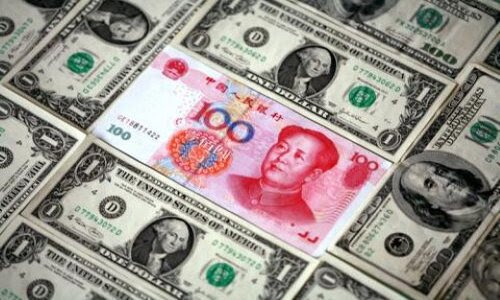
China Is Quietly Betting Against The U.S. Dollar – Are We Ready?
For decades, Americans have assumed the dollar is untouchable. It has been the backbone of global trade, the symbol of U.S. economic power, and the silent reason why our standard of living has been so high. Most of us take it for granted. But the world is changing — quietly, steadily, and with a subtle warning from China that few Americans are noticing.
In recent weeks, Chinese regulators verbally advised major Chinese banks to limit their exposure to U.S. Treasuries. This is not an official Bank of China directive — the central bank’s holdings remain untouched. It’s guidance for the financial institutions under its watch, a nudge toward diversification and risk management. China is not selling everything overnight, but make no mistake: this is a signal the rest of the world will notice.
Why U.S. Treasuries Are More Than Just Debt
U.S. Treasuries are often described as “safe,” but their importance goes far beyond that. They are the currency of trust in global finance. Foreign governments, pension funds, and global investors hold trillions in U.S. debt because it’s liquid, reliable, and fungible — meaning it can be used almost anywhere in the world.
For the United States, this has been a superpower advantage. By being the world’s preferred borrower, the U.S. government has been able to pile on debt at historically low interest rates. The dollar has remained the dominant reserve currency, and Americans have benefited from cheap borrowing, a high standard of living, and financial security that most of the world can only envy.
Now, that trust is subtly being tested. When a major player like China begins shifting its strategy, even incrementally, it starts to raise questions: if China is cautious, who else might be rethinking their exposure to U.S. debt?
The Stakes for Everyday Americans
You don’t need a finance degree to see the stakes. Rising Treasury yields, a weakening dollar, and higher borrowing costs would affect everyone:
Mortgages and car loans could become more expensive.
Inflation could chip away at the value of your paycheck.
Retirement accounts, 401(k)s, and savings could grow more slowly.
Even without a headline-grabbing financial crisis, the gradual erosion of confidence can quietly destabilize daily life. The ripple effects may be slow at first, but they can be profound over time.
Elon Musk’s Dire Warning
Elon Musk has been blunt: without a revolution in productivity powered by AI and robotics, the U.S. could face economic collapse. Musk is not exaggerating — he’s highlighting a reality most Americans ignore. Our debt, now surpassing $38 trillion, is growing faster than our ability to generate the economic output needed to support it.
AI and robotics may indeed offer a lifeline, producing wealth, efficiency, and growth at a scale never seen before. But in the meantime, global investors are already adjusting their bets. If other nations follow China’s lead, the U.S. could find itself paying more to borrow and losing influence in the process.
A Long-Term, Strategic Move
It’s important to understand what China is doing — and what it isn’t. This is not a fire sale of U.S. debt. The Chinese government isn’t trying to crash the dollar overnight. What they are doing is preparing for a changing world.
By instructing banks to manage exposure, China is signaling a long-term strategic pivot:
Diversifying reserves into other assets, such as gold or alternative currencies.
Reducing the risk of being caught in sudden U.S. interest rate swings.
Preparing for geopolitical tension, including potential conflict over Taiwan or future friction with the U.S.
Other countries are watching. Japan, the UK, and others could follow similar strategies. If multiple major holders of U.S. debt reduce their exposure simultaneously, the results could be dramatic: rising interest rates, a weaker dollar, and a more expensive borrowing environment for businesses and individuals alike.
Broader Economic Picture
This is about more than China and Treasuries. The U.S. is facing a structural debt problem. Every year, the government borrows more to cover spending, and interest payments alone are consuming a larger portion of the budget. If foreign demand for debt slows, the U.S. must either raise rates to attract buyers or increase domestic borrowing. Both have consequences:
Higher interest rates could slow economic growth and depress the stock market.
The dollar could lose some of its global reserve status, making imports more expensive and eroding American purchasing power.
Ordinary Americans could feel the effects in higher costs for everything from homes to groceries.
This isn’t a distant possibility. It’s a real economic dynamic unfolding right now, quietly, and China is the first country signaling a shift.
What Comes Next
The message is clear: the world is slowly moving toward a more diversified, multipolar financial system. The dollar’s reign is not guaranteed forever. Americans need to wake upto a new reality: our economy is deeply connected to global trust, and that trust is not unconditional.
The good news? Innovation, technological growth, and careful fiscal planning could still keep the U.S. strong. But ignoring these signals could leave the country vulnerable to slower growth, higher costs, and financial instability.
China isn’t attacking. They’re planning. And the U.S. would be wise to do the same.
And there will be Wars and Rumors of Wars
How AI Is Rewriting Warfare, From Human Judgment To Algorithmic Execution
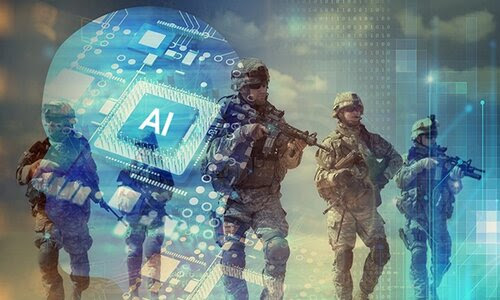
There is a quiet but profound transformation underway in modern warfare — one that may ultimately matter more than tanks, missiles, or even nuclear weapons. War is no longer simply being fought by humans with machines as tools. Increasingly, it is being executed by machines themselves, with humans drifting into the role of supervisors, validators, or spectators.
The battlefield is shifting from human judgment to algorithmic execution.
This change is not merely technological. It is philosophical. It challenges centuries of assumptions about command, accountability, and the moral weight of violence. And it is happening faster than most political leaders, ethicists, or citizens realize.
Why This Shift Is Inevitable
At its core, modern war has become a contest of speed, information, and complexity — domains where humans are at a permanent disadvantage.
A single contemporary battlefield can generate more data in an hour than a World War II commander saw in a lifetime: drone video, satellite imagery, electronic signals, thermal sensors, battlefield communications, cyber activity. Human cognition simply cannot keep up. Algorithms can.
Once militaries realized that victory increasingly depends on who can observe, decide, and act the fastest, the direction became unavoidable. AI does not get tired. It does not hesitate. It does not second-guess. It does not suffer fear — or mercy.
And in war, hesitation is often fatal.
At first, AI assisted humans. Then it recommended actions. Now, in many contexts, it executes them. Humans remain “in the loop” largely for legal and moral reasons — not because they are the most efficient decision-makers.
That distinction matters. Because when speed determines survival, anything that slows the loop becomes a liability.
Ukraine: The First Algorithmic War
The Ukraine-Russia conflict offers the clearest window yet into this future.
This war is not just being fought with artillery and infantry — it is being fought with machine vision, automated targeting, and autonomous systems operating at machine speed.
Drones now locate targets, evade jamming, navigate without GPS, and strike with minimal human guidance. Some systems select targets based on probability models — not certainty — calculating acceptable risk rather than moral judgment. Swarms of cheap drones overwhelm expensive defenses. Ground robots probe enemy positions where no soldier would survive.
What matters most is not individual heroism but system efficiency.
Ukraine, in particular, has embraced this reality out of necessity. Facing a larger adversary, it has turned to autonomy to conserve manpower and compress decision cycles. Russia, in turn, has adapted by automating defense, electronic warfare, and counter-drone responses. Each iteration pushes both sides further away from human-paced warfare.
This is not a glimpse of the future. It is the future — already underway.
Where This Is Going: War Without Pause
If current trends continue, tomorrow’s wars may look unsettlingly different.
- Battles That Unfold Too Fast for Humans
Entire engagements may occur in seconds — too quickly for human commanders to meaningfully intervene. Algorithms will detect threats, allocate resources, strike, reassess, and strike again before a human can even comprehend the situation.
Humans won’t command these battles. They will authorize systems to fight them.
- Autonomous Swarms as the New Infantry
Instead of soldiers advancing across terrain, swarms of autonomous drones and ground units will maneuver collectively — sacrificing individual units to achieve statistical success. Losses will be measured not in lives but in hardware attrition rates.
War becomes a math problem.
- AI Commanders
Strategy itself may become algorithmic. AI systems could design campaigns, predict enemy behavior, optimize logistics, and continuously adapt plans in real time. Human leaders may retain symbolic authority while machines determine outcomes.
The uncomfortable truth: an AI strategist may eventually outperform the best human generals — not because it is wiser, but because it can simulate millions of possibilities instantly.
- War Without Emotion — or Restraint
Machines do not feel horror at civilian casualties. They do not recoil from escalation. They execute parameters. If those parameters drift — or are intentionally loosened — violence can scale faster than human conscience can react.
This is where the danger lies.
Why This Actually Matters
The true risk of algorithmic warfare is not that machines will become evil. It is that war will become easier to start and harder to stop.
When leaders no longer risk their own citizens’ lives, political restraint erodes. When machines absorb the cost of combat, war becomes an optimization exercise rather than a moral crisis. When algorithms decide, responsibility diffuses — and accountability vanishes.
Who is guilty when an autonomous system makes a fatal error?
The programmer? The commander? The machine?
History has never answered that question — because history has never faced it.
The Line We Are Quietly Crossing
Human-led war was slow, imperfect, and brutal — but it was restrained by human limitation. Algorithmic war removes those brakes.
We are approaching a world where wars may be fought largely beyond human perception, driven by systems that value efficiency over meaning, probability over principle. Once crossed, that line will be nearly impossible to uncross.
The battlefield is no longer just a place.
It is becoming a process.
And increasingly, that process no longer belongs to us.
How The Progressive Left Is Legislating Christianity Out of Our Life

First it was California (Mystery Babylon), where Christian schools were told they must treat biblical teaching on sexuality as optional–or face loss of accreditation. Then came New York, where religious adoption agencies were driven out of existence for refusing to violate their faith. Colorado followed, forcing Christian camps and schools to adopt state-approved gender policies or shut their doors. In each case, the strategy was the same: no outright ban, no dramatic showdown–just regulations, conditions, and “standards” quietly tightened until faith-based education became impossible to sustain.
Now, that same playbook has arrived in Virginia.
House Bill 359, introduced by Democrat Delegate Dan Helmer in January, is being marketed as a reasonable update to accountability rules for private schools. In reality, it is another calculated step in a nationwide effort to bring religious education to heel–not by force, but by bureaucracy. The goal is not simply oversight. It is submission.
Supporters claim the bill merely ensures “non-discrimination” and transparency for schools participating in Virginia’s Education Improvement Scholarships Tax Credits Program. But the language of HB 359 reveals something far more troubling: an attempt to redefine religious conviction itself as a problem the state must correct.
The most dangerous maneuver in the bill is its redefinition of “public funds.” Tax credits–money that never enters government hands–are suddenly treated as state funding. This legal sleight of hand gives Virginia leverage over private Christian schools simply because low-income families rely on scholarships funded by private donations. In effect, the state is saying: If your families need help, your faith comes with strings attached.
Once that threshold is crossed, the coercion begins.
Under HB 359, Christian schools would be prohibited from operating according to their biblical beliefs about sex and gender. Admissions policies, student conduct codes, and access to programs would all have to align with state-approved views on sexual orientation and gender identity. What Scripture teaches plainly would be relabeled as discrimination.
Perhaps even more alarming is the requirement that schools provide a “meaningful and nonpunitive opt-out” from religious instruction and worship. Bible classes. Chapel. Prayer. These are not side offerings in Christian education–they are the foundation. To force a Christian school to allow students to opt out of Christianity itself is not tolerance; it is an attempt to hollow out faith from the inside.
The bill also mandates alignment with Virginia’s Standards of Learning and opens curricula to government inspection. This is not neutral oversight–it is ideological standardization. It ensures that even private religious schools must ultimately teach within boundaries set by the state, not by conscience, conviction, or community.
And the enforcement mechanisms are brutal. Schools found in violation could face civil penalties of up to $10,000 per incident or be barred from enrolling scholarship students for five years. For many schools, that would be a death sentence. Not because parents no longer want Christian education–but because the state has made it unaffordable unless families abandon it entirely.
This is no accident. HB 359 was introduced in direct response to the expansion of school choice under Governor Glenn Youngkin. When parents were given more freedom to leave failing or ideologically hostile public schools, the left did not ask why families were leaving. Instead, it moved to ensure that no meaningful alternative could exist.
We have seen this movie before. In California, regulators used accreditation rules to pressure Christian colleges into conformity. In Washington state, religious schools have faced threats for maintaining biblical hiring standards. In Massachusetts and Oregon, licensing and nondiscrimination rules have been weaponized to push faith-based institutions out of public life altogether.
The message is always the same: You may believe what you want–until your beliefs affect how you operate.
For families of faith, this moment demands clear eyes. Religious liberty does not disappear all at once. It erodes through compliance forms, grant conditions, and carefully worded statutes that sound benign until enforced. The state does not need to ban Christianity from the classroom if it can regulate it into irrelevance.
HB 359 is still in committee. But its intent is already unmistakable. It is not about protecting students–it is about reshaping them. It is not about accountability–it is about control. And it is not isolated to Virginia.
“They will not stop” is no longer a slogan. It is a warning. The only question left is whether Americans who value genuine religious freedom will recognize the strategy in time–or wake up one day to find that faith-based education still exists in name only, safely managed, carefully monitored, and finally, no longer free at all.
Magog Countries Fear the Loss of Persia
Why Some Of Trump’s Muslim ‘Allies’ Fear A Loss Of Iran More Than They Fear Iran
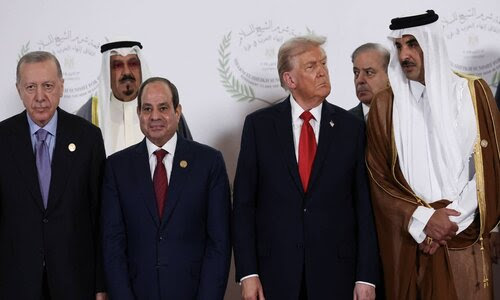
US President Donald J. Trump’s Gulf Arab allies, according to the New York Times, oppose an American strike on Iran primarily out of fear of regional instability and the possible damage to economies, tourism, and domestic security.
While this explanation may sound credible on the surface, a deeper and far more uncomfortable reality is that for several of these regimes, the real danger is not Iran’s collapse, but an ideological exposure that could follow decisive American action, as well as concern about Israel becoming more prominent in the region.
A serious confrontation with Iran would not only reshape the regional balance of power; it would also force a number of Arab states to clarify positions that for decades they have fought to keep ambiguous.
Iran, since its 1979 Islamic Revolution, is not merely a rival or destabilizing neighbor. It is the ideological and operational core of modern Islamist warfare in the Middle East. Since 1979, Tehran has armed, funded, trained, and coordinated proxy organizations with the explicit aim of undermining Western influence. “Death to America,” Ayatollah Ali Khamenei announced in 2023, “is not just a slogan, it is a policy.” For decades, Iran has also been encircling Israel in a “ring of fire” the better to destroy it.
Hezbollah in Lebanon; Hamas and Palestinian Islamic Jihad in Gaza; Shiite militias in Iraq and Syria, and the Houthis in Yemen are not independent actors pursuing local grievances. They are integral components of a coherent Iranian strategy, backed by Russia and China, aimed at expanding Islamist Iran’s influence in the region by force; destabilizing sovereign states, and eroding the regional order from within. This strategy is not reactive; it is doctrinal.
Trump’s Iran policy, after years of hesitant US engagement at best, has consistently combined economic pressure and military deterrence, with limited diplomatic patience, to restore America’s international credibility.
Trump’s restoration of credibility has apparently unsettled not only Iran’s regime, but also some of Washington’s supposed regional allies, who have grown accustomed to maneuvering Washington when desirable. Some, such as Qatar, have built fancied empires by never committing to any side and instead playing every side. Just as much blame, however, must go to those leaders in the Middle East and Europe who agreed to be played.
What many have largely avoided addressing is the extent to which some governments, such as Qatar’s and Turkey’s — which host American military bases — benefit from U.S. security guarantees.
While publicly Qatar and Turkey affirm their commitment to “stability”, at the same time they zealously set about destabilizing half the planet by funding, promoting, and even training Islamist terror networks (such as here, here, here, here and here) that presumably serve their own strategic interests. To Western audiences, they speak the language of moderation, while churning up grievance narratives and ideological victimhood at home.
A decisive confrontation with Iran might shatter the carefully maintained duplicity that these countries have so tenderly nurtured for decades.
Qatar, for instance, presents itself as a neutral mediator, a champion of dialogue, and a facilitator of regional diplomacy, while in practice, for years, Qatar has provided safe haven, financial channels, and political legitimacy to just about every Islamic terrorist group. Hamas’s senior leaders have been welcome to live in Qatar as safe and comfortable billionaires while directing their terrorist operations elsewhere.
According to Udi Levy, a former senior official of Israel’s Mossad spy agency who dealt with economic warfare against terrorist organizations:
“Qatar is at the top of funding terrorism worldwide, even more than Iran… Qatar transferred funds through various channels, primarily via their largest foundation, Charai, which is one of the largest funding sources for terrorist organizations in the world.”
Qatar’s state-owned media empire, Al -Jazeera, consistently amplifies Islamist narratives, demonizes Israel, and undermines moderate Arab governments, all while projecting an image of supposed neutrality. In fact, by its own admission, it was Qatar that whipped up and catalyzed the entire disruptive “Arab Spring” that begin in 2010.
When Qatar is not acting out its central role in sustaining this Islamist terrorist ecosystem, an absent decoy to deflect attention, such as the Iranian regime, could redirect scrutiny toward Qatar even further.
Turkey, looking forward rather than backward, appears to agree with that assessment. Turkey, doubtless, shares the same point of view. It appears to be using its proxy, Syria — under the interim presidency of former al-Qaeda leader Ahmed al-Sharaa — and a place on Trump’s alleged “Board of Peace ” in Gaza, eventually to pincer Israel in the middle.
Under President Recep Tayyip Erdoğan, who regularly uses jihadist and anti-Israel rhetoric, Turkey abandoned what was left of Mustafa Kemal Ataturk’s secular legacy in favor of overtly Islamist, neo-Ottoman goals. “The mosques are our barracks, the domes our helmets, the minarets our bayonets and the faithful our soldiers,” Erdogan once recited.
Under Erdogan’s rule, Turkey also hosts Hamas operatives, offers political cover to Islamist causes, and has dispatched armed flotillas, built 31 new warships, threatened Greece, and has been doing his utmost to acquire American F-35 stealth fighter jets.
While Turkey competes with Iran in certain arenas, it also benefits from Iran’s role as a regional spoiler that distracts attention from Erdogan’s own neo-Ottoman ambitions. A serious weakening of Iran would, by removing this diversionary decoy, expose Turkey’s broader regional agenda in Syria and Gaza with greater visibility.
Saudi Arabia, by contrast, has suffered direct attacks from Iranian-backed forces and has legitimate reasons to fear aggression from Iran, which for decades appears to have had its acquisitive eyes on the kingdom’s oil fields as well as its guardianship of Islam’s two holiest sites: the pilgrimage Kaaba stone and its surrounding mosque in Mecca, and the Prophet’s Mosque in Medina.
Saudi Arabia and Iran are not partners; they are fierce rivals and competitors. Saudi Crown Prince Mohammed bin Salman once prioritized domestic reform, economic diversification, and social transformation – while, in recent weeks, viciously turning against Israel “even more than al-Jazeera.”
The United Arab Emirates, under the exceptional, trailblazing leadership of its president, Sheikh Mohamed bin Zayed Al Nahyan, has offered a striking example of unwavering loyalty to the West, to the Abraham Accords, and he demonstrates leadership in showing that extremist Islam need not be a requirement. For the UAE, opposing Iran does not demand embracing Islamism, anti-Western rhetoric, or hostility toward Israel. Through normalization with Israel, economic openness, technological cooperation, and a degree of religious tolerance rare in the region, the UAE has presented an awe-inspiring example of stability rooted in cooperation rather than ideological warfare.
Bin Zayed’s strategic clarity stands in perfect contrast to the duplicity other Gulf states and illustrates that alignment with Israel and the United States need not come at the expense of any legitimacy.
The suggestion advanced by the New York Times and other media that Israel represents a greater threat to regional stability than a weakened Iran is not merely inaccurate — it inverts reality. Israel has no imperial ambitions, no desire to dominate Arab capitals, and no ideology of regional subversion. Its military actions are defensive responses to existential threats posed by Iran, Qatar, Turkey, Saudi Arabia, their proxies, propaganda, and terrorist organizations.
Unlike Iran, Qatar, Turkey, Saudi Arabia and their proxies, Israel operates within legal and moral constraints that are routinely ignored or openly rejected by its adversaries. To portray Israel as the destabilizing force while downplaying the role of the countries subscribing to extremist versions of Islam is not analysis; it is narrative distortion and journalistic malpractice.
Israel does not fight Islamic terrorism because it wants to. It fights Islamic terrorism because it has to. It has shown time and again that it would clearly prefer to be left in peace under its fig tree. Israel fights because, to survive against such overwhelming belligerence, it must — usually alone, often condemned, and often while its supposed “allies” hedge their bets.
Many regional actors benefit indirectly from Israel doing the difficult and dangerous work of confronting Iran’s proxies, among other adversaries, even as they publicly distance themselves from Israel’s actions to placate domestic opinion or ideological associates. This hypocrisy is rarely acknowledged in Western mainstream media coverage, yet it remains a defining feature of the region’s geopolitics.
Trump’s Middle East policy threatens not only Iran’s nuclear ambitions; it threatens an entire system built on moral relativism, selective outrage, and strategic double-talk. By demanding accountability, enforcing sanctions, and refusing to indulge diplomatic illusions, Trump exposed the fragility of regimes accustomed to managing perceptions rather than confronting realities. His approach has disrupted comfortable arrangements that allowed Iran’s regime to expand while claiming plausible deniability.
The resistance to Trump’s Iran strategy, therefore, is rooted in a fear of transparency and a lurking competition for supremacy. A Middle East no longer dominated by Iranian subversion and chaos would force too many actors to answer uncomfortable questions about their own financing networks, ideological alignments, and long-standing contradictions. For regimes built on doubletalk, truth is far more dangerous than missiles.
The region does not suffer from a lack of diplomacy. It suffers from an excess of illusion. Iran’s regime is not some misunderstood actor seeking stability; it is a theocratic dictatorship that oppresses women, murders innocents – estimated at this point to be more than 90,000 — and exports violence, in Khamenei’s own words, as state policy.
Trump’s refusal to indulge this illusion marked a historic breakthrough — a rare moment of strategic honesty in Middle Eastern affairs — one that clarifies who genuinely seeks stability and those who benefit from engineering perpetual instability.
Such honesty may well have unsettled not only Iran’s leaders but also those who quietly rely on chaos to obscure their own failures and unrelenting bellicosity.
Exposure, not war, is what these countries fear – and what they should get.