Bible Prophecy, Signs of the Times and Gog and Magog Updates with Articles in the News
The Architecture Of Obsession: How Media Coverage Warps Israel’s Reality
When Samuel Hyde set out to explain why Israel dominates global media coverage, he knew the debate would begin where it always does–with arguments over words. Critics and defenders alike fixate on whether journalists write “settlement” or “neighborhood,” whether the barrier is labeled a “security fence” or “apartheid wall.”
These semantic battles feel forensic, as if the correct noun might finally settle the great drama of the Middle East. But Hyde, a South African-Israeli writer and fellow at the Jewish People Policy Institute, identifies these disputes as exactly what they are: a distraction. Words matter, he writes, but they keep us arguing on the surface while deeper, more corrupting structures remain untouched and unseen.
In a Jerusalem Post editorial and on his Substack, Hyde exposes two distortions so massive they become strangely invisible. The first is the sheer scale of attention–not criticism, but attention–directed at Israel. The second is the systematic reduction of regional warfare into a localized Israeli-Palestinian conflict. Together, these forces explain why Israel occupies such an outsized and morally charged place in Western media’s imagination, and why that coverage has become both obsessive and fundamentally dishonest.
How does disproportionate media coverage transform Israel from a country into a symbol–and what reality gets erased in that transformation?
Hyde begins with numbers that expose an obsession defying rational explanation. In the first nine months following October 7, 2023, The New York Times published 6,656 articles about the Gaza war. Compare that to 80 articles covering the American-led battle to free Mosul, Iraq, over nine months in 2016-2017. The Tigray War in Ethiopia killed 600,000 people in a year and warranted 198 articles. Syria’s civil war generated 5,434 articles during its first 13 years combined. One AI analysis found that between 50,000 and 70,000 articles about Gaza appeared worldwide in nine months, compared to 1,000 about Mosul in the same timeframe.
The imbalance becomes even more grotesque when examined at individual news organizations. Former Associated Press reporter Matti Friedman revealed that AP employed more full-time journalists covering Israel than it assigned to China, India, and Russia combined. Israel received more dedicated staff than all of sub-Saharan Africa–an entire continent encompassing dozens of countries, hundreds of millions of people, multiple wars, famines, mass displacement, and genocidal violence. As Hyde writes, “You cannot plausibly cover Israel more than an entire continent without warping the reader’s sense of reality.”
This is not journalism as rational analysis. Even if news were merely meant to cover suffering, power, and danger on Earth, this allocation of resources would be indefensible. The pattern reveals something else entirely: a systemic fascination bordering on obsession with covering Israel as though it were the gravitational center of world affairs.
Hyde identifies the consequence of this saturation: “This saturation coverage creates the illusion of centrality.” Audiences learn that whatever they see most frequently must be the most important event in the world. Israel transforms from one nation among many into “a kind of moral index of the age–a stage upon which the world’s conscience is imagined to be tested and revealed.” Meanwhile, catastrophes of far greater scale and brutality flicker briefly across screens before disappearing into silence.
Hyde argues this is not accidental. The Israeli-Palestinian conflict occupies a peculiar and disproportionate place in Western political imagination, unmatched by deadlier or more brutal conflicts. Israel is small enough to be grasped symbolically but complex enough to absorb endless projection. “It is intimate, familiar, and endlessly legible to Western eyes in a way that ‘distant’ tragedies are not,” Hyde writes. “And so it becomes over-seen, over-examined, intensely dissected, and uniquely moralized until the examination itself becomes both activism and a substitute for understanding.”
The second distortion operates at the conceptual level. Media coverage routinely frames Israel’s wars as “the Israeli-Palestinian conflict,” as though the entire story were a localized struggle between two neighboring peoples–one strong and one weak, one powerful and one victimized. Hyde calls this framing “tidy, emotionally resonant, and yet profoundly misleading.”
The reality is stark: “Most of Israel’s wars have not been fought against Palestinians but against Egyptians and Jordanians, Syrians and Lebanese, Iraqis and, increasingly, Iranians.” Israel’s most significant enemy today is the Islamic regime in Iran–a non-Arab, non-Palestinian regional power pursuing nuclear and strategic ambitions. During the recent war, rockets fired at Israel came from Gaza, Lebanon, Yemen, Iraq, and Iran itself.
Hyde offers a powerful image: “Imagine for a moment a satellite photograph that does nothing but trace the arcs of ballistic missiles and rockets fired at Israel over the past years–a dark map illuminated by red lines streaking inward from multiple directions. Such an image would reveal instantly what the dominant narrative conceals: the contours of a regional war.”
But that is not how the story gets told. A vast regional struggle involving state and non-state actors, militias and proxies, ideologies and regimes stretching across the Middle East gets reduced to a single pairing: Israelis versus Palestinians. In this reduction, Israel is cast as the dominant actor, the controlling force, and ultimately the villain. Power flows in one direction only. Agency belongs almost exclusively to Israel. The wider forces shaping the conflict fade into the background or vanish altogether.
Hyde explains the mechanics of this distortion: “This is how media distortion always works–not by inventing the facts but by shrinking and enlarging them selectively. A small story is made to seem enormous. A large story is compressed until it fits the awaiting political template.” The result is a narrative both emotionally compelling and intellectually impoverished–a morality play where Israel embodies the worst sins of the modern age while broader regional dynamics dissolve into abstraction.
Once established, this narrative becomes self-reinforcing. The more Israel is covered, the more it seems to matter uniquely. The more it is framed as the central actor in a simplified conflict, the easier it becomes to load it with symbolic meaning. “Israel ceases to be a state acting within a volatile region and becomes instead a metaphor for everything the imagination fears about power and injustice,” Hyde writes.
This explains why disputes over terminology feel so intense yet change so little. The problem is not word choice. “It is that the story being told is already too small to hold the truth, and too large to escape moral projection. It magnifies Israel until it eclipses the region, and then isolates it until it bears responsibility for forces far beyond its control.”
Matti Friedman, who spent years inside the machinery of international journalism as an AP reporter, has documented how this obsession operates from within news organizations. His observations confirm Hyde’s analysis with the weight of insider testimony. The disproportionate allocation of journalistic resources to Israel is not merely a statistical anomaly–it reflects editorial priorities that treat Israel as uniquely deserving of scrutiny and moral judgment.
Friedman’s revelation about AP staffing levels exposes the concrete decisions behind the abstraction of bias. When a news organization assigns more reporters to cover Israel than to cover China, India, and Russia combined–nations that together represent billions of people and possess nuclear arsenals–the organization is making a choice about what matters.
When that same organization dedicates more resources to Israel than to all of sub-Saharan Africa, it is declaring through its actions that one small nation in the Middle East deserves more attention than an entire continent experiencing wars, genocides, and humanitarian catastrophes.
These staffing decisions create a feedback loop. More reporters produce more stories. More stories train audiences to believe Israel is more important. The belief in Israel’s importance justifies assigning more reporters. The cycle continues until the coverage itself becomes the story, and Israel’s conflicts–real but limited in scale–loom larger in global consciousness than wars killing hundreds of thousands elsewhere.
When media coverage magnifies Israel until it eclipses an entire region, then isolates it until it bears responsibility for forces beyond its control, journalism becomes a form of false testimony.
CAMERA, the Committee for Accuracy in Middle East Reporting and Analysis, has tracked similar patterns at CNN and other major outlets. The obsession transcends individual journalists or specific editorial decisions. It is systematic, structural, and self-perpetuating.
Hyde’s analysis is not about denying Palestinian suffering or sanctifying Israeli policy. It is about demanding “proportionality, context, and intellectual honesty–qualities without which journalism becomes a kind of secular theology, assigning sin and virtue according to narrative convenience rather than reality.”
The coverage of Israel feels uniquely charged, moralized, and obsessive because it is. Until we confront the media structures producing this obsession–the imbalance of attention and the fiction of a purely local conflict–we will continue arguing over words while missing the story those words were meant to describe.
The distortion is not incidental. It is architectural, built into how news organizations allocate resources and frame narratives. And it transforms Israel from a nation navigating a volatile region into a symbol bearing moral weight no country could sustain–while the actual forces driving Middle East violence remain conveniently invisible.
South Korea’s Dangerous Descent Into Restricting Freedom Of Religion
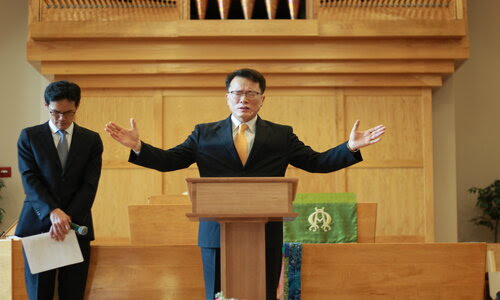
A few thousand worshippers at last week’s Sunday service at Segero Church in the city of Busan South Korea sang loudly, “All my life, you have been faithful. All my life you have been so, so good …. I will sing of the goodness of God.” The song is appropriate for a congregation that has grown so dramatically from about 20 members a few decades ago to a 23-acre campus buzzing with life and activity. After the service, dozens of church members prepared free lunch for everyone who wished to stay, as they do every week.
This practice, an elder told me, makes it possible for the church to also offer meals for the wedding celebrations that take place at Segero Church nearly every weekend, at no charge to the marrying couples. It is an essential way for the church to address the crisis of the nation’s declining marriage and fertility rates, among the lowest in the world, though you would not know it from the hundreds of young people gathered at the stage to sing each service. Last year, the church also started a Christian school.
And yet, since August, the lead pastor of Segero Church has been in prison, accused by the government of election interference. I visited Pastor Son, hoping to encourage him. Instead, he encouraged me, and I mean that in the most literal sense of the word. He gave me courage, like he has for his three children, who advocate on his behalf; the elders and pastors of the church, some of whom are also being targeted by the state; and his wife, who spends most nights sleeping and praying at the church. Meanwhile, during the time he has been imprisoned, Pastor Son has written a book and is sharing the Gospel with his fellow inmates.
It may be that Pastor Son, in his zeal to speak out against the current administration’s progressive, socialist, and pro-LGBTQ platform, violated the letter of South Korean law. At best, that might merit a fine. Instead, he has been arrested, threatened with 16 charges, held in jail pending his trial, and faces significant prison time. The intent of the government is clear. Like the state of Colorado did for Jack Phillips, the process is the punishment. It is meant to elicit fear and silence dissent.
I asked if the government’s attempts at intimidation was working, or if other pastors and Christians were speaking out. Many had spoken out, I was told. But many others had not. They, like many Americans, believe that Christians should avoid politics altogether.
Of course, Christians just across the border in communist North Korea have no luxury of even having an opinion. There, I learned from a tour guide, a Bible will earn you a lifetime sentence in a hard labor camp. There is no freedom, religious or otherwise. There’s also not enough food.
South Korea, on the other hand, is an economic miracle. Industry, infrastructure, and innovation abound. Seventy-five years after the communist North invaded the free South, the results are in, and it’s not even close. South Koreans have every reason to sing of the goodness of God. And that is why they also have every reason to be concerned by the outrageous treatment of Pastor Son, as well as the many other ways the current party in power is compromising religious freedom.
Years ago, Chuck Colson warned of alarming language being used by certain American political leaders. Instead of “religious freedom,” they referred to “freedom of worship.” There’s an essential difference, said Colson, between the freedom to order one’s public life around their deeply held convictions and merely allowing someone to believe what they want in their own heads, hearts, homes, and houses of worship. Thankfully, in the years since, American courts have consistently upheld true religious freedom, but not because progressive lawmakers, politicians, and judges haven’t tried their best to chip away at it.
This seems to be what is currently happening in South Korea. If it does happen, it will be because of both progressive lawmakers who hope to sideline any religious resistance to their agenda and because of Christians who were willing to have their convictions sidelined. And it would be a tragedy.
Please pray for Pastor Son, his wife, and his children. Please pray for the leaders and members of Segero Church, that they would remain faithful and courageous during this time. Please pray for his trial and sentencing, which is scheduled for the end of this month. And please consider signing the petition launched by the Christian Broadcasting Network, asking our government to speak out on behalf of Pastor Son.
Are Americans Being Radicalized Online And Converting To Islam?
Simon Hankinson, a former U.S. diplomat, made a case Monday for what he deemed a rise in “lone wolf amateur terrorism.” Hankinson referred to the high-profile, Bondi Beach, Australia massacre. Within 10 minutes, on December 14, 2025, a father and a son opened fire on hundreds during a festival, ultimately killing 15 people and injuring 40.
Hankinson used this tragedy to make a simple point: “In most cases of Islamist terrorism, the perpetrator is of Muslim heritage and has ancestral roots in a Muslim country.” Both the father and son involved in this attack appeared to have been born Muslim.
Now, consider the other two stories Hankinson addressed concerning young men like John Michael Garza, described as Mexican-American, and Christian Sturdivant, grandson of a Christian minister. Garza, late last year, “was charged in Texas with terrorism offenses, accused of providing bomb components to individuals he is alleged to have believed were acting on behalf of the Islamic State (ISIS).
Garza was arrested after allegedly giving an undercover FBI agent instructions on how to make a bomb.” Sturdivant, Hankinson wrote, “was charged in North Carolina with a similar offense — allegedly attempting to provide material support to IS.”
Neither of these individuals appeared to have been raised in Muslim households nor were recent immigrants. And yet, they were allegedly drawn into plans to support IS solely through online interactions. As Hankinson emphasized, they echo earlier figures like Zachary Chesser, the suburban Virginia convert who, post-high school, embraced radical Islam via blogs, websites, and eventual real-world ties. And what stands out today is the shift: radicalization increasingly requires no physical community, no visit to a mosque, no face-to-face recruitment… Screens alone suffice.
The chilling cases highlighted by Hankinson serve as a stark reminder of how rapidly and deeply online influences can reshape a person’s worldview — sometimes toward darkness we scarcely imagine. From a Christian perspective, this invites sobering reflection.
Scripture reminds us that the heart is deceitful above all things (Jeremiah 17:9), and we are shaped by what we see and interact with. “Do not be conformed to this world,” Paul urges us in Romans 12:2, “but be transformed by the renewal of your mind.” And yet, look around. What do you see happening when the “world” streaming into our lives, far from being a mere cultural drift, results in a life of algorithmic echo chambers, propaganda videos, and increasingly lifelike AI companions that affirm (or only further confuse) our angers, curiosities, or searches for meaning?
Hankinson noted how we’ve moved from desktop blogs to always-on social media, where young people can radicalize on religion, politics, or even gender ideology without ever meeting another soul in the flesh. This alone should serve as a wake-up call. But he pushed even further, stressing how “kids are interacting with AI avatars so convincing they might as well be real. And who controls them? People with financial motives at best, political or even terrorist goals at worst.”
We must ask ourselves: If evil associations corrupt good manners (1 Corinthians 15:33), what does constant digital “association” with unseen voices do to the soul? When the screen becomes confessor, teacher, and companion, whose lordship are we truly submitting to?
These incidents prompt more questions rather than quick answers. How much of our children’s formation have we unwittingly outsourced to devices that know their habits better than we do? In seeking belonging or purpose online, are we equipping future generations to discern truth from manipulation, or leaving them vulnerable to whoever — or whatever — speaks loudest in the feed?
Maybe online echo chambers aren’t creating terrorists in our midst. But it’s possible. It’s not even a matter of Islamist terrorist ideology. Just look at the anti-ICE protests unfolding across the country. The anger, the violence… Almost assuredly, it ties back to what they see online and hear from mainstream media.
As Hankinson put it, “With all the time they spend online, our children are vulnerable as never before. Active online radicalization methods will only get more sophisticated.” He suggested parents counter this by reclaiming time together, in person, fostering genuine human connection over endless scrolling. That, I would argue, resonates with the incarnational faith we profess: a God who entered the physical world, not merely messaged it.
As followers of Christ called to guard our hearts (Proverbs 4:23), it’s important to consider: how do we model and teach a life where real, embodied relationships — family, church, neighbors — hold greater weight than virtual ones? Perhaps the deeper unease is this: if heavy screen time can lead some to pledge loyalty to violent ideologies — even outright terrorism — far from their upbringing, what subtler shifts might it work in all of us?
The cases are extreme, yet they illuminate a broader vulnerability. What worlds are our minds truly inhabiting, hour by hour, scroll by scroll — and who, ultimately, is forming them?
Strategic pause: If Trump betrays Magog / Iran’s protesters, Russia and China (Gog) will celebrate
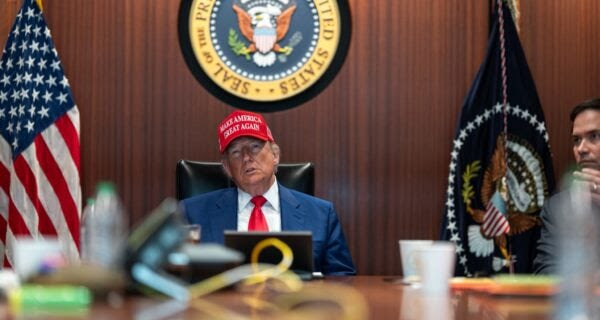
The risk for Trump is that, having raised the prospect of launching a regime change in Iran, his failure to do so would seriously undermine his own credibility.
US president Donald J. Trump’s delay in delivering on his “locked and loaded” promise to Iran’s brave protestors, it appears, is merely the result of placing the final touches on his “It’s time to look for new leadership in Iran.”
From the moment a fresh wave of anti-government protests erupted throughout Iran at the start of the year, Trump has made numerous threats to intervene if Tehran’s theocratic regime continued to resort to acts of extreme violence to suppress the will of the Iranian people.
Trump’s most explicit warning to the ayatollahs came at the height of the recent disturbances, when it became clear the regime was resorting to extreme violence to crush the protestors.
The president urged Iranians to keep protesting, declaring that help was on its way, without saying what that help might be:
Trump also revealed that he had “cancelled all meetings with Iranian officials,” who had attempted to reopen negotiations on Iran’s controversial nuclear program in a deliberate attempt to deflect attention away from their domestic woes and buy time to restore order.
The president insisted that no such talks would take place “until the senseless killing of protesters STOPS.”
Israeli man arrested for spying on former PM on behalf of Iran
When asked what he meant by “help is on its way,” Trump indicated that military action was among the options being weighed to punish Iran over the crackdown.
“The killing looks like it’s significant, but we don’t know yet for certain,” Trump said. “We’ll act accordingly,” he added.
In another sign that the US was preparing to attack Iran, the State Department urged American citizens to leave Iran, including by land through Turkey or Armenia.
Trump’s subsequent decision to tone down his anti-Iran rhetoric, claiming that his warnings have led to Iran ending the killings—which apparently it has not—initially raised doubts about Trump’s willingness to act.
That Trump so far has not followed through on his threats must be a source of profound disappointment for Iranian protestors.
Trump’s official position on the unrest is that he intends to “watch and see what the process is” before deciding what to do next.
This caveat appeared despite the fact that even regime officials, including Supreme Leader Ayatollah Ali Khamenei, have publicly acknowledged that thousands of Iranian protestors have been killed during the past two weeks of violence.
In a speech at the weekend, Khamenei said thousands had been killed, “some in an inhuman, savage manner,” and blamed the US for the deaths.
Assessments on the number of protestors killed during the recent unrest differ wildly.
The US-based Iranian Human Rights Activists News Agency (HRANA) has claimed more than 3,000 lives have been lost, while some activists are claiming that at least 16,500 protestors have been killed and 330,000 injured.
What is not in dispute is that, despite Trump’s claim that regime officials have told him they will not exact reprisals against the protestors, telling the White House they will not execute them, the killing has continued unabated.
Iran’s Chief Justice Gholamhossein Mohseni-Ejei said that “the government must act quickly to punish more than 18,000 people who have been detained through rapid trials and executions.”
The Islamic regime is basically employing the same tactics of brutal repression that it used during similar anti-government protests, such as during the 2009 Green Movement and more recent protests in 2022.
The risk for Trump is that, having raised the prospect of launching a regime change in Iran, his failure to do so would seriously undermine his own credibility and, with it, the effectiveness of American deterrence.
Hostile powers such as Russia and China, both of which are allies of Iran, will certainly be taking a close interest in how the latest drama plays out in Iran and just how willing the American leader is to follow through on his threats of serious action.
Trump’s involvement in major global security challenges is already under fierce scrutiny over his involvement in the conflicts in Ukraine and Gaza, where his interventions have achieved only mixed results.
Trump’s intense involvement in diplomatic efforts to end the Ukraine war has so far achieved little, with Russian President Vladimir Putin promising peace while continuing merciless attacks on Ukraine, making no credible effort toengage with the Trump administration’s various peace initiatives.
Iranian President: We are in ‘full-scale war’ with US, Israel, Europe
As former Chief of Romanian intelligence Ion Mihai Pacepa noted decades ago, “Instructions on how to behave in Washington.”
You simply have to keep on pretending that you’ll break with terrorism… over, and over, and over’”—and then presumably do whatever you want.
In Gaza, meanwhile, Trump’s initial success in negotiating the release of all the living Israeli hostages and all but one of the deceased has stalled at the start of “Phase 2” of his “Comprehensive Plan to End the Gaza Conflict,” especially on the key question of requiring Hamas terrorists to disarm and end their involvement in the Gaza Strip.
So long as Hamas remains an active force in Gaza, the prospects of a lasting peace will remain remote.
The perception that Trump might not have the staying power to achieve his stated objectives in conflicts such as Iran, Ukraine, and Gaza will be carefully watched as he pursues other policy objectives in Venezuela, Greenland, and possibly Cuba.
While it can be argued that removing Venezuelan dictator Nicolas Maduro and protecting Greenland from the nefarious designs of China and Russia are all worthy objectives, if Trump is serious about reasserting America’s dominant role in world affairs, then he needs to show that he genuinely means business when dealing with implacable foes such as Russia, China, and Iran.
Iranian lawmakers threaten jihad if Khamenei attacked
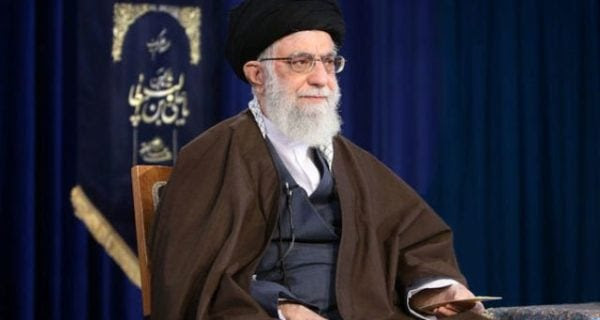
Iranian President Masoud Pezeshkian said an attack on Khamenei would be viewed as a declaration of war.
Iranian lawmakers on Tuesday warned that any attack on Iran’s so-called “supreme leader,” Ayatollah Ali Khamenei, would lead to a declaration of “jihad,” or holy war, and a violent global response from the Islamic world.
The threat came as tensions between Washington and Tehran continued to escalate amid Iran’s deadly crackdown on nationwide anti-government protests.
US President Donald Trump has repeatedly threatened to “hit” the Iranian regime and “help” the demonstrators if the violent repression continues.
“Any attack on the supreme leader means declaring war on the entire Islamic world,” Iran’s semi-official ISNA news agency quoted the parliamentary National Security Committee as saying.
The commission reportedly added that those responsible for the attack should expect “the issuance of a jihad decree by Islamic scholars and the response of Islam’s soldiers in all parts of the world.”
Iranian President Masoud Pezeshkian issued a similar warning on Sunday, saying an attack on Khamenei would be viewed as a declaration of war.
“Any aggression against the supreme leader of our country is tantamount to all-out war against the Iranian nation,” he posted on social media.
Iran’s leader says rioters ‘must be put in their place’ as protest death toll reaches at least 10
Such threats from Iranian leaders have come amid speculation that the US may take coercive measures against Iran, including potential military strikes, following Trump’s own warnings to the regime.
Last week, for example, Trump called on Iranian protesters to “take over your institutions” and suggested the US was prepared to take strong action against the regime.
“Save the names of the killers and abusers. They will pay a big price. I have canceled all meetings with Iranian Officials until the senseless killing of protesters STOPS. HELP IS ON ITS WAY. MIGA [Make Iran Great Again]!!!”
Protests erupted in Iran on Dec. 28 over economic hardships but quickly swelled into nationwide demonstrations calling for the downfall of the country’s Islamist, authoritarian system.
The Iranian government has responded with force in an effort to crush the unrest.
The US-based group Human Rights Activists in Iran has confirmed 4,029 deaths during the protests, while the number of fatalities under review stands at 9,049. Additionally, at least 5,811 people have been injured, and the total number of arrests stands at 26,015.
Iranian officials have put the death toll at 5,000 while some reports indicate the figure could be much higher. The Sunday Times, for example, obtained a new report from doctors on the ground, which states that at least 16,500 protesters have died and 330,000 have been injured.
Iranians celebrate Maduro’s fall as protests challenge Khamenei
The exact numbers are difficult to verify, as the regime has imposed an internet blackout across the country while imposing its crackdown.
Trump recently called for an end to Khamenei’s 37-year reign.
“It’s time to look for new leadership in Iran,” Trump told Politico in an interview published on Saturday.
“The man is a sick man who should run his country properly and stop killing people,” Trump said. “His country is the worst place to live anywhere in the world because of poor leadership.”