
Bible Prophecy, Signs of the Times and Gog and Magog Updates with Articles in the News
How Global Instability Is Preparing The Stage For Prophetic Alignment
Time magazine’s assessment of the top global risks for 2026 reveals a world accelerating toward systemic instability. As nations fracture and fear deepens, the world will increasingly demand order at any cost signaling conditions for the final prophetic alignment described in scripture.
Time magazine’s recent examination of the Top 10 Global Risks for 2026 reads less like speculative futurism and more like a warning flare fired into a darkening sky. Its conclusion is stark: the world is accelerating toward systemic instability on nearly every front. Political upheaval, technological dominance, economic coercion, and the weaponization of resources are no longer hypothetical dangers. They are operational realities–already shaping how nations act, how markets move, and how populations are governed.
For secular analysts, this is a story about risk management. For Christians who take Bible prophecy seriously, it is something far more sobering. It looks like alignment.
Time’s assessment paints a picture of a world fraying simultaneously at multiple pressure points. Governments are weakening or polarizing, trust in institutions is collapsing, economic systems are increasingly used as weapons, and emerging technologies are consolidating unprecedented power in the hands of a few. Add to this intensifying wars, cyber conflict, energy insecurity, and looming resource shortages–especially water–and you have a global environment primed not for stability, but for desperation.
And desperation is where dangerous solutions are born.
Scripture has long warned that global chaos would precede the rise of a deceptive world leader–one who promises peace, order, and security, but delivers bondage and destruction. The book of Revelation does not describe the Antichrist emerging in a world of calm and contentment. He rises in a world exhausted by conflict, fractured by fear, and desperate for someone–anyone–who can make the pain stop.
Time’s conclusion that instability is accelerating “on nearly every front” echoes the words of Jesus Himself. In Matthew 24:6-8, Christ warned His disciples that before the end, the world would experience wars and rumors of wars, nation rising against nation, famines, and upheaval–what He called “the beginning of birth pains.” Birth pains are not random; they intensify, converge, and signal that something inevitable is approaching.
What makes this moment unique is not just the presence of chaos, but the infrastructure now forming to manage it.
Political instability is conditioning the world to accept centralized authority. As nation-states struggle to govern fractured populations, the appeal of a unifying global figure grows stronger. Sovereignty becomes an obstacle rather than a safeguard. In times of fear, people trade freedom for promises of security–and often do so willingly.
Economic crises play a critical role in this conditioning. Time highlights economic coercion as a rising global risk, and we already see how financial systems are used to punish dissenting nations, individuals, and even ideologies. Revelation 13 describes a future system in which buying and selling are controlled–where economic participation itself becomes a tool of obedience. A cashless, digitized, globally integrated economy is no longer futuristic. It is nearly complete.
Technology may be the most powerful accelerant of all. AI-mediated reality, information control, and algorithmic influence shape what people see, believe, and fear. Truth becomes malleable. Deception becomes scalable. Revelation warns of “lying signs and wonders,” but deception in the modern age does not require miracles–it requires control of information, perception, and digital identity. Global tech dominance makes mass deception not only possible, but efficient.
Then there is resource weaponization. Competition over energy, food, and water is intensifying, just as Scripture foretold scarcity and famine as hallmarks of the end times. Control resources, and you control populations. Centralize resource distribution, and centralized power becomes “necessary.” Again, the world will not resist this–it will demand it.
Out of this convergence–political chaos, economic fear, technological dominance, and resource scarcity–emerges the perfect environment for a global leader who appears reasonable, competent, and compassionate. He will not arrive as a villain. He will arrive as a savior. He will speak of peace, unity, and solutions. And the world, exhausted by instability, will love him for it.
This is precisely the deception Revelation warns about.
A global leader requires a global system: a unified economy, a shared ideological or spiritual framework, and technological tools capable of enforcing compliance. What once seemed impossible now looks inevitable. The world is being conditioned–step by step–for centralized authority, diminished sovereignty, and mass deception.
These developments are not random. They are alignment indicators.
Time magazine may frame these risks in secular terms, but Scripture gives them eternal context. The acceleration toward instability is not just a geopolitical concern–it is a prophetic signal. We are watching the stage being set, not by conspiracy, but by human response to fear and chaos.
For believers, this is not a call to panic, but to discernment. Jesus warned His followers in advance so they would not be deceived. As the world demands order at any cost, Christians must remember that true peace does not come from global systems or charismatic leaders, but from Christ alone.
The birth pains are intensifying. And history tells us that when the world cries out loud enough for order, someone will answer. The question is not whether that moment is coming–but whether we will recognize it when it arrives.
Invisible Warfare: What The Maduro Raid Reveals About Tomorrow’s Battles
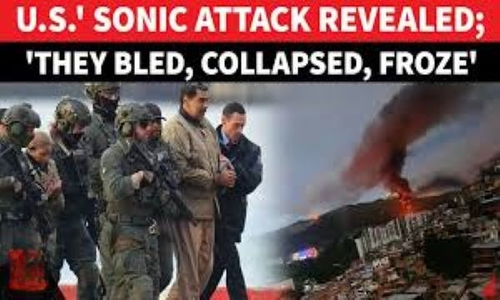
War usually announces itself loudly. Sirens. Explosions. Gunfire. That’s how Venezuelan security forces expected it to begin.
Instead, according to one shaken guard who survived the raid to capture Nicolás Maduro, war arrived in silence — and then in sound so violent it crushed the body from the inside.
One moment, radar screens were alive. The next, they went dark.
No warning. No incoming aircraft. No alarms.
Then the sky filled with drones.
What followed, if the account is even partially accurate, reads less like modern combat and more like a preview of something unsettlingly new — a form of warfare where the enemy doesn’t overwhelm you with numbers, but with technology you don’t understand and cannot fight.
A Battle That Was Over Before It Began
The Maduro guard’s description is striking for what didn’t happen. There was no prolonged firefight. No drawn-out siege. No heroic last stand.
Instead, a small group — perhaps just twenty men — descended from a handful of helicopters and obliterated hundreds of defenders with chilling ease.
These soldiers didn’t behave like ordinary troops. Their movements were too fast. Their fire too precise. Their coordination too perfect.
But it wasn’t just their weapons.
Then came the sound.
Not an explosion. Not a blast. Something else entirely.
A pressure. A vibration. A force that seemed to crawl inside the skull and tear the body apart from within. Men dropped instantly. Noses bled. Some vomited blood. Others collapsed, unable to stand, unable to think, unable even to fight back.
The guard didn’t know what it was. He only knew it ended the battle immediately.
And that may be the most terrifying part.
The War You Don’t See Coming
If this account reflects reality — even in part — it suggests something deeply unsettling: future wars may not look like wars at all.
No bombs. No visible weapons. Just systems that quietly shut down your defenses, scramble your senses, and render resistance impossible.
Before a single soldier fired a shot, Venezuela’s eyes and ears were reportedly taken away. Radar went dark. Communications failed. Confusion spread. By the time anyone realized what was happening, it was already over.
This is the new battlefield: not one of trenches and tanks, but one of invisible dominance.
You don’t defeat the enemy by killing them outright — you defeat them by making them helpless.
The Rise of “Invisible Weapons”
For decades, militaries have chased the same goal: win fast, win decisively, and win without prolonged bloodshed. The tools described in this raid — drones, electronic disruption, mysterious incapacitating forces — fit perfectly into that doctrine.
Drones, for example, are no longer just flying cameras. They swarm. They confuse. They overwhelm defenders psychologically before the first shot is fired. When dozens appear overhead, no one knows which ones are watching, which ones are jamming signals, and which ones might strike.
Then there’s the idea of weapons that don’t kill — at least not directly — but remove the human body from the fight. Sound, vibration, energy, pressure. Forces that attack balance, cognition, and physical control rather than flesh and bone.
If such systems exist in deployable form, they represent a terrifying advantage. A soldier who can’t stand, can’t think, can’t breathe normally is no soldier at all.
What Else Might Be Coming?
Unconfirmed but credible reports suggest this may only be the beginning.
Future conflicts could involve technologies that:
Paralyze entire units without firing a bullet
Induce panic or disorientation instantly
Shut down cities digitally before troops ever arrive
Use artificial intelligence to predict and neutralize resistance in real time
Imagine battles decided not by who has more soldiers, but by who controls the airwaves, the data, the senses, and the mind.
In that world, traditional armies — especially those relying on older systems — don’t just lose. They never get the chance to fight.
A Warning Heard Across Latin America
The Venezuelan guard ended his testimony with a warning — not to his enemies, but to anyone thinking of confronting the United States.
After what he witnessed, he said, no one should assume they understand American military power.
That warning has reportedly echoed far beyond Caracas.
Because if a small force can dismantle a heavily guarded regime using tools that leave defenders bleeding, confused, and broken — without suffering a single casualty — then power itself has been redefined.
The Future of War Is Quiet, Fast, and Relentless
Whether every detail of this story proves true or not, the direction is unmistakable.
War is no longer just about firepower.
It’s about control.
Control of information.
Control of perception.
Control of the human body itself.
The most dangerous weapons of the future may not explode.
They may hum.
They may vibrate.
They may arrive without warning and leave no visible scars.
And by the time the world fully understands them, resistance may already be impossible.
Selective Outrage: Why The Left Protests Israel But Ignores Iran’s Slaughter
Why is it that crowds gathered outside synagogues in New York last week to protest Israel’s war with Hamas, yet the streets fall eerily quiet when Iran’s own regime is accused of slaughtering its people? Where are the student encampments, the mass marches, the candlelight vigils in America’s major cities when Iranians risk everything to overthrow a brutal theocracy? Why does outrage ignite only in one direction?
This is not a rhetorical trick. It is a moral question–one the modern political left must ask itself with honesty and courage. Why do I protest when Jews are involved, but remain silent when Muslims, Persians, women, and dissidents are being killed by an Islamic regime? Why does my conscience activate selectively?
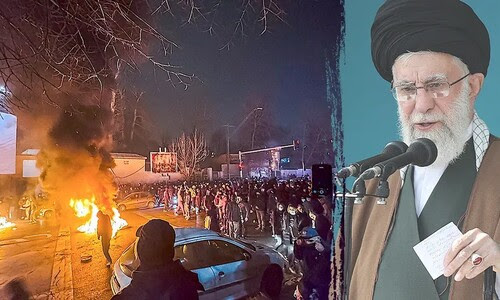
Reports emerging from Iran paint a grim and horrifying picture. Under a near-total communications blackout, the world is receiving only fragments–enough to suggest a tragedy of massacre proportions. Eyewitnesses describe hospitals overwhelmed, blood supplies critically low, bodies piling up, and snipers positioned on rooftops. Human rights groups report that casualties are rising by the hour. Some outlets claim that even conservative estimates suggest thousands of anti-regime protesters may have been killed within days.
The Iranian regime has reportedly shut down the internet, cut electricity, and unleashed security forces using live fire against civilians. Yet tonight, hundreds of thousands are said to be back in the streets of Tehran, waving the lights of their phones in the darkness–silent signals to a watching world that they are still there. In an extraordinary act of defiance, reports indicate that hundreds of mosques have been burned, a declaration by ordinary Iranians that they are done with clerical rule and religious tyranny.
And yet–silence.
Where is the Western outrage? Where are the campus protests? Where are the celebrities, the social media campaigns, the carefully worded condemnations? The contrast is impossible to ignore. Protesters who claim to stand for human rights seem energized only when Israel is the villain. When Jews are involved, outrage becomes a public ritual. When a radical Islamist regime kills its own people, the moral urgency evaporates.
This selective outrage demands self-examination. It exposes a worldview less concerned with justice than with ideology.
Part of the answer lies in the failure–perhaps refusal–of Western progressive culture to understand Islam as an ideology rather than a racial identity. In modern liberal discourse, Islam has been effectively racialized. Criticizing it is treated as an attack on “brown people,” rather than as a critique of a belief system or a political structure. This confusion renders the Iranian uprising unintelligible. If Islam must always be defended as an oppressed identity, then Iranians rejecting Islamic rule break the narrative.
The Western press struggles with this reality. To explain Iran honestly would require acknowledging that millions of people are not rebelling against “Western imperialism,” but against Islamism itself–a clerical system that has suffocated speech, crushed women, destroyed economic opportunity, and criminalized dissent. That story cannot be told without challenging sacred assumptions.
There is also an economic truth many prefer to ignore. Iran is not just a religious dictatorship; it is a centrally controlled, state-dominated economy where survival depends on loyalty to power. Decades of nationalization, price controls, and bureaucratic coercion have obliterated the middle class and entrenched corruption. Covering Iran honestly would require admitting that these systems–often romanticized in Western progressive rhetoric–have failed catastrophically.
Iran shatters the simplistic oppressor-versus-oppressed framework. Its people are not victims of Western capitalism; they are victims of authoritarianism enforced by ideology. That reality is deeply inconvenient.
As tensions rise, a massive military buildup in the Middle East suggests that U.S. strikes on Iran may be imminent–potentially in support of the Iranian people and against the regime brutalizing them. If and when that happens, the pattern is predictable.
The same activists silent today will flood the streets tomorrow to protest America. “Woke” demonstrators will chant against intervention, even as Iranians beg the world not to look away. Groups like “Queers for Palestine” will continue to excuse or ignore regimes that would imprison or execute them.
The silence over Iran is now deafening. And it reveals something uncomfortable: for many, outrage is not about human suffering. It is about who fits the narrative. Until that changes, justice will remain selective–and the cries from Tehran will echo unanswered.